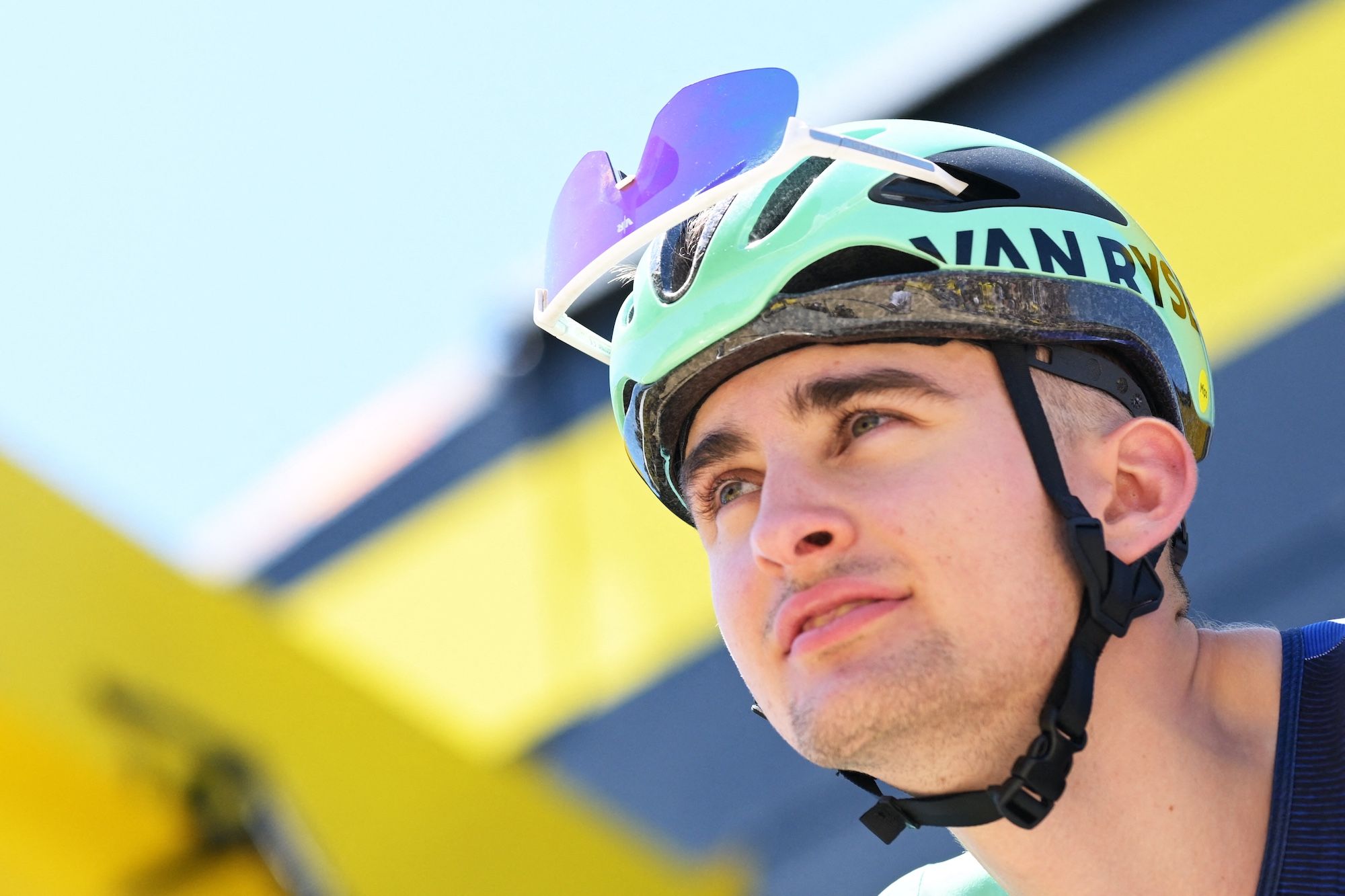
Paul Seixas, the 19-year-old rising star of the Decathlon CMA CGM team, is adopting a notably more reserved strategy during his debut Tour de France. While the French rider previously earned a reputation for aggressive, long-range attacks at races like Itzulia Basque Country and Liège-Bastogne-Liège, his team management has implemented a more cautious approach to help the teenager navigate the demands of a three-week Grand Tour. Currently sitting in sixth place overall, Seixas remains 4 minutes and 35 seconds behind race leader Tadej Pogačar as the competition moves into the decisive Alpine stages.
The shift in tactics, confirmed by team director Luke Rowe, is designed to preserve the young rider’s energy and prevent the high-risk errors that marked his earlier season. Rowe, who has been guiding Seixas through his maiden Tour, emphasized that while the rider possesses natural flair and charisma, the realities of General Classification (GC) racing require a measured, patient mindset to avoid “flying too close to the sun.”
Managing Risk and Racing for the Podium
A primary concern for the team has been the balance between Seixas’ natural attacking instinct and the necessity of tactical restraint. According to Rowe, the team director explicitly instructed the 19-year-old to tone down his aggressive descending style earlier this year.
“I spoke to him pre-Dauphiné and I said, ‘We’ve just got to kind of tone that down a bit,’” Rowe explained in a joint interview with international media. “With 3,500 kilometres in the Tour, if you take every corner full gas, one of them is going to catch you out.”
The adjustment appears to be working. While Seixas has been more conservative, he has maintained a high level of performance, notably finishing third over the summit of the Tourmalet, where he successfully distanced rivals including Remco Evenepoel while trailing only Tadej Pogačar and Jonas Vingegaard. Rowe noted that this performance demonstrated that the team’s current strategy is not about inactivity, but rather about choosing the right moments to exert effort.
The Challenge of Racing Against Pogačar
As the Tour de France enters its final, grueling phase, the prospect of challenging the current leader, Tadej Pogačar, remains a significant hurdle. Rowe acknowledged the difficulty of the current GC landscape, noting that attempting to follow Pogačar’s explosive attacks often leads to riders burning out and losing more time in the long run.
“If you say to Paul, ‘when Pogačar goes, you follow,’ I don’t think right here, right now he can follow Pogačar,” Rowe said. “Then he explodes and you lose more time. It’s ABC, it’s not rocket science, but I don’t want to set him up to fail.”
This weekend presents a major test for the field, starting with a challenging stage through the Vosges, followed by a summit finish in the Alps on Sunday. For Seixas, these stages represent uncharted territory, as he is competing beyond a one-week race format for the first time in his professional career. The team’s focus remains on guiding him through these stages while insulating him from the intense pressure of the overall classification battle.
Looking Ahead to the Final Stages
The upcoming mountainous double-header will be instrumental in determining the final podium standings. With the race entering its most difficult terrain, Seixas is expected to continue his conservative approach, prioritizing consistency and patience over the flamboyant attacks that defined his early-season success. Team management maintains that the goal is to develop the rider’s long-term potential, rather than forcing a result that could jeopardize his growth.
The Tour de France continues this weekend with the remaining mountain stages, which are expected to finalize the hierarchy for the Paris finish. Fans and analysts will be watching to see if Seixas can maintain his current position in the top ten as the race reaches its conclusion.
Keep reading