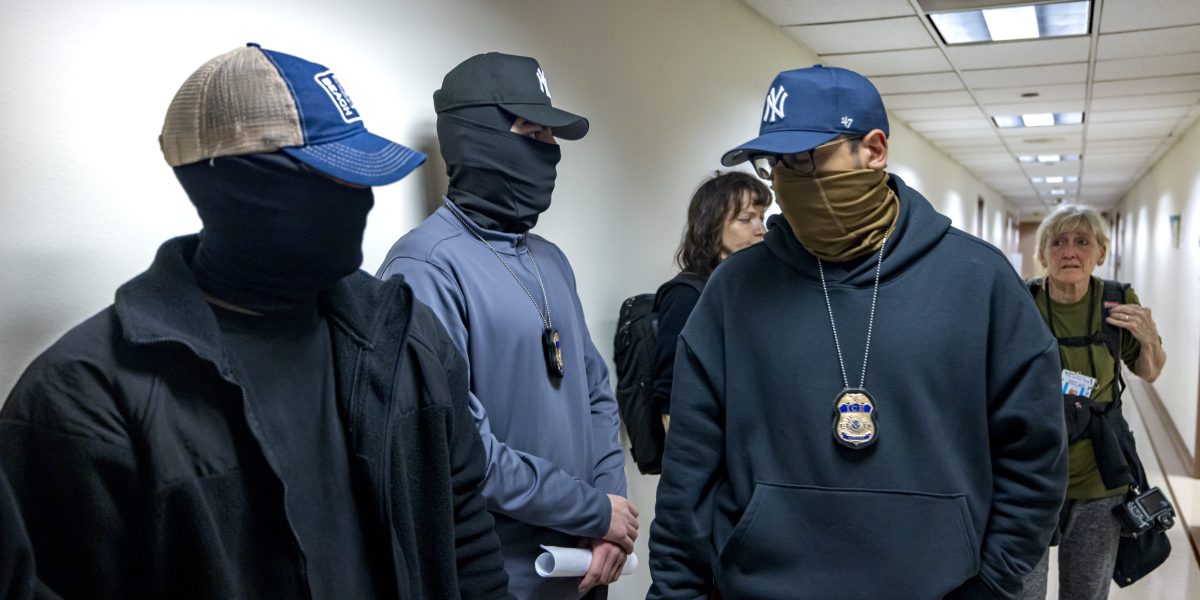
U.S. Immigration and Customs Enforcement (ICE) has issued a new policy requiring officers conducting field operations to wear standardized, identifiable attire, moving away from a long-standing practice of utilizing plainclothes for arrests. The directive, signed by Acting ICE Director David Venturella, mandates that agents wear specific tactical clothing and clearly display badges during enforcement actions, following a series of high-profile incidents that drew public and political scrutiny.
The updated appearance standards, which prohibit items such as hoodies, sweatshirts, and non-collared shirts during field operations, aim to improve transparency and public safety. According to agency guidance, officers are now required to wear khaki or coyote brown tactical pants paired with an ICE-branded polo shirt. During high-visibility operations, the policy further mandates the use of ballistic vests to ensure officers are easily recognizable to both the public and local law enforcement agencies.
Policy Shifts Following Operational Controversies
The move toward a more visible, uniformed presence follows several incidents that prompted criticism regarding the agency’s identification protocols. On July 13, a video captured by a bystander at Harry Reid International Airport in Las Vegas showed two individuals in hooded sweatshirts attempting to detain a man in a public terminal. The footage, which circulated widely, showed the men struggling with the individual before abandoning the attempt after members of the public intervened. The man involved, later identified as Phu Nguyen, was subsequently taken into custody by ICE at Los Angeles International Airport the following day.
The Las Vegas incident highlighted concerns regarding the professional appearance and identification of federal agents in public spaces. In response to such events, the new directive explicitly requires that arresting officers must ensure their ICE badge is visible at the time of an arrest, particularly during low-visibility operations. This change in the Employee Code of Conduct is viewed by some within the agency as a potential precursor to a broader transition toward a fully uniformed workforce, departing from the historical reliance on plainclothes operations for deportation and enforcement tasks.
Public Safety and Congressional Oversight
The lack of clear identification among federal immigration enforcement officers has been a consistent point of contention for lawmakers and civil rights advocates. Members of Congress and various state attorneys general have previously urged the agency to adopt stricter standards for insignia and identification, arguing that unidentifiable enforcement actions can erode community trust and create dangerous situations for both the public and the officers involved.
Nick Wilson, senior director of public safety policy at the Center for American Progress, noted that the era of arrests conducted in unbranded street clothes has faced significant criticism for its impact on public safety. Wilson stated that federal agents should be held to the same standards of visibility and independent oversight as local law enforcement, emphasizing that clear identification is essential for maintaining accountability in civil rights matters.
Internal Agency Responses
The Department of Homeland Security (DHS) has maintained that officer safety remains a primary concern during enforcement operations. In a statement regarding the Las Vegas incident, a DHS spokesperson attributed the decision to halt the arrest to the presence of a crowd, noting that officers opted to de-escalate the situation for the safety of all involved. The spokesperson described the surrounding individuals as “anti-ICE agitators,” framing the event as a challenge to standard enforcement procedures.
Internally, the new dress code has been met with varied feedback. Some agency personnel have indicated that the shift is a necessary step toward professionalizing field operations and addressing the lack of public clarity during arrests. As the agency begins to implement these standards, stakeholders await further guidance on how these changes will be enforced and whether they will lead to additional modifications in training and operational protocols.
Keep reading