
Carl Anthony
2026-01-24 20:00:00
2026 is the new 2016, a throwback to what some are fondly remembering as the carefree internet. That seemingly more simple time before everyone was an influencer, before AI and algorithms were everywhere, and before everything got so expensive. Those were the days.
If you’re feeling nostalgic for 2016 and have a soft spot for cars, here are a few vehicles you may remember seeing on your social media feed a decade ago.
Design and engineering teams unite
On January 10th, 2012, Lexus unveiled its LF-LC Hybrid Sport Coupe Concept during the North American International Auto Show (NAIAS) in Detroit. Speaking to the media, Mark Templin, group vice president and general manager of the Lexus Division at Toyota Motor Sales, said the concept was the future of Lexus.
As Templin described at the time, Lexus was intent on cementing itself as a force in the luxury car market, one that would be characterized by quality and reliability, customer service, and emotional products. The LF-LC Concept was the embodiment of the latter, having been conceived at Toyota’s Calty Design Center in Newport Beach, California. No denying this concept was unique, with its spindle grille, dual 12.3-inch screens, and tech interface that Templin said was like having an iPad for a center console.
Four years later, in January 2016, Lexus returned to NAIAS to unveil the LC 500, the production version of the LF-LC Hybrid Sport Coupe Concept. During the reveal, the car’s chief engineer, Koji Sato, spoke about how the Lexus design and engineering teams worked together to bring the LC to life. Both teams found ways to transition many of the concept’s promises into the production vehicle, underscored by a commitment to help each other no matter what.
“Design and engineering sides worked together on issues and obstacles that were overcome one by one,” Sato said at the time. “I feel we achieved something greater than simply preserving the spirit of the concept’s design.”
The LC was the first Lexus to use the automaker’s then-new GL-A global architecture for luxury vehicles, a rear-wheel drive platform that would quickly become known for its structural stiffness. When the LC debuted in Detroit in 2016, it was the strongest high-strength steel unibody Lexus had ever built, with torsional rigidity and twist resistance capabilities beyond those of the LFA supercar.
The naturally aspirated 5.0-liter V8, connected to a 10-speed automatic, produced nearly 470 horsepower and 389 lb-ft. of torque.
Lexus would debut a convertible version in 2019 and the Inspiration Series in 2020. The hybrid variant was discontinued following the 2025 model year, but both the coupe and convertible with the 5.0-liter V8 are available for 2026.
Buick Avista Concept
Not the Buick you remember

Like Lexus and its LC, Buick used NAIAS in Detroit in January 2016 to reveal its own 2+2 performance car, the Avista. Despite high praise at the time, the Avista remained a design concept only and was never sent to production.
The Avista served as a way to showcase a new side of Buick, one that would move the brand from being seen as outdated to modern and even futuristic. Meanwhile, Buick’s marketing campaign at the time was one of reinvention. This “isn’t the Buick you remember” because “this Buick” now has a beautiful design, advanced technology, is quiet on the road, and so forth. Buick used that messaging to aim SUVs like the Encore and Envision at younger buyers, which helped sustain the brand’s 30 consecutive months of sales growth by the end of 2016.
Buick continues to showcase its more recent Wildcat concept from time to time. Another 2+2 concept, the Wildcat includes unique features such as aromatherapy and biometric sensing.
Hyundai Autonomous Ioniq Concept
Consumers still skeptical
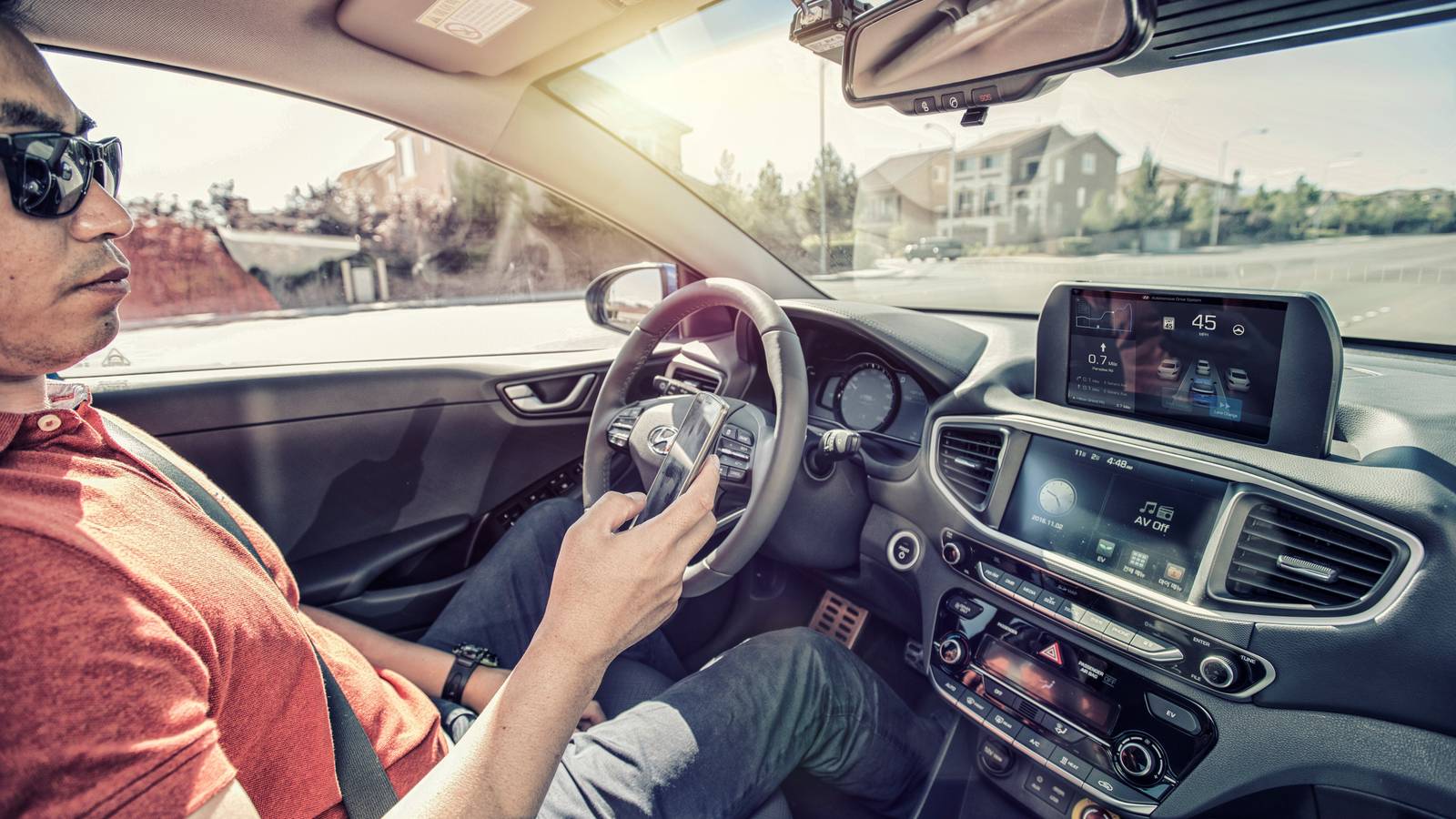
The Hyundai Autonomous Ioniq Concept made its debut at the Los Angeles Auto Show during Automobility LA in November 2016.
Among the high points was the “hidden” LiDAR system, which, instead of resembling a bucket of chicken on the roof, was now nicely integrated into the front bumper. Holding to the discipline of sensor fusion, the LiDAR system was supported by camera and radar technology to provide the Ioniq a more complete view of its surroundings.
In 2016, self-driving vehicles spanned the gamut in terms of possibilities and pitfalls. For some, they represented the promise of safer cars and roadways. For others, a cautionary tale about over-reliance on technology and unaddressed cybersecurity concerns. Those with limited mobility might have access to more equitable transportation via a self-driving vehicle, but enthusiasts and gearheads pushed back, asking, “What’s the point?” if the car can simply drive itself.
Despite lofty promises that autonomous cars would enter full production around 2020, the entire notion has yet to catch on. By and large, consumers still don’t trust a fully autonomous car, and while that might change with the advent of more optimized robotaxis, the idea of self-driving vehicles on a macro level seems stuck in neutral.

The Force was strong with Nissan
Stormtroopers descend on NYC
Revealed as a 2017 model in November 2016, the Nissan Rogue: Rogue One Star Wars Edition was the first production vehicle to pay homage to the iconic film franchise. A collaboration between Nissan and Lucasfilm Ltd., the one-off Rogue featured Rebel Alliance and Galactic Empire decals, a Rogue One logo on the doors, and a bumper protector under the tailgate with Star Wars lettering. Limited to just 5,400 units, lucky buyers also received a replica Death Trooper helmet.
The Rogue One Star Wars Edition was an SV model of the 2017 Rogue, available with either front-wheel or all-wheel drive. Under the hood, the 2.5-liter DOHC inline four-cylinder produced 170 horsepower and 175 lb-ft. of torque.
After its debut at the 2016 Los Angeles Auto Show, the Rogue One Star Wars Edition would appear again at the New York International Auto Show in April 2017. Nissan’s display in New York that year included a gigantic Death Star inflatable and appearances by the Stormtroopers themselves.
Where will we be a decade from now?
It might be interesting to see how things change if 2036 becomes the new 2026. I wonder what vehicles would make this list 10 years from now? Maybe by then, we will finally have autonomous cars.




![]Morelia, Mexico: Charming House for Sale – Your Dream Home Awaits](https://scontent-lax3-2.xx.fbcdn.net/v/t39.30808-6/621747007_1314948440668297_7821737113808962721_n.jpg?stp=dst-jpg_tt6&cstp=mx720x1280&ctp=p600x600&_nc_cat=111&ccb=1-7&_nc_sid=cae128&_nc_ohc=UX3SnqPo-NEQ7kNvwFafCIH&_nc_oc=AdnoYQtixLT29FcXYkrpWbu-0tKezd-EOsPWfdUTQgy6IB-porqTUTPt0EZw59LaVda_4fT2jZGaKeBmu9NXU_Xy&_nc_zt=23&_nc_ht=scontent-lax3-2.xx&_nc_gid=Pc41aDgwVTYTTCTN0LDKfA&oh=00_Afo4yz-680lxr4rIwfzj6Hv2vfjrvXHRjsJibXwEUDL9Lw&oe=697B63E6 "]Morelia, Mexico: Charming House for Sale – Your Dream Home Awaits")


