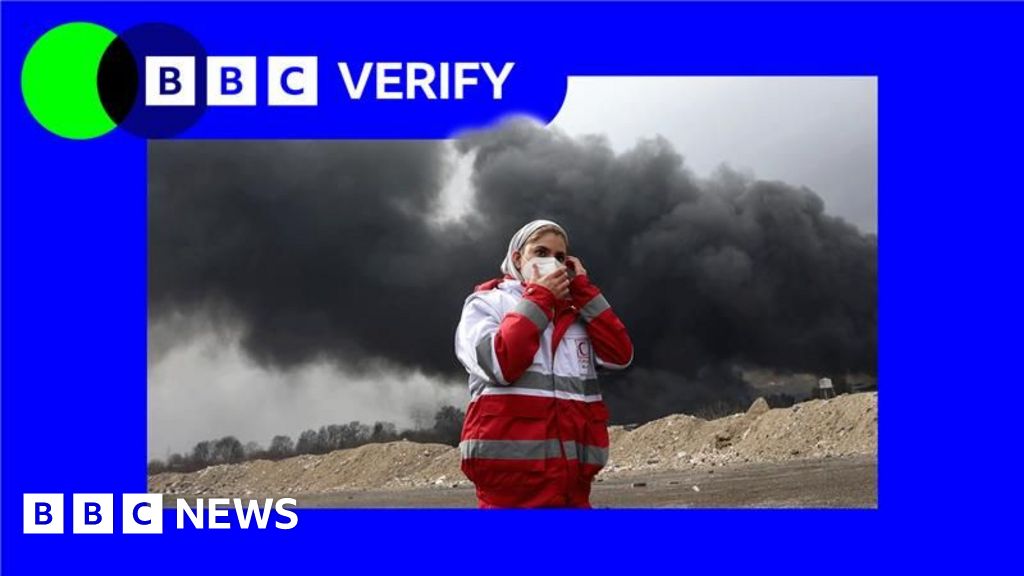
Tehran, Iran – A wave of air strikes targeting oil facilities around the Iranian capital has triggered a public health crisis, with reports of “black rain” and “unprecedented” levels of pollution, according to scientists and residents. The attacks, which began on February 28, 2026, have sparked widespread concern over the immediate and long-term health consequences for the nearly 10 million people living in Tehran and surrounding areas.
The escalating conflict between Iran and a coalition led by Israel and the United States has increasingly focused on Iran’s energy infrastructure. The Israel Defense Forces (IDF) initially claimed responsibility for strikes on “fuel depots” near Tehran on March 7, 2026, sharing a photograph purportedly showing damage to the Tehran oil refinery. However, the IDF later stated there were “no IDF strikes at those sites” after BBC Verify provided coordinates of the facilities for comment, requesting clarification on the discrepancy. The Pentagon did not respond to requests for comment.
Satellite imagery captured on March 9, 2026, and reviewed by BBC Verify, shows two major oil facilities in Tehran – the Shahran depot and the Tehran oil refinery – still ablaze following reported air strikes on Saturday, March 9th. Smoke plumes from the ongoing fires are combining with cloud cover, hindering a full assessment of the damage. Images from Shahran depot on Sunday morning revealed emergency workers inspecting burned-out oil tankers and blackened buildings.
Health Concerns Mount as Pollution Levels Soar
The attacks have released a cocktail of pollutants into the atmosphere, causing a significant deterioration in air quality. Residents report a strong smell of burning and smog so thick it has blocked out the sun in parts of the city. Experts warn that the scale of some of the pollutants released could be “unprecedented,” posing serious health risks to the population. The World Health Organization (WHO) has cautioned that attacks on oil facilities can have severe health implications for nearby residents.
The specific composition of the “black rain” – a phenomenon reported by residents – is currently under investigation. However, experts believe it likely contains soot, particulate matter, and other combustion byproducts released from the burning oil facilities. Exposure to these pollutants can exacerbate respiratory conditions like asthma and bronchitis, and increase the risk of cardiovascular disease and cancer. Long-term exposure could have even more devastating health consequences.
Impact on Iran’s Oil Infrastructure and Global Markets
The strikes represent the first time Iran’s oil facilities have been directly targeted since the start of the conflict. At least four oil storage facilities and an oil production transfer centre in Tehran and the Alborz province were hit on March 8, 2026, according to Iranian state media. The Aghdasieh oil warehouse, the Tehran refinery, the Shahran oil depot, and a facility in Karaj city were all reportedly targeted. Oil from the Shahran depot leaked into the streets following the attacks, and at least four tanker drivers were killed in Tehran and Alborz.
Despite the damage, Iranian state media reported that fuel distribution has not been disrupted, and security forces are working to contain the fires. However, the attacks have raised concerns about the stability of Iran’s oil production capacity and its potential impact on global oil prices. The Strait of Hormuz, a key waterway for global oil shipments, is also a growing point of concern. U.S. Officials have indicated that Iran may be preparing to deploy naval mines in the strait, prompting the U.S. Military to destroy 16 Iranian mine-laying boats on March 10, 2026, according to U.S. Central Command. CBS News reported that President Trump suggested the war was nearing completion, but U.S. Defense Secretary Pete Hegseth anticipated the most intense day of strikes on Iran on March 12, 2026.
Conflicting Reports and Ongoing Investigations
The situation remains fluid and information is often conflicting. The initial claim by the IDF regarding strikes on fuel depots near Tehran was later contradicted by their own statement denying involvement at specific locations identified by BBC Verify. This discrepancy highlights the challenges of verifying information in an active conflict zone. The Pentagon’s silence on the matter further complicates the picture.
The attacks come amid a broader military campaign involving the United States and Israel against Iran, which began on February 28, 2026. As of March 11, 2026, approximately 140 U.S. Service members have been wounded in the conflict, according to the Pentagon. Iran has continued its attacks on petroleum-producing Gulf Arab countries, despite suggestions from former President Trump that the war would end soon.
The Wider Geopolitical Context
The current conflict is rooted in a complex web of geopolitical tensions in the Middle East. The United States and Israel have long viewed Iran’s nuclear program and regional influence with concern. The recent escalation follows years of simmering tensions, including proxy conflicts and accusations of support for terrorist groups. The attacks on Iran’s oil infrastructure represent a significant escalation in the conflict, raising the stakes and increasing the risk of a wider regional war.
The situation is further complicated by the involvement of multiple actors, including regional powers like Saudi Arabia and Turkey, as well as international organizations like the United Nations. Efforts to de-escalate the conflict and find a diplomatic solution have so far been unsuccessful. The potential for miscalculation and unintended consequences remains high.
Smoke plumes caused by oil depot and refinery strikes drifted across Tehran on Monday, satellite images show, as the World Health Organization (WHO) warned that attacks on oil facilities could pose serious health risks to residents. https://t.co/cqxd1nv3re2o
The ongoing conflict and the resulting pollution crisis in Tehran underscore the devastating human and environmental costs of war. As the situation continues to evolve, the international community faces a critical challenge in preventing further escalation and protecting the health and well-being of civilians.
The next key development to watch is the response from Iranian authorities regarding further strikes and potential retaliatory measures. Updates on the air quality situation in Tehran and the extent of the damage to oil facilities will also be crucial. Readers are encouraged to share their perspectives and experiences in the comments section below.
Keep reading