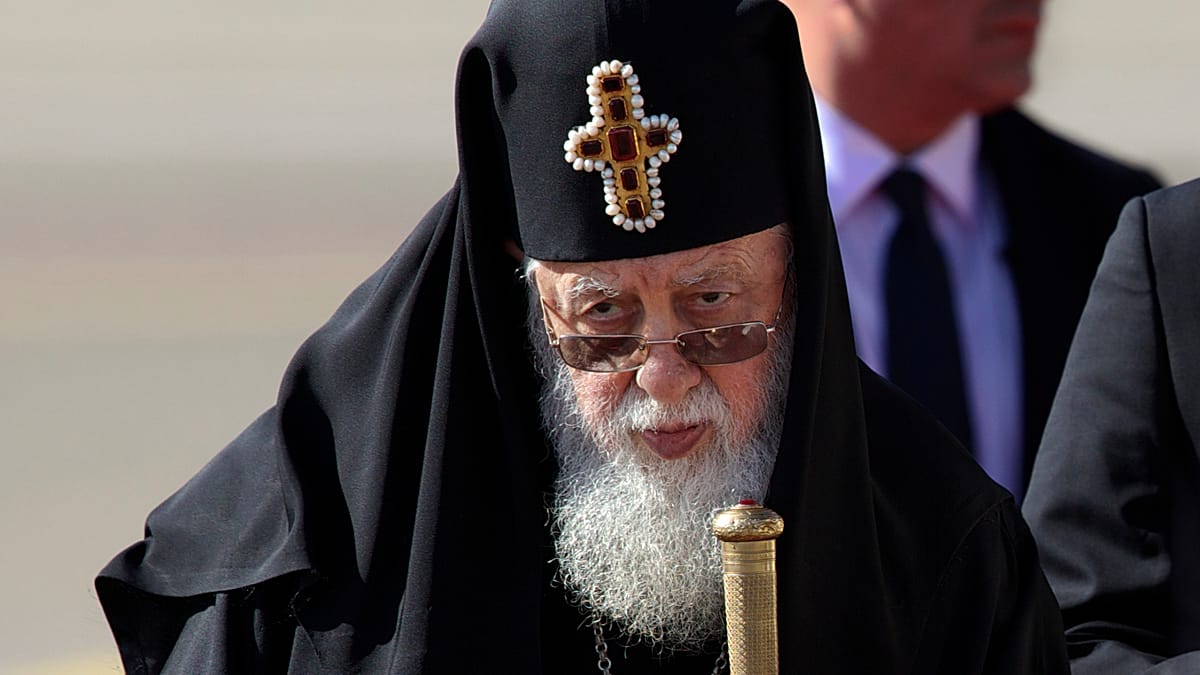
Georgian Orthodox Patriarch Ilia II, a Pillar of Faith Through Decades of Change, Dies at 93
Tbilisi, Georgia – Ilia II, the Catholicos-Patriarch of All Georgia, a deeply influential figure who guided the Georgian Orthodox Church through the tumultuous final years of Soviet rule and the subsequent period of independence, has died at the age of 93. His passing, confirmed by the church on Tuesday, marks the end of an era for Georgia, where the Orthodox Church holds a uniquely powerful position in society and national identity. Ilia II had been hospitalized earlier that day at the Caucasus Medical Centre in Tbilisi due to “mass bleeding from the stomach,” according to Sopio Aspanidze, the director of the medical center.
The Georgian Orthodox Church announced that Ilia II “has reposed in the Lord,” with Metropolitan Shio Mujiri designated as locum tenens until a new patriarch is elected. Mujiri described the late patriarch as “an epochal figure; We see a tremendous loss for the entire Orthodox Church.” Ilia II’s nearly five-decade leadership, beginning in 1977, saw the church navigate a period of profound political and social transformation, emerging as a central force in post-Soviet Georgia.
Born Irakli Ghudushauri-Shiolashvili on January 4, 1933, in Ordzhonikidze, which is now Vladikavkaz, Russia, Ilia II’s life mirrored the complex history of the Caucasus region. His family maintained a strong connection to the Georgian Orthodox faith, a crucial element in shaping his future role. He pursued theological studies at the Moscow Theological Academy from 1956 to 1960, becoming a monk and receiving ordination as a priest during that time. According to his biography on Wikipedia, this period laid the foundation for his eventual ascent within the church hierarchy.
From Soviet Restrictions to National Revival
Ilia II’s patriarchate began during a period of intense restriction on religious practice under Soviet rule. The Georgian Orthodox Church, like other religious institutions in the Soviet Union, faced significant challenges, and limitations. However, Ilia II skillfully navigated these constraints, working to preserve the church’s traditions and maintain its spiritual influence. He played a key role in securing the recognition of the Georgian Orthodox Church’s autocephaly – its self-governance – from other Eastern Orthodox churches, a crucial step in asserting its independence. Reuters reports that he oversaw the church’s transformation from a repressed institution to one of Georgia’s most powerful.
The collapse of the Soviet Union in 1991 ushered in a new era for Georgia and for the Georgian Orthodox Church. Ilia II became a prominent figure in the country’s post-independence development, offering spiritual guidance and playing a stabilizing role during a period of political instability and conflict. He was widely respected for his efforts to mediate between rival factions and promote national unity. His leadership coincided with a significant revival of religious faith and a strengthening of the church’s role in public life.
A Stabilizing Force in Georgian Politics
Throughout his patriarchate, Ilia II consistently emphasized the importance of national identity, cultural preservation, and spiritual values. He actively promoted the construction and restoration of churches and monasteries across Georgia, contributing to a visible resurgence of religious architecture and artistic heritage. The church, under his guidance, also became increasingly involved in social welfare programs, providing assistance to vulnerable populations and supporting educational initiatives.
The Georgian Apostolic Autocephalous Orthodox Church, one of the oldest Christian churches in the world, traces its origins back to the early 4th century, when Christianity was adopted as the state religion of the ancient Georgian kingdom of Iberia. As the 141st primate of the church, Ilia II carried a weighty legacy, and his influence extended far beyond the religious sphere. He was often consulted by political leaders and played a significant role in shaping public discourse on important national issues. Orthodox Times highlights his profound impact on both the Church and Georgian society, describing him as a “spiritual father and moral authority.”
His long tenure – from December 25, 1977, until his death on March 17, 2026 – made him the longest-serving patriarch in the history of the Georgian Orthodox Church. This longevity allowed him to build deep relationships with generations of Georgians and to establish himself as a symbol of continuity and stability in a rapidly changing world.
The Future of the Georgian Orthodox Church
The election of a new patriarch within the next two months will be a pivotal moment for the Georgian Orthodox Church and for Georgia as a whole. The process will likely involve a complex series of deliberations among church leaders and potentially input from the wider community of believers. The new patriarch will face the challenge of continuing Ilia II’s legacy while also addressing the evolving needs and concerns of a modernizing society.
The Georgian government has already begun preparations for Ilia II’s funeral, with the Government Administration holding a meeting on organizational issues, as reported by local news sources. The outpouring of grief and tributes from across Georgia and the international Orthodox community underscores the profound respect and affection that Ilia II commanded.
His death leaves a void in the spiritual and cultural landscape of Georgia, but his contributions to the nation’s identity and resilience will undoubtedly be remembered for generations to arrive. The legacy of Ilia II will continue to shape the Georgian Orthodox Church and its role in the life of the nation for years to come.
The next official update regarding the election of a new patriarch is expected within two months, as outlined by Metropolitan Shio Mujiri. Readers are encouraged to share their reflections on Ilia II’s life and legacy in the comments below.