
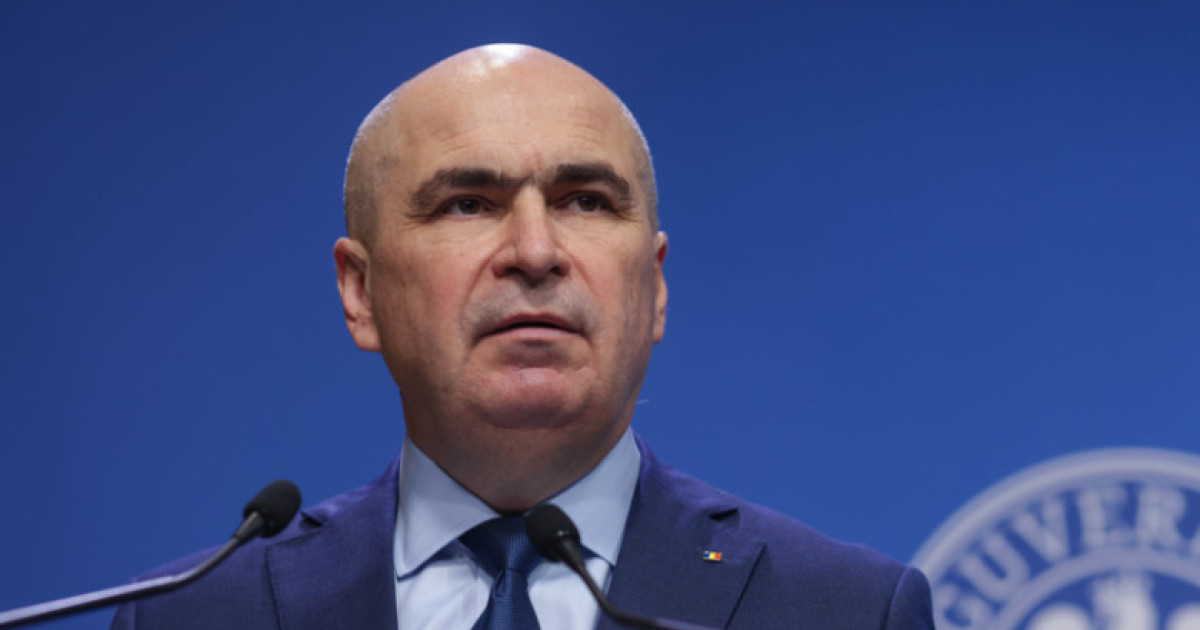
Romanian Prime Minister Ilie Bolojan confirmed on Tuesday that he has formally accepted the resignation letters submitted by ministers from the Social Democratic Party (PSD), marking a definitive step in the ongoing political crisis that began when the PSD withdrew its support for the governing coalition.
The development follows an internal PSD ballot in which more than 97% of approximately 5,000 party representatives voted in favor of withdrawing support for Bolojan, as reported by party leader Sorin Grindeanu. The move triggered a governmental impasse, with the PSD ministers subsequently submitting their resignations, which Bolojan acknowledged receiving during a cabinet meeting.
Despite the loss of its coalition partner, Bolojan emphasized that his National Liberal Party (PNL) remains committed to maintaining governmental stability. He stated that the PNL leadership unanimously adopted a resolution expressing strong support for the continuation of the government under his leadership and for the completion of agreed reforms, particularly those tied to the National Recovery and Resilience Plan.
Bolojan also announced that the PNL would no longer pursue a coalition with the PSD, citing the party’s decision to withdraw support as having generated an unnecessary political crisis. Instead, he indicated that discussions would begin with other political groups currently supporting the government, including the Save Romania Union (USR), the Democratic Alliance of Hungarians (UDMR), and the parliamentary group of national minorities, to explore the feasibility of a minority government.
The Prime Minister further revealed that he intends to propose a parliamentary moratorium to ensure that key projects linked to the National Recovery and Resilience Plan continue to progress regardless of shifting political alliances. This measure aims to safeguard essential reforms and investments during what he described as a difficult period for national governance.
Who Will Assume Interim Responsibilities for Vacant Ministerial Portfolios?
In response to the vacancies left by the departing PSD ministers, Bolojan confirmed that he has instructed the outgoing officials to establish contact with their successors to ensure a smooth transfer of responsibilities. He stated that he had asked the resigning ministers to reach out to those who will temporarily assume their duties so that all outstanding issues can be addressed.
While specific names of interim officeholders have not yet been publicly disclosed, Bolojan emphasized that the acting ministers will be drawn from within the existing PNL-led governing structure or appointed through consensus with the remaining supportive parliamentary factions. The goal, he said, is to maintain administrative continuity without disrupting essential public services.
The Prime Minister reiterated that the government remains fully operational and that all ministers, whether permanent or interim, are expected to uphold their duties in accordance with the rule of law and the public interest. He dismissed concerns about institutional paralysis, asserting that mechanisms are in place to prevent any governance vacuum.
Political Reactions and Implications for Romania’s Governing Stability
The PSD’s decision to withdraw support has drawn sharp criticism from Bolojan, who labeled the move a “completely wrong and irresponsible decision” that risks destabilizing the country. He argued that it undermines the foundational principles of the coalition formed the previous year—fiscal discipline, good governance, and respect for citizens.
Political analysts have noted that the crisis raises questions about the durability of Romania’s governing arrangements ahead of upcoming electoral cycles. Some observers suggest that the PNL may seek to govern as a minority administration with issue-based support from centrist and minority parties, while others warn that prolonged uncertainty could delay critical reforms and EU-funded projects.
The involvement of parties such as USR and UDMR in potential talks signals a possible shift toward a broader, albeit less stable, parliamentary configuration. However, no formal agreements have been reached, and the situation remains fluid as negotiations continue behind the scenes.
Next Steps and Outlook for the Government
As of now, the Bolojan-led government continues to function in a caretaker capacity for the portfolios vacated by PSD ministers, with interim arrangements being coordinated internally. The Prime Minister has called for restraint and responsibility from all political actors, urging them to prioritize national interests over partisan advantage.

The next key development to watch is whether the PNL will formally present its proposal for a parliamentary moratorium on Recovery and Resilience Plan-related legislation, and whether it can secure sufficient ad hoc support to pass essential measures without a stable majority.
For ongoing updates on Romania’s political situation, including official statements from the Prime Minister’s Office and parliamentary proceedings, readers are encouraged to consult verified government sources and reputable international news outlets covering European affairs.
If you found this analysis informative, please consider sharing it with others interested in European politics and governance. We welcome thoughtful comments and discussion below.