The global economic outlook has taken a significant hit as the International Monetary Fund (IMF) warns that the ongoing Middle East conflict is acting as a primary catalyst for a slowdown in worldwide growth. In a stark reassessment of the global trajectory, the IMF has revised its growth projections downward, signaling that the world is facing a complex, multi-dimensional crisis that extends far beyond the immediate theater of war.
The Middle East conflict global economic impact is now manifesting as what the IMF describes as an “asymmetric shock,” where the damages are not distributed evenly, leaving the most vulnerable nations and energy-dependent economies to bear the brunt of the volatility. This shift comes at a precarious time for global markets already struggling with post-pandemic recovery and lingering inflationary pressures.
According to recent data, the IMF has slashed its global economic growth forecast for 2026 to 3.1%, a notable decrease from the estimates provided in January reported by Thai Publica. The downward revision reflects the growing instability in key geopolitical corridors and the potential for a prolonged disruption in global supply chains.
The Four Dimensions of the Global Shock
In a detailed analysis published on March 30, the IMF outlined four critical dimensions through which the conflict is transmitting economic damage: Energy, Trade, Food and Finance via The Standard. Unlike a symmetric shock, which affects all players similarly, this asymmetric crisis creates a divide between those who can absorb the costs and those who are pushed toward economic collapse.

1. Energy and the Strait of Hormuz
The most immediate concern for the IMF is the stability of energy transport, specifically focusing on the Strait of Hormuz. The organization warns that the potential closure or disruption of this vital waterway would lead to a surge in oil prices, which effectively acts as an “economic tax” on energy-importing nations via The Standard. Because so much of the world’s oil passes through this narrow chokepoint, any volatility here directly translates to higher costs at the pump and increased production costs for industries worldwide.
The uncertainty surrounding the future of shipping through the Strait remains a critical unknown, with the IMF noting that it is currently impossible to determine the exact long-term fate of transport in this region via IMF.
2. Food Security and Fertilizer Logistics
Beyond energy, the conflict is triggering a secondary crisis in global food security. The IMF has highlighted that the disruption of fertilizer transport through the Arabian Gulf is particularly dangerous because it coincides with the beginning of the planting season via The Standard. When farmers cannot access necessary nutrients for their crops during the critical sowing window, the result is a lower harvest yield, which inevitably drives up global food prices and threatens food stability in poor nations.

3. Trade Disruptions
The conflict has created a ripple effect across international trade routes. As shipping lanes become riskier or are bypassed entirely, the cost of freight increases and delivery times lengthen. This instability in the supply chain compounds the energy and food crises, making it more expensive to move goods across borders and further slowing the pace of global GDP growth.
4. Financial Instability and “Embedded Inflation”
From a financial perspective, the IMF is warning central banks to prepare for “embedded inflation” (inflation that becomes a permanent part of the economic structure). If energy prices remain elevated due to the conflict, inflation may not subside as quickly as previously hoped, forcing central banks to maintain interest rates high for longer periods via The Standard.
This environment is particularly perilous for countries with high levels of public debt. These nations are facing a “double blow”: rising bond yields that make borrowing more expensive and the flight of capital toward safer assets, which can lead to currency devaluation and further economic instability via The Standard.
Key Economic Takeaways
- Global Growth Revision: The 2026 global growth forecast has been lowered to 3.1% via Thai Publica.
- Energy Risk: Disruption of the Strait of Hormuz serves as a regressive “economic tax” on energy importers via The Standard.
- Agricultural Threat: Fertilizer transport delays in the Arabian Gulf are threatening food security during the planting season via The Standard.
- Financial Danger: High-debt nations are at risk from rising bond yields and embedded inflation via The Standard.
What Happens Next?
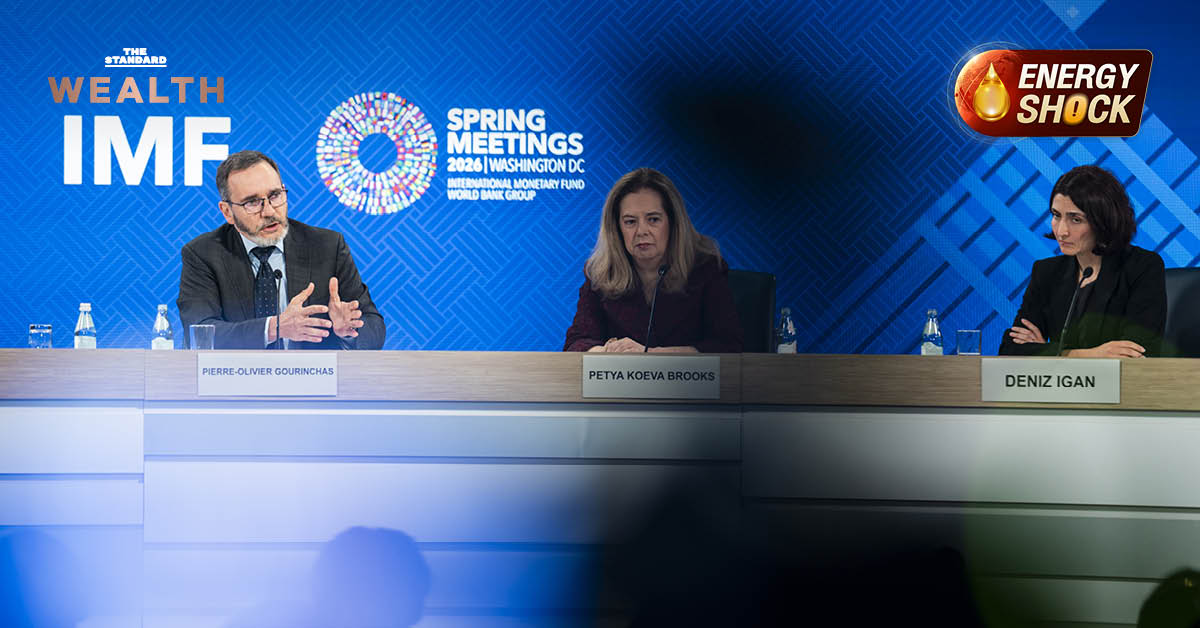
The international community is now looking toward the IMF Spring Meetings 2026 for more definitive guidance and potential policy coordination to mitigate these shocks via IMF. The focus will likely remain on how to prevent a full-scale global recession if the conflict continues to escalate or if the energy chokepoints in the Middle East are compromised.
World Today Journal will continue to monitor the IMF’s updates and the evolving situation in the Middle East. We invite our readers to share their perspectives on how these global shifts are affecting their local economies in the comments below.
Related reading