
The global economic landscape is facing a period of significant instability as the International Monetary Fund (IMF) issues warnings regarding the fragility of international growth and the looming threat of energy volatility. With geopolitical tensions mounting, particularly in the Middle East, the IMF has signaled that the world is navigating a precarious path that could lead to severe economic disruptions.
Central to these concerns is the potential for a systemic energy shock. The IMF has cautioned that the global community is perilously close to a major energy crisis, which could stifle economic recovery and exacerbate inflationary pressures across both developed and emerging markets. This volatility is closely tied to ongoing conflicts and the stability of critical supply chains.
For Italy, the outlook remains subdued. Recent data indicates a trend of stagnant or modest growth, with the IMF confirming a growth rate of +0.7% for 2024 via Il Giornale d’Italia. Although some sectors, such as the furniture industry, demonstrate resilience in exports, the broader macroeconomic picture suggests a challenging road ahead for the Eurozone and its member states.
As we analyze these projections, the intersection of energy security and GDP growth becomes the primary focal point for policymakers. The risk is not merely a dip in percentages, but a fundamental shift in how global trade and energy consumption are managed in an era of persistent geopolitical friction.
IMF Growth Projections and the Global Economic Slowdown
The International Monetary Fund has revised its outlook for global economic performance, reflecting the impact of instability in the Middle East. According to reports, the IMF has lowered its 2026 global GDP forecast to 3.1% via ANSA. This downward adjustment underscores the fragility of the current recovery and the high sensitivity of global markets to regional conflicts.
The “best-case scenario” currently envisioned by the fund suggests that global growth will slow to 3.1% by 2026 via Il Sole 24 Ore. This suggests that even under favorable conditions, the momentum of the post-pandemic recovery is waning, hampered by high interest rates and the lingering effects of energy price spikes.
In the Eurozone, the trajectory is similarly cautious. Projections indicate that the area should close 2024 with a growth rate of 0.8%, which is slightly lower than calculations made three months prior via Il Giornale d’Italia. However, a slight acceleration is anticipated for 2025, with growth expected to reach +1.2%.
Italy’s Economic Outlook: A Detailed Breakdown
Italy continues to struggle with low growth figures, reflecting broader structural issues within the Italian economy. Various international and national institutions provide a range of projections for the coming years, illustrating the uncertainty surrounding the country’s fiscal trajectory.
According to data compiled by Istat, the Italian National Institute of Statistics, the IMF’s projections for Italy’s GDP growth are as follows via Istat:
- 2025: 0.7%
- 2026: 0.7%
- 2027: 1.3%
These figures contrast with other institutional forecasts. For instance, the OECD projected a more conservative growth of 0.4% for 2025, rising to 0.6% in 2026, and 0.8% in 2027 via Istat. Meanwhile, the European Commission offered a slightly more optimistic view, forecasting 0.8% growth for both 2025 and 2026, reaching 1.4% by 2027 via Istat.
The discrepancy between these figures highlights the volatility of the economic environment. The Italian Ministry of Economy and Finance (MEF) had previously projected a 0.7% growth rate for 2025 in its October 2025 documents via Istat, while Istat’s own December 2025 projections placed the 2025 growth at 0.5%, rising to 0.8% in 2026 via Istat.
| Institution | 2025 | 2026 | 2027 |
|---|---|---|---|
| IMF (Jan 2026) | 0.7 | 0.7 | 1.3 |
| OECD (Mar 2026) | 0.4 | 0.6 | 0.8 |
| European Commission | 0.8 | 0.8 | 1.4 |
| Istat (Dec 2025) | 0.5 | 0.8 | — |
The Energy Crisis and Geopolitical Risks
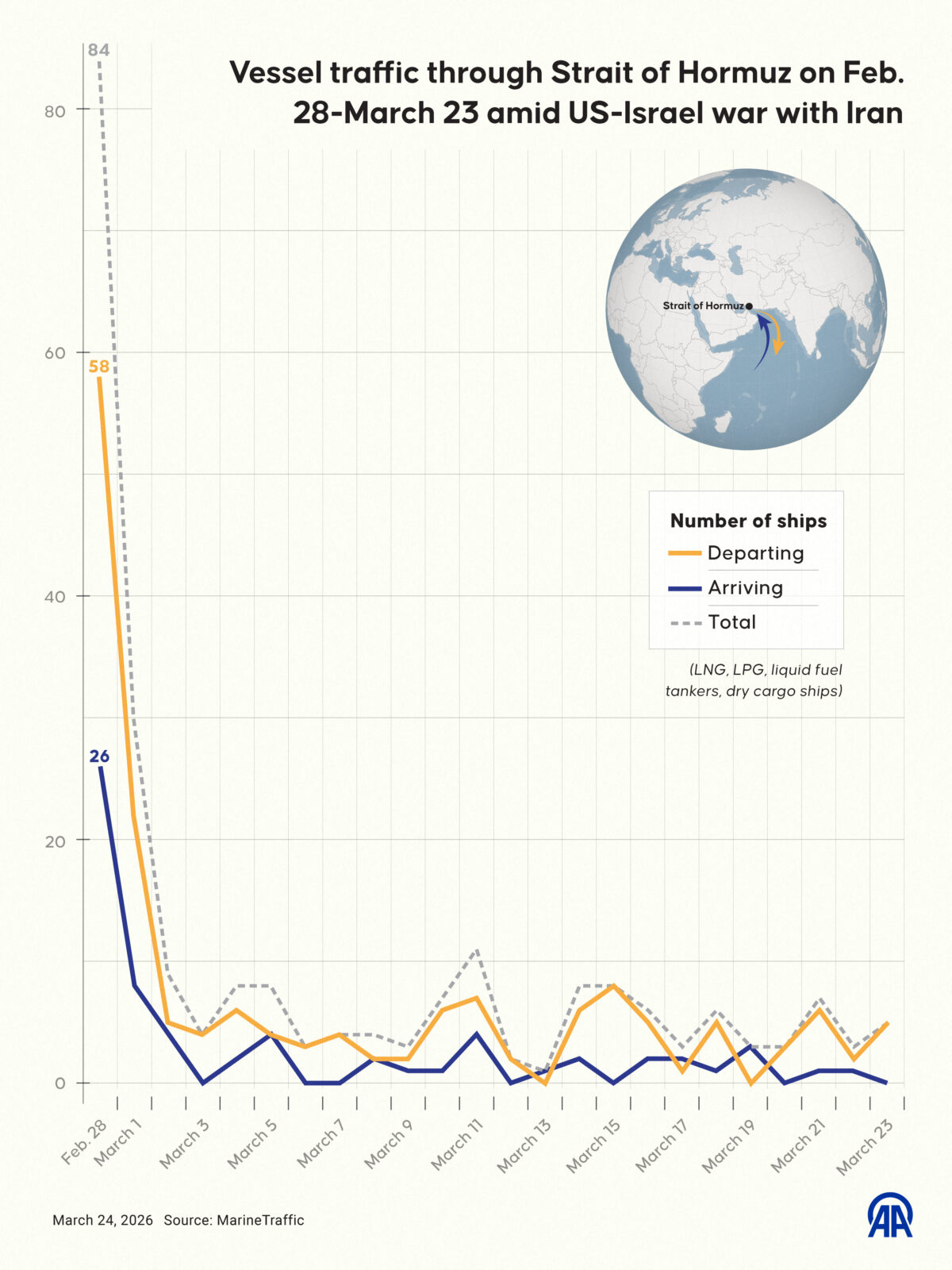
The IMF’s alarm regarding a “modern energy crisis” is rooted in the fragility of global oil and gas distribution. The conflict in the Middle East is cited as a primary driver of this risk, with the potential to disrupt shipping lanes and production capacities via ANSA. Such disruptions typically lead to a “boom” in oil prices, which, while benefiting producers, acts as a tax on global consumption and an anchor on economic growth.
When energy costs spike, the ripple effect is felt across all sectors. Manufacturing costs increase, transportation becomes more expensive, and consumer purchasing power declines. This creates a “recessionary specter” where the cost of energy effectively sinks growth, potentially pushing vulnerable economies into a full-scale downturn.
The IMF’s warnings emphasize that the world is not merely facing a price fluctuation, but a systemic risk where the availability of energy could become a critical bottleneck for industrial production and societal stability. This represents particularly concerning for Europe, which is still transitioning its energy dependencies following the disruptions caused by the conflict in Ukraine.
Russia’s Economic Resilience
Interestingly, while much of the world struggles, the IMF has revised its growth estimates for Russia upward. For 2024, the IMF expects Russia’s growth to reach 3.6% via Il Giornale d’Italia. This resilience is often attributed to the Russian state’s ability to pivot its trade toward Asian markets and the continued demand for its energy exports despite international sanctions.
This divergence—where a sanctioned economy grows faster than several G7 nations—highlights the complex nature of the current global economic order. It suggests that the “weaponization” of energy and trade is creating new, fragmented economic blocs, further complicating the IMF’s efforts to stabilize global growth.
What This Means for the Global Economy
The combination of slowing GDP growth and the threat of an energy crisis creates a challenging environment for entrepreneurship and investment. Businesses are facing a “triple threat”: high borrowing costs, unpredictable energy inputs, and dampened consumer demand.
For the average global citizen, this translates to persistent inflation in the cost of living. When the IMF warns of an energy crisis, it is effectively warning of a period where heating, electricity, and fuel could become prohibitively expensive, further straining household budgets already impacted by the post-pandemic inflationary wave.
The path forward requires a dual strategy: accelerating the transition to sustainable energy to reduce dependence on volatile fossil fuel markets, and implementing fiscal policies that protect the most vulnerable from price shocks without fueling further inflation.
Key Takeaways for Stakeholders
- Global GDP: The IMF has lowered the 2026 global growth forecast to 3.1%, citing Middle East tensions.
- Energy Risk: The world is warned of a potential “modern energy crisis” that could disrupt global economic stability.
- Italy’s Position: Growth remains low, with forecasts for 2025 and 2026 hovering between 0.4% and 0.8% depending on the institution.
- Eurozone Trend: A modest 0.8% growth is expected for 2024, with a projected rise to 1.2% in 2025.
- Russia’s Growth: Contrasting with the West, Russia’s 2024 growth is revised upward to 3.6%.
The next critical milestone for monitoring these trends will be the subsequent IMF World Economic Outlook report, which will provide updated data on whether the risks in the Middle East have materialized into a full-scale energy shock or if the global economy has managed to absorb the volatility.
We invite our readers to share their perspectives on how energy volatility is affecting their local businesses in the comments below.
Keep reading