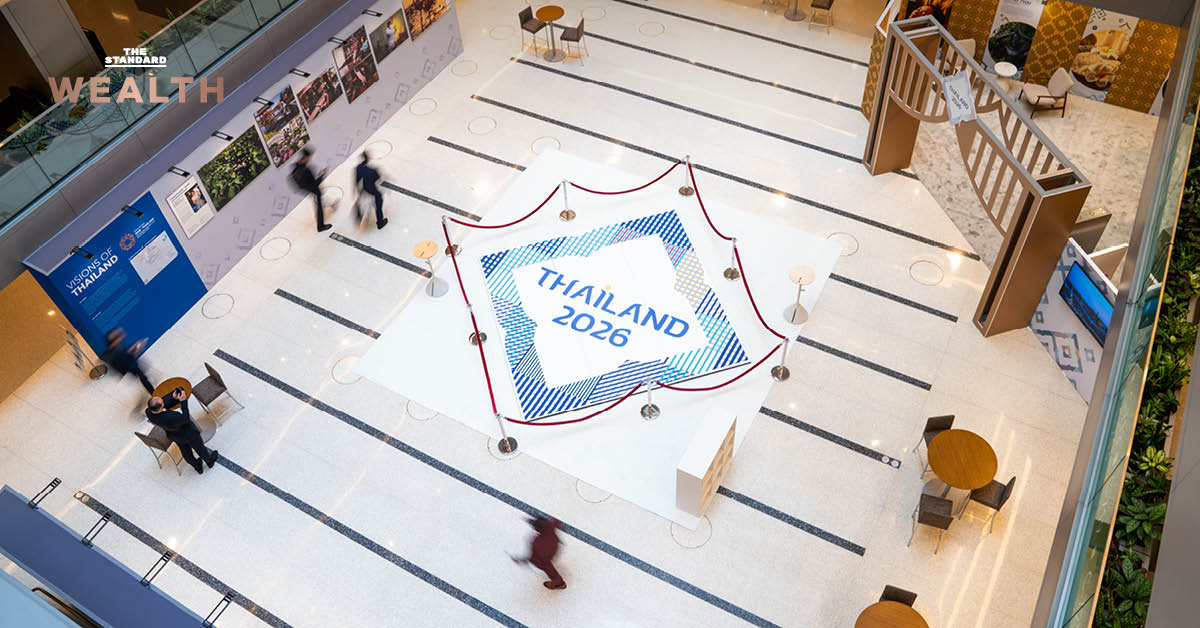
The International Monetary Fund (IMF) has significantly lowered its outlook for the Thai economy, projecting an IMF Thailand GDP growth forecast of just 1.5% for 2026. This figure marks the slowest growth rate among all nations in the Association of Southeast Asian Nations (ASEAN), sparking concerns over the kingdom’s long-term economic resilience in an increasingly volatile global market.
This downward revision comes at a time when the global economy is grappling with systemic instability. The IMF has warned that the risk of a global recession remains elevated if ongoing international conflicts continue to prolong, creating a precarious environment for export-dependent economies like Thailand. The projection of 1.5% growth highlights a stark contrast to the more robust trajectories seen in neighboring Southeast Asian markets, positioning Thailand as a regional laggard in economic expansion.
The economic pressure is not limited to regional dynamics but is deeply intertwined with broader geopolitical friction. From escalating tensions in the Middle East to the shifting trade paradigms between the United States and China, the headwinds facing the Thai economy are multifaceted. As the world moves toward a new era of economic measurement and geopolitical realignment, the traditional reliance on GDP as the sole indicator of success is being questioned by the very institutions providing these forecasts.
The ASEAN Economic Outlook: Thailand’s Growth Lag
The revelation that Thailand is expected to be the slowest growing economy in Southeast Asia by 2026 underscores a deepening structural challenge. While other ASEAN members have managed to pivot more effectively toward emerging industries or leverage stronger domestic consumption, Thailand’s growth has remained sluggish. The 1.5% forecast is a critical signal to policymakers that current economic strategies may be insufficient to maintain competitiveness within the region.
This stagnation is occurring against a backdrop of wider institutional updates. The IMF and World Bank’s April 2026 Update emphasizes that regional outlooks are being heavily influenced by global volatility, though Thailand’s specific dip to 1.5% suggests internal vulnerabilities combined with external shocks.
For a nation heavily reliant on tourism and manufacturing exports, the unhurried growth forecast reflects a failure to fully recover or adapt to the “new normal” of global trade. The ASEAN economic outlook generally remains positive for other member states, making Thailand’s position particularly concerning for investors and regional trade partners.
Geopolitical Volatility and Global Recession Risks
The IMF’s cautious stance on Thailand cannot be viewed in isolation from the current state of global geopolitics. A primary driver of economic uncertainty is the escalating tension surrounding the Strait of Hormuz and the ongoing friction between the United States, China, and Iran. The potential for a global recession is heightened by the risk of supply chain disruptions in these critical maritime corridors.
Recent escalations include the United States increasing pressure on Tehran by ending oil sanctions waivers, a move designed to isolate the Iranian government. Such maneuvers often lead to increased volatility in energy prices, which directly impacts the operational costs of industries across Southeast Asia. When coupled with the “China vs. Trump” dynamic—characterized by strategic blockades and trade wars—the resulting global trade instability creates a ripple effect that suppresses GDP growth in emerging markets.
The risk of a global recession is further compounded by the persistence of war. The IMF has explicitly noted that prolonged conflict keeps inflation high and investment low, forcing countries to divert resources from growth-oriented infrastructure to defensive or emergency spending. For Thailand, these external shocks manifest as reduced demand for exports and increased costs for imported energy, further squeezing the projected 1.5% growth margin.
Institutional Shifts: Beyond GDP and Climate Finance
As the IMF and World Bank release these sobering figures, there is an internal debate within these institutions about how economic health should be measured. There is a growing movement to introduce new indicators that move beyond GDP to better reflect quality of life, environmental sustainability, and social equity. This shift suggests that while the 1.5% figure is the current benchmark, the definition of “growth” itself is evolving.
However, this evolution is meeting political resistance. The United States has recently urged the IMF and World Bank to abandon certain climate finance goals, reflecting a shift in U.S. Priorities toward immediate economic stability over long-term environmental mandates. This tension between global sustainability goals and national economic interests creates a fragmented approach to international finance.
the accuracy of these forecasts has reach under scrutiny. Some U.S. Officials, including Bessent, have disparaged IMF and World Bank forecasts, suggesting that the U.S. Economy will cycle through higher prices more quickly than the institutions predict. This skepticism highlights a growing divide between the “technocratic” projections of the IMF and the “political” economic views of major superpowers. For a country like Thailand, Which means that while the 1.5% forecast is the official line, the actual outcome may be swayed by the unpredictable policy shifts of the U.S. And China.
Key Economic Drivers and Risks
| Factor | Impact on GDP | Primary Driver |
|---|---|---|
| Regional Competition | Negative | Slowest growth in ASEAN |
| Energy Costs | Negative | Strait of Hormuz tensions/Iran sanctions |
| Global Trade | Mixed/Negative | US-China trade frictions |
| Institutional Metrics | Neutral | Shift from GDP to new indicators |
What This Means for Stakeholders
The projected growth of 1.5% has immediate implications for several key groups:
- Investors: The “slowest in ASEAN” label may lead to a reallocation of capital toward more dynamic neighbors like Vietnam or Indonesia, potentially increasing the cost of borrowing for Thai firms.
- Policymakers: There is an urgent need to diversify the economy away from traditional exports and tourism, focusing instead on high-tech industries or digital economy integration to break the low-growth cycle.
- Local Businesses: Compact and medium enterprises (SMEs) may face tighter credit conditions and reduced consumer spending as the broader economic outlook remains bleak.
- Global Trade Partners: Thailand’s stagnation may signal a shift in supply chain reliability, prompting partners to seek more resilient alternatives within the region.
The broader question is whether the IMF Thailand GDP growth forecast is a permanent ceiling or a temporary dip. If the global economy avoids a full-scale recession and geopolitical tensions in the Middle East subside, there may be room for an upward revision. However, the current trajectory suggests that without significant structural reform, Thailand risks a “lost decade” of stagnant growth.
The shift toward new economic indicators mentioned by the World Bank and IMF could provide a different perspective. If Thailand can lead in areas like social wellbeing or green transition—despite the U.S. Push against climate finance—it may find a new way to define progress that isn’t captured by the 1.5% GDP figure.
As we look toward the remainder of 2026, the focus will remain on the interplay between international sanctions, maritime security in the Hormuz region, and the ability of the Thai government to implement aggressive growth strategies. The world is watching to see if the kingdom can defy the IMF’s projections or if it will remain the anchor dragging down the ASEAN average.
The next major checkpoint for these projections will be the IMF’s subsequent quarterly review, where updated data on global trade volumes and energy prices will likely trigger another revision of the regional outlooks.
Do you believe the IMF’s projections accurately reflect Thailand’s potential, or are geopolitical risks being overemphasized? Share your thoughts in the comments below.
- US Running Low on Key Missiles as Iran War Drags On
- Trump Slams US Ammo Shortage Reports Amid Iran Conflict as He Denies Pentagon Rifts
- Fittipaldi Warns of Russell-Antonelli Rivalry at Mercedes (archynewsy.com)
- Canter Warns Acting Attorney General Blanche May Weaponize Justice Department (newsdirectory3.com)