
Projected trends in state-level adult obesity prevalence across diverse racial and ethnic groups in the United States remain a focal point for public health policy, particularly as researchers debate the long-term impact of emerging medical interventions. While long-term forecasts through 2035 provide a baseline for understanding the trajectory of the obesity epidemic, recent shifts in the clinical landscape—specifically the increased utilization of glucagon-like peptide-1 receptor agonists (GLP-1 RAs)—have introduced new variables that challenge historical modeling methods. Understanding these projections requires a careful look at how demographic data, socioeconomic factors, and pharmaceutical access intersect in the American healthcare system.
The prevalence of obesity in the United States is measured by the Body Mass Index (BMI), a screening tool defined as a person’s weight in kilograms divided by the square of height in meters. According to the Centers for Disease Control and Prevention (CDC), obesity is categorized as a BMI of 30.0 or higher. Public health experts track these metrics by race and ethnicity to identify disparities in health outcomes, as obesity is a known risk factor for chronic conditions including type 2 diabetes, heart disease, and certain types of cancer.
The Role of Historical Trends in Obesity Forecasting
Most predictive modeling regarding obesity is built upon longitudinal data, which tracks changes in population health over decades. By analyzing past trends, researchers can estimate future prevalence rates at both the national and state levels. However, as noted in academic discourse regarding these models, such forecasts are generally predicated on the assumption that past behaviors and environmental factors will continue to influence health outcomes in a relatively linear fashion.
These models are essential for state governments and health departments as they allocate funding for preventative programs, nutrition assistance, and community exercise initiatives. The National Institute of Diabetes and Digestive and Kidney Diseases (NIDDK) notes that obesity prevalence is not uniform across the country, with significant variations observed based on geographic location, income level, and racial or ethnic identity. When models fail to account for sudden shifts in medical technology or clinical practice, their accuracy in predicting the long-term health landscape may be limited.
Impact of GLP-1 Receptor Agonists on Public Health
The emergence of GLP-1 RAs—a class of medications originally developed for the management of type 2 diabetes—has significantly altered the approach to weight management. Drugs such as semaglutide and tirzepatide have demonstrated clinical efficacy in reducing body weight, leading to a surge in prescribing patterns. The U.S. Food and Drug Administration (FDA) has approved specific formulations of these medications for chronic weight management in adults with obesity or overweight conditions accompanied by at least one weight-related comorbidity.
The integration of these medications into the standard of care presents a potential “disruptor” to historical obesity forecasts. If a significant portion of the population gains access to and effectively utilizes these therapies, the trajectory of obesity prevalence may deviate from models based solely on historical trends. However, access remains a critical hurdle. High costs, insurance coverage variability, and ongoing supply chain challenges mean that the real-world impact of these drugs on population-level obesity statistics is still being analyzed by health economists and epidemiologists.
Addressing Health Disparities in Obesity Prevalence
Forecasting models must account for the reality that obesity does not affect all groups equally. Data from the National Center for Health Statistics consistently shows that non-Hispanic Black and Hispanic adults often experience higher age-adjusted prevalence of obesity compared to non-Hispanic White and non-Hispanic Asian adults. These disparities are often linked to a complex web of factors including food insecurity, neighborhood safety, access to affordable healthcare, and systemic barriers to physical activity.
Effective public health policy requires more than just clinical intervention; it necessitates addressing the social determinants of health. When health experts review long-term projections, they emphasize that even if pharmacological solutions become more accessible, the root causes of obesity—such as the prevalence of ultra-processed foods and limited access to fresh produce in “food deserts”—must remain a priority for legislative and community-based action. Future updates to state-level forecasts will likely need to integrate these socioeconomic variables alongside pharmaceutical uptake rates to provide a more nuanced outlook for 2035.
Next Steps for Data Monitoring
The scientific community remains committed to refining these models as new data becomes available. The next major update in surveillance data is expected via the Behavioral Risk Factor Surveillance System (BRFSS), which provides the primary source of state-level data on obesity prevalence in the United States. Researchers and policymakers are encouraged to monitor these annual updates to assess how current interventions, including the evolving use of weight-management medications, correlate with changes in population health.
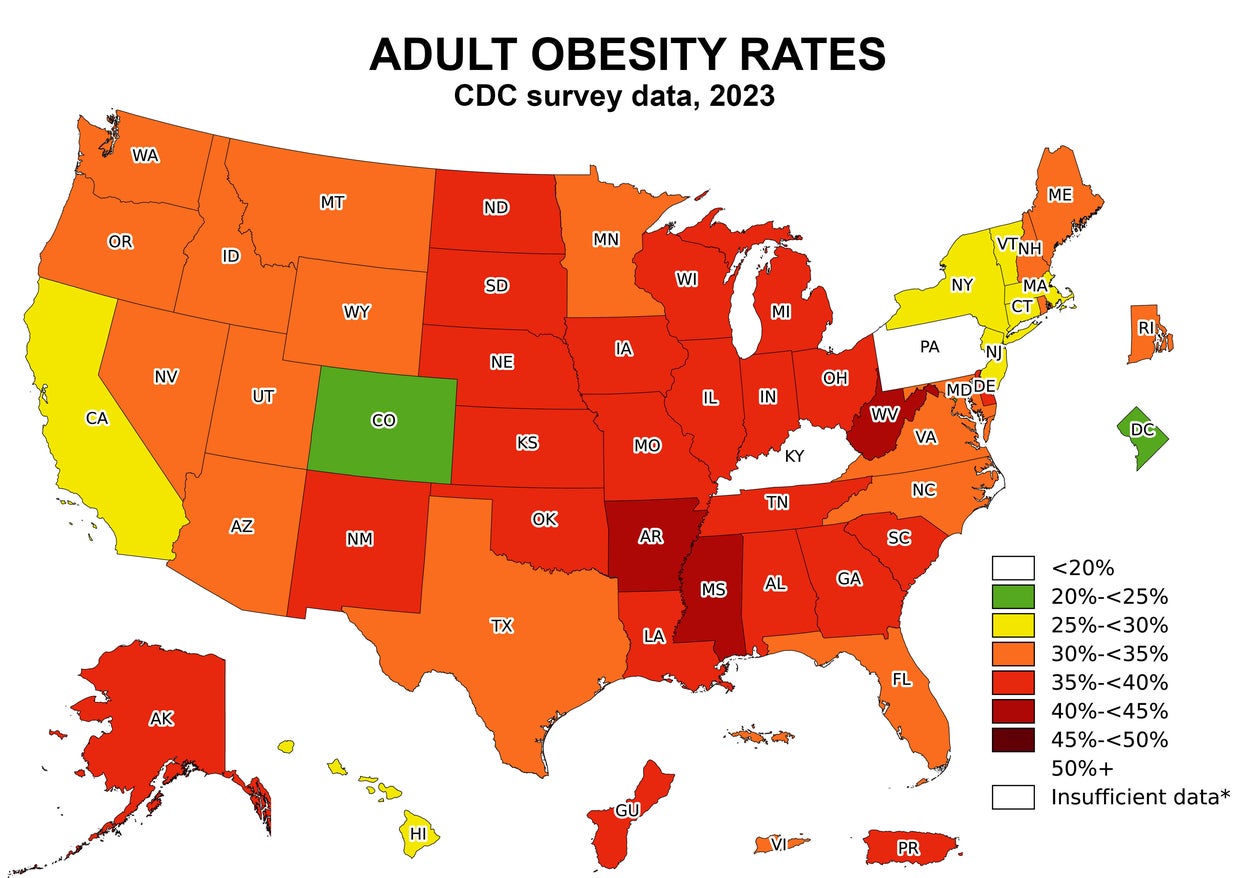
As the conversation around obesity management continues to evolve, readers are encouraged to consult official resources from the CDC and local health departments for the most current data regarding their specific regions. For further analysis on health policy and medical research, stay connected with our health reporting section. We welcome your thoughts on how public health initiatives can better address these disparities; please feel free to share your perspectives in the comments section below.