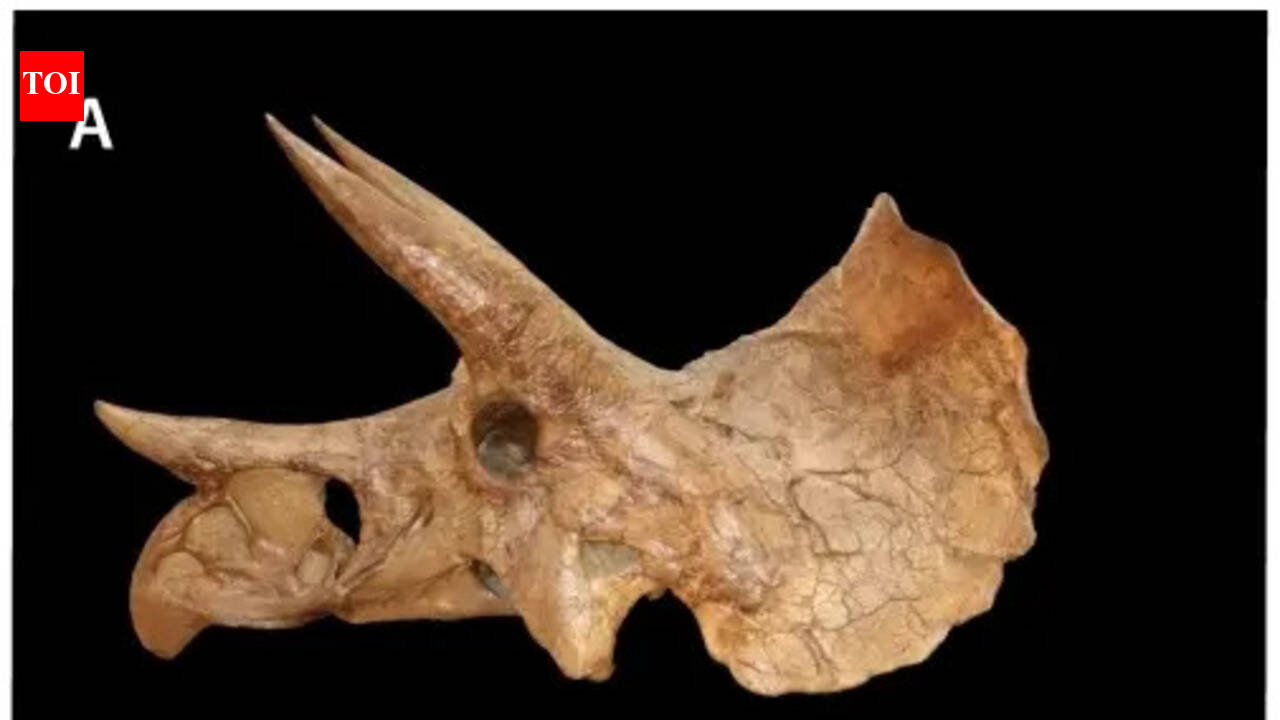
In the late summer of 2017, a routine construction project in Thornton, Colorado, took an unexpected turn into the prehistoric past. What began as a commercial development excavation evolved into a significant paleontological recovery operation, unearthing a rare fossilized skeleton that provided scientists with a rare window into the Late Cretaceous period. While initial assessments on-site led workers to believe they had discovered the remains of a common Triceratops, subsequent professional analysis confirmed a more scientifically significant find: a Torosaurus.
The discovery was made at a site earmarked for the construction of a new public safety facility, prompting an immediate halt to construction activities. According to the Denver Museum of Nature & Science, which led the excavation and preservation efforts, the fossilized specimen was found to be remarkably intact, comprising approximately 80 per cent of the skull and 15 per cent of the skeleton. This level of preservation is considered highly unusual for a Torosaurus, a creature often overshadowed by its more famous relative, the Triceratops, despite being one of the largest horned dinosaurs to roam the Earth.
The Scientific Significance of the Thornton Torosaurus
The Torosaurus is a genus of ceratopsid dinosaur characterized by its massive, elongated skull, which featured two large openings, or fenestrae, in the bone. Paleontologists at the Denver Museum of Nature & Science noted that the Thornton find was particularly important due to its completeness and the specific geological context in which it was buried. The skeleton was located within the Denver Formation, a rock layer that has provided researchers with essential data regarding the ecosystem that existed just before the mass extinction event that ended the age of the dinosaurs.

Because the specimen was found in such a densely populated urban area, the recovery process required coordination between city officials and the museum’s paleontology team. Excavation crews worked alongside scientists to carefully extract the fossils, ensuring the surrounding sediment remained stable. The City of Thornton officially cooperated with the museum to facilitate the scientific research, effectively turning a construction delay into a major regional educational opportunity.
Understanding the Torosaurus vs. Triceratops
For decades, a spirited debate has existed within the paleontology community regarding the relationship between the Torosaurus and the Triceratops. Some researchers have hypothesized that Torosaurus fossils might actually represent older, more mature individuals of the Triceratops species rather than a distinct genus. However, the discovery of specimens like the one found in Thornton continues to provide researchers with the physical evidence needed to analyze cranial growth patterns and bone density.
The Thornton specimen, often cited by the Denver Museum of Nature & Science as one of the most complete of its kind ever recovered in Colorado, remains a cornerstone of the museum’s ongoing research. By studying the skull’s dimensions and the specific wear patterns on the teeth, paleontologists can better understand the diet, growth stages, and social behaviors of these massive herbivores. The museum provides extensive resources on these findings through their paleontology research portal, where they catalog the evolution of dinosaur science in the Rocky Mountain region.
Legacy of the 2017 Discovery
The 2017 event serves as a reminder of the prehistoric history hidden beneath the modern infrastructure of the American West. The transition from a construction site to a dig site underscores the importance of municipal protocols that mandate archaeological assessments when major earthworks are initiated. The Thornton specimen was eventually moved to the museum’s climate-controlled laboratories, where it underwent extensive cleaning, stabilization, and reconstruction.

Today, the findings continue to influence regional understanding of the Hell Creek and Denver formations. Visitors to the Denver Museum of Nature & Science can view displays and educational materials related to Colorado’s prehistoric past, often featuring insights derived from the Thornton find. The project stands as a successful model for how local government and scientific institutions can collaborate to preserve natural history without compromising necessary urban development.
For those interested in the most recent updates regarding the curation of this specimen or upcoming public exhibits featuring the Thornton Torosaurus, the Denver Museum of Nature & Science exhibition schedule provides the most reliable information. We encourage our readers to share their thoughts or experiences with local historical discoveries in the comments section below.
Keep reading