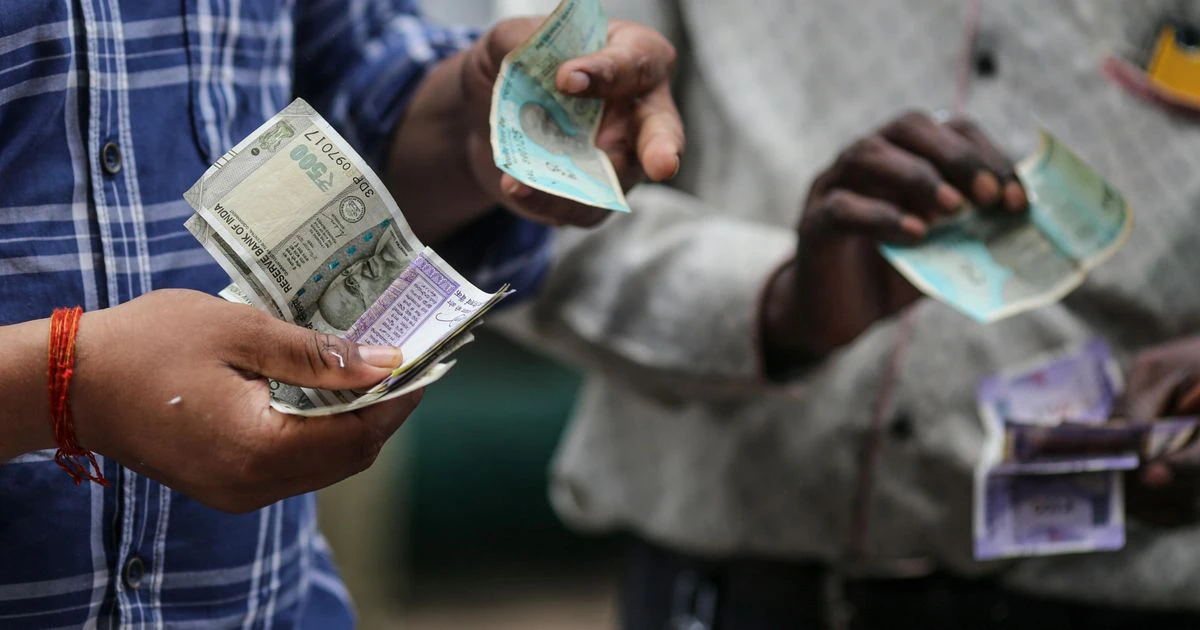
Indian Sovereign Bonds Face Record Outflows Amid Rupee Weakness & Rate Cut Uncertainty
By bhaskar Dutta, Financial Markets Analyst
Indian sovereign bonds accessible to global investors are experiencing unprecedented selling pressure in December, marking the largest monthly outflow since the Fully accessible Route (FAR) was established in 2020. this trend is driven by a confluence of factors, including a weakening Indian Rupee adn growing expectations that the Reserve Bank of India (RBI) is nearing the end of its interest rate easing cycle. Understanding thes dynamics is crucial for investors navigating the evolving landscape of emerging market debt.
The December Exodus: A Deep Dive
Data from the Clearing Corporation of India reveals that global funds have offloaded approximately ₹14,300 crore (roughly $1.6 billion) worth of Indian bonds this month. This substantial outflow signals a shift in investor sentiment. Standard Chartered Plc anticipates this trend may persist in the coming months.
Several key elements are contributing to this pullback:
* Rupee depreciation: The Indian Rupee has hit a series of record lows against the US dollar, significantly diminishing returns for foreign investors. For Euro-based investors, the total return on Rupee-denominated assets has been a negative 10% year-to-date.
* Emerging Market Reallocation: Investors are actively reallocating capital to emerging markets offering higher yields and stronger currency appreciation potential. Hungary’s Forint and the Mexican Peso have delivered double-digit returns, presenting attractive alternatives.
* Carry Trade dynamics: Rajeev De Mello, Global Macro Portfolio Manager at Gama Asset Management, highlights that, factoring in carry, the Rupee is currently the worst-performing major emerging market currency, projecting this trend into 2025.
Impact on Indian Bond Markets & Borrowing costs
the selling pressure is impacting the Indian bond market, pushing it towards its largest monthly decline in four months. This is further exacerbated by substantial debt issuance from state governments. Consequently, government borrowing costs are rising, even as India faces relatively high US tariffs compared to other Asian nations.
The RBI’s signaling of potential inflationary pressures next year is also dampening expectations for further interest rate cuts. This shift in monetary policy outlook adds another layer of uncertainty for investors. The Rupee’s decline past the 91-per-dollar mark, though partially recovered through central bank intervention, underscores the currency’s vulnerability.
Year-End Positioning & Derivative Activity
Beyond macroeconomic factors, year-end profit-taking is also playing a role. Vikas Jain, Head of India Fixed Income, Currencies and Commodities Trading at Bank of America Corp., notes that investors are trimming bond holdings and increasing activity in interest rate derivative trades following a surge in swap rates. This typical year-end repositioning contributes to the overall outflow.
Looking Ahead: Potential Catalysts for a Reversal
Despite the current headwinds,several developments could potentially reverse the outflow trend and reignite foreign interest in Indian debt:
* US Trade Deal: A potential trade agreement with the US could alleviate pressure on the Rupee by reducing tariffs. Analysts at Australia and New Zealand Banking Group predict the Rupee could strengthen by as much as 1.5% to 88.5 per dollar if such an accord is reached.
* Index Inclusion: Increased inclusion of indian securities in major global bond indexes is a meaningful catalyst. India is already part of the JPMorgan Chase & co.’s emerging market gauge.
* Bloomberg Index consideration: The possibility of inclusion in the Bloomberg Global Aggregate Index next year is generating anticipation.Bloomberg Index Services Limited (BISL) has already solicited client feedback on this matter. This inclusion would likely attract substantial “real-money” flows.
Expert Perspective & long-Term Outlook
While the current outflows present a short-term challenge, the long-term fundamentals of the Indian bond market remain compelling. The FAR framework, designed to facilitate foreign investment, continues to evolve.
Though, investors must carefully monitor currency fluctuations, RBI policy decisions, and global macroeconomic developments.A proactive and informed approach is essential to navigate the complexities of the Indian bond market and capitalize on potential opportunities.
Disclaimer: I am a financial markets analyst and this content is for informational purposes onyl. It does not constitute financial advice. Investors should conduct their own due diligence and consult with a qualified financial advisor before making any investment decisions.
Key Takeaways:
* Record outflows from Indian sovereign bonds are occurring in December 2023.
Worth a look