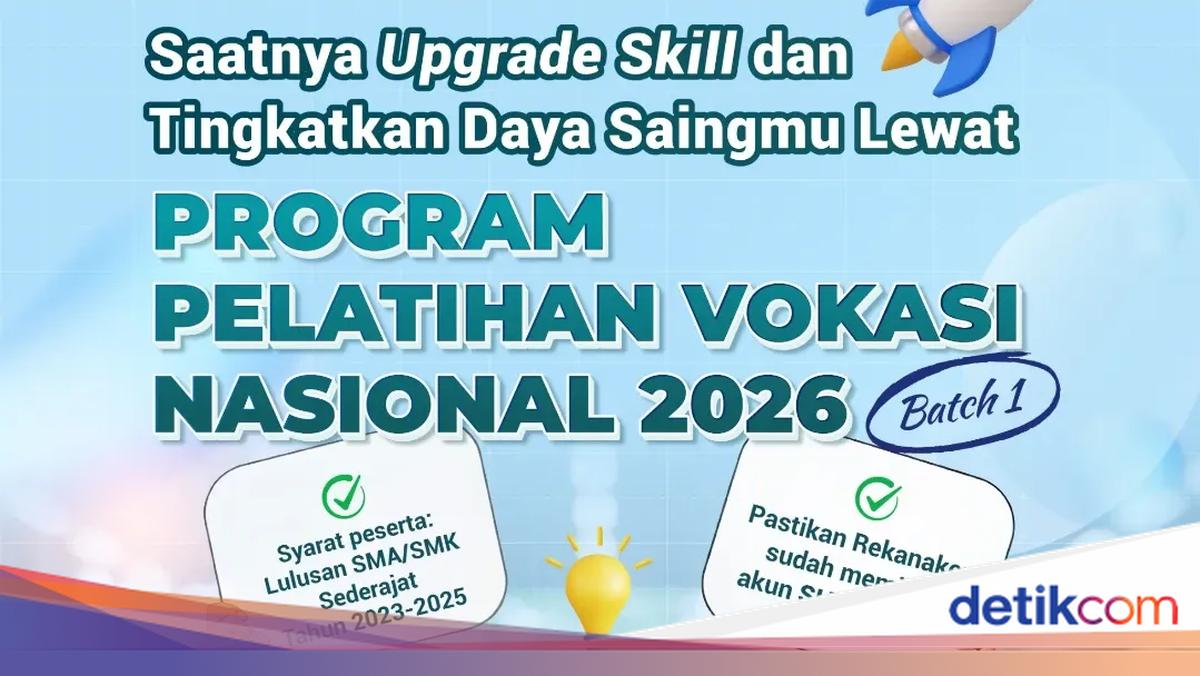
Indonesia Launches Free Vocational Training Program for Young Workers
The Indonesian government has officially launched a nationwide vocational training program aimed at bridging the skills gap between education and the demands of the labor market. The initiative, dubbed Pelatihan Vokasi Nasional 2026, will provide free training to an estimated 70,000 graduates from senior and vocational high schools annually, beginning with the first cohort this year. The program is a key component of the government’s broader strategy to prepare the workforce for the challenges and opportunities of Indonesia’s future economic growth, aligning with the ambitious “Indonesia Emas 2045” (Golden Indonesia 2045) vision.
Coordinated by the Ministry of Manpower (Kemnaker), the program offers training across 31 different vocational fields, delivered through a combination of in-person, online and hybrid learning formats. This comprehensive approach is designed to cater to diverse learning preferences and geographical constraints, ensuring accessibility for a wide range of participants. The initiative addresses a critical need for skilled labor in Indonesia, where, according to data from the Central Statistics Agency (BPS), approximately 31.05 million workers—representing nearly 21% of the national workforce of around 148 million—are graduates of senior high school. Vocational high school (SMK) graduates contribute another 20.80 million workers, or 14% of the total.
The launch of Pelatihan Vokasi Nasional 2026 underscores the government’s commitment to investing in human capital development. Coordinating Minister for Economic Affairs, Airlangga Hartarto, emphasized that the program is structured to enhance both hard and soft skills, fostering not only technical proficiency but also essential workplace attributes like discipline, work ethic, and adaptability. “The entire training series is provided free of charge by the Government,” Hartarto stated during a press conference on February 27, 2026. “This program is designed to develop work competencies, productivity, discipline, attitude, and work ethic for employment or entrepreneurship.”
Program Details and Benefits
The program will be rolled out in three batches throughout 2026, with each batch accommodating approximately 20,000 participants. Training will be conducted at 33 Technical Implementation Units of the Vocational and Productivity Training Center (UPT BPVP) and Service Units (Satpel) of the Ministry of Manpower, strategically located across various provinces throughout Indonesia. The Ministry of Education and Culture (Kemdikdasmen) estimates that approximately 3.28 million students graduated from senior and vocational high schools in the 2024/2025 academic year, highlighting the significant potential pool of beneficiaries for this initiative.
Beyond the free tuition, participants in the Pelatihan Vokasi Nasional 2026 program will receive a range of benefits designed to alleviate financial burdens and support their training journey. These include a daily transportation allowance of Rp 20,000 (approximately $1.25 USD as of February 28, 2026), accommodation for participants traveling from outside the training location, and enrollment in the Workplace Accident Insurance (JKK) and Death Insurance (JKM) programs. Upon completion of the training, participants will receive a training certificate and a competency certificate from the National Professional Certification Agency (BNSP), enhancing their credentials and employability.
The program’s emphasis on “link and match” principles is a crucial element of its design. This approach ensures that the curriculum is closely aligned with the specific needs of industries and businesses, maximizing the relevance of the training and increasing the likelihood of successful employment outcomes. The government hopes this will lead to a more skilled and adaptable workforce capable of driving Indonesia’s economic progress.
Eligible Fields of Study and Application Process
The Pelatihan Vokasi Nasional 2026 program offers a diverse array of training options, covering 31 vocational fields. These include high-demand sectors such as Information and Communication Technology, Business and Management, Tourism, Fashion, Garment and Apparel, Automotive, Housekeeping, Electrical Engineering, and Smart Farming. Additional fields include Construction, Barista training, Fisheries Cultivation, Hairdressing and Makeup, Cooking, Sewing, Vehicle Maintenance, Tour Guiding, Digital Marketing, Cybersecurity, Solar Panel Installation, Welding, Computer Numerical Control (CNC) operation, Industrial Automation, and Electric Vehicle technology.
Recognizing the priorities of President Joko Widodo’s administration, the program also includes training in areas such as the Red and White Cooperatives and Nutritious Free Meals (MBG). These initiatives reflect the government’s commitment to food security and economic empowerment at the grassroots level. With over 820 classes available, the program aims to provide a wide range of opportunities for individuals to upskill and reskill, adapting to the evolving demands of the job market.
To participate in the Pelatihan Vokasi Nasional 2026 program, applicants must meet specific eligibility criteria. They must be graduates of senior high school (SMA), vocational high school (SMK), or Islamic senior high school (MA) or equivalent, be at least 17 years old, possess an active SiapKerja account – accessible through this link – and have graduated within the past three years. Interested candidates can register through the official Skillhub portal at skillhub.kemnaker.go.id. The application process is expected to be competitive, and applicants are encouraged to apply promptly and select training programs aligned with their skills and educational background.
Looking Ahead
The launch of the Pelatihan Vokasi Nasional 2026 program represents a significant investment in Indonesia’s future workforce. By providing free, high-quality vocational training, the government aims to equip young workers with the skills and knowledge they need to succeed in a rapidly changing global economy. The success of the program will depend on effective implementation, strong collaboration between the government and industry, and ongoing monitoring and evaluation to ensure that the training remains relevant and responsive to the needs of the labor market.
The Ministry of Manpower has indicated its intention to increase the program’s quota in the future, contingent upon positive evaluations of the initial batches. This commitment suggests a long-term vision for vocational training as a cornerstone of Indonesia’s economic development strategy. As the program progresses, it will be crucial to track key metrics such as participant completion rates, employment outcomes, and employer satisfaction to assess its overall impact and identify areas for improvement.
The next key milestone for the program will be the closing of registration for the first batch of participants. Individuals interested in participating are encouraged to visit the Skillhub portal and submit their applications as soon as possible. The government is also expected to release further details regarding the training schedule and curriculum in the coming weeks.
What are your thoughts on this novel initiative? Share your comments below and let us recognize how you reckon this program will impact Indonesia’s workforce.
Related reading