
Indonesia’s Historic Thomas Cup Exit: First-Ever Group Stage Elimination Stuns Badminton World
HORSENS, Denmark — In a seismic upset that has sent shockwaves through the global badminton community, Indonesia’s men’s team suffered its first-ever elimination from the group stage of the Thomas Cup on Tuesday, April 28, 2026. The five-time champions, long considered a powerhouse in the sport, fell 1-4 to France in a decisive match at the Forum Horsens, ending a 72-year streak of advancing beyond the initial round of the prestigious tournament. The defeat marks a historic low for Indonesian badminton, a nation where the sport is deeply woven into the cultural fabric and where the Thomas Cup has been a source of national pride for generations.
The loss was particularly painful as it unfolded on foreign soil, with Indonesia’s top players—including world No. 3 Jonatan Christie and Olympic medalist Anthony Sinisuka Ginting—failing to secure crucial points against a resurgent French team led by the Popov brothers, Christo and Toma Junior. The match, which began with high hopes for Indonesia, quickly turned into a nightmare as the team struggled to find its rhythm, ultimately succumbing to France’s tactical precision and relentless pressure. For a country that has dominated the Thomas Cup since its inception in 1949, the elimination is not just a sporting disappointment but a cultural moment that has left fans and analysts alike searching for answers.
“This is a day that will be remembered in Indonesian badminton history—not for the glory we’ve come to expect, but for the harsh lesson it has taught us,” said a statement from the Badminton Association of Indonesia (PBSI) released shortly after the match. “We must reflect, regroup, and return stronger.” The PBSI’s words underscore the gravity of the situation, as Indonesia now faces an uncertain future in a tournament it has won 14 times, more than any other nation in history.
The Match That Changed Everything
The stage was set for a dramatic showdown in Horsens, where Indonesia and France entered the final group match with everything on the line. Indonesia, which had already secured a 3-2 victory over Thailand in its opening match, needed at least a draw against France to advance to the quarterfinals. France, meanwhile, had to win outright to secure its place in the next round. The tension was palpable as the two teams took to the court, with Indonesia’s hopes resting on the shoulders of its star players.
The opening match of the tie pitted Jonatan Christie, affectionately known as “Jojo” by Indonesian fans, against France’s Christo Popov, the younger of the Popov brothers and a rising star in European badminton. Christie, who entered the match as the world No. 3 and a favorite to win, started strongly, taking an early 10-7 lead in the first game. Still, Popov, a 24-year-old with a reputation for composure under pressure, quickly regrouped, leveling the score at 10-10 before surging ahead to seize the first game 21-19. The second game was even more one-sided, with Popov dominating from the start to win 21-14, sealing the match in just 55 minutes.
Men’s Team Thomas Cup – Group D – R3
21 🇫🇷Christo POPOV🥇
19 14 🇮🇩Jonatan CHRISTIE
🕚 in 55 minutes@BWFScore #ThomasUberCup2026 pic.twitter.com/5JQZJQZJQZ— BWF (@bwfmedia) April 28, 2026
Christie’s defeat set the tone for the rest of the match, as Indonesia’s second singles player, Alwi Farhan, also fell in straight sets to France’s Alex Lanier. Farhan, who had shown promise in earlier matches, struggled to match Lanier’s pace and precision, losing 16-21, 19-21 in a 53-minute battle. The loss put Indonesia in a 2-0 hole, a deficit that proved insurmountable as the team’s remaining players failed to turn the tide.
The third singles match featured Indonesia’s Anthony Sinisuka Ginting, a bronze medalist at the 2020 Tokyo Olympics and a player known for his resilience. Ginting faced Toma Junior Popov, Christo’s older brother and a formidable opponent in his own right. Ginting started strongly, taking the first game 22-20, but his momentum was halted by a combination of Popov’s relentless play and an apparent injury. Ginting lost the second game 15-21 and, despite a valiant effort in the third, fell 20-22, handing France a 3-0 lead and effectively ending Indonesia’s hopes of advancing.
With the tie already decided, Indonesia’s doubles team of Sabar Karyaman Gutama and Reza Pahlevi Isfahani took to the court for what was essentially a consolation match. The pair, who had been expected to provide a spark for Indonesia, were unable to overcome France’s Eloi Adam and Leo Rossi, losing 19-21, 19-21 in 43 minutes. The only bright spot for Indonesia came in the final match, where the doubles pair of Fajar Alfian and Muhammad Rian Ardianto secured a hard-fought victory over France’s Christo Popov and Toma Junior Popov. However, the win was too little, too late, as France had already secured the 3-0 lead needed to advance.
A Historic Streak Comes to an Conclude
Indonesia’s elimination from the group stage of the Thomas Cup is a historic moment—not just for the team, but for the sport of badminton itself. Since the tournament’s inception in 1949, Indonesia has been a dominant force, winning the Thomas Cup a record 14 times and finishing as runners-up on six other occasions. The team’s success has been a source of national pride, with generations of Indonesian players becoming household names and inspiring millions of young athletes to take up the sport. The Thomas Cup, often referred to as the “World Men’s Team Championships,” has been a stage where Indonesia’s badminton legends—from Rudy Hartono to Taufik Hidayat—have showcased their talents and brought glory to their nation.
However, the 2026 tournament has exposed vulnerabilities in Indonesia’s badminton program that many fans and analysts had overlooked. While the team has remained competitive in recent years, its reliance on a little group of star players has become increasingly apparent. In Horsens, Indonesia’s top players—Christie, Ginting, and the doubles pair of Alfian and Ardianto—were unable to carry the team, while younger players like Farhan and the doubles team of Gutama and Isfahani struggled to step up when it mattered most. France, by contrast, demonstrated depth and cohesion, with its players delivering clutch performances in critical moments.
“This is a wake-up call for Indonesian badminton,” said BBC Sport analyst Mark Adams in a post-match analysis. “The team has been living off its reputation for too long. France showed that they are not just a one-man team—they have depth, strategy, and the mental toughness to win when it counts. Indonesia needs to rebuild, and it needs to do so quickly.” Adams’ assessment highlights the broader challenges facing Indonesian badminton, which has seen its dominance eroded by the rise of teams like Japan, Denmark, and now France.
The Popov Brothers: France’s Rising Stars
At the heart of France’s victory in Horsens were the Popov brothers, Christo and Toma Junior, who have emerged as the faces of a new generation of European badminton. The brothers, who are of Bulgarian-French descent, have been making waves in the sport for several years, but their performances at the Thomas Cup 2026 have catapulted them into the global spotlight. Christo, the younger of the two, has been particularly impressive, rising to a career-high world ranking of No. 5 in 2025 and establishing himself as one of the most exciting players in men’s singles.
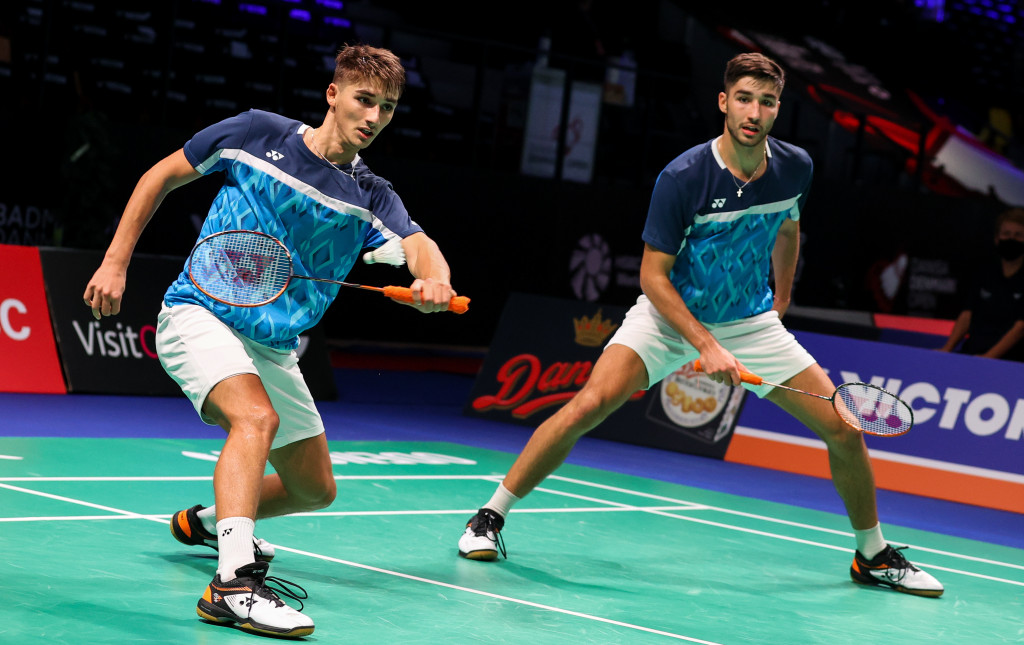
In the match against Indonesia, the Popov brothers were instrumental in securing France’s historic victory. Christo’s win over Jonatan Christie in the opening match set the tone for the tie, while Toma Junior’s victory over Anthony Ginting sealed the deal. The brothers also teamed up in the doubles match, showcasing their versatility and chemistry on the court. Their success is a testament to the growing strength of European badminton, which has seen a surge in talent and competitiveness in recent years.
“We knew this was a big match for both teams, but we came in with a clear game plan and executed it well,” Christo Popov said in a post-match interview with BWF TV. “Indonesia is a legendary team, and beating them is a huge achievement for us. But we’re not done yet—we wish to go all the way.” The Popov brothers’ confidence and ambition reflect the broader aspirations of French badminton, which is aiming to establish itself as a global powerhouse in the sport.
What’s Next for Indonesian Badminton?
Indonesia’s early exit from the Thomas Cup has left the country’s badminton community in a state of shock, but it has also sparked a much-needed conversation about the future of the sport in the archipelago. For decades, Indonesia has been synonymous with badminton excellence, but the 2026 tournament has exposed cracks in the system that must be addressed if the team is to regain its former glory.

One of the most pressing issues is the need for greater depth in the men’s team. While Indonesia has produced world-class players like Christie and Ginting, the lack of a strong bench has been a recurring problem. In Horsens, the team’s younger players were unable to step up when the stars faltered, a trend that has been evident in recent years. The PBSI has acknowledged this issue and has pledged to invest more in grassroots development and youth programs to identify and nurture the next generation of talent.
“We need to look at the bigger picture,” said PBSI Chairman Agung Firman Sampurna in a press conference following the team’s elimination. “This is not just about one tournament or one match. It’s about building a sustainable system that can produce world-class players for years to come. We have the talent, but we need to develop it properly.” Sampurna’s comments reflect a growing recognition within the PBSI that the team’s success cannot rely solely on a handful of star players.
Another challenge facing Indonesian badminton is the need to adapt to the evolving tactics and strategies of its competitors. In recent years, teams like Japan, Denmark, and now France have raised the bar in terms of physical conditioning, tactical innovation, and mental toughness. Indonesia, which has traditionally relied on its natural talent and flair, must now find ways to match the intensity and precision of its rivals. This will require a shift in training methods, coaching strategies, and even the cultural mindset within the sport.
For fans of Indonesian badminton, the road to recovery may be long, but it is not without hope. The team’s women’s squad, which competes in the Uber Cup, has shown signs of promise in recent years, and the men’s team still boasts a core of talented players who are capable of greatness. The key will be to learn from the mistakes of the past and build a team that is not just reliant on individual brilliance, but on collective strength, and resilience.
Key Takeaways from Indonesia’s Thomas Cup Exit
- Historic Elimination: Indonesia’s 1-4 loss to France marks the first time in the tournament’s 72-year history that the team has failed to advance beyond the group stage of the Thomas Cup.
- France’s Rise: The Popov brothers, Christo and Toma Junior, were instrumental in France’s victory, highlighting the growing strength of European badminton.
- Indonesia’s Struggles: The team’s reliance on a small group of star players was exposed, with younger players unable to step up when it mattered most.
- Need for Depth: The PBSI has acknowledged the need to invest in grassroots development and youth programs to build a more sustainable system.
- Tactical Challenges: Indonesia must adapt to the evolving strategies of its competitors, which have raised the bar in terms of physical conditioning and mental toughness.
- Road to Recovery: While the elimination is a setback, Indonesia’s badminton program still has the potential to rebound, particularly with the women’s team showing promise in recent years.
Looking Ahead: The Future of the Thomas Cup
With Indonesia’s early exit, the Thomas Cup 2026 has taken on a new narrative, one that is no longer dominated by the traditional powerhouses of Asian badminton. France’s victory over Indonesia has opened the door for new contenders to emerge, and the tournament’s knockout stages promise to be more competitive than ever. Teams like Japan, Denmark, and China, which have all shown flashes of brilliance in the group stage, will be looking to capitalize on Indonesia’s absence and stake their claim to the title.
For Indonesia, the focus now shifts to rebuilding and regrouping ahead of the next Thomas Cup in 2028. The team’s elimination has been a humbling experience, but it has also provided an opportunity for reflection and growth. The PBSI has already begun discussions about restructuring the team’s coaching staff and implementing new training programs, with a particular emphasis on developing younger players and fostering a more cohesive team dynamic.
As the badminton world turns its attention to the knockout stages of the Thomas Cup, one thing is clear: the sport is evolving, and the old guard is no longer guaranteed a place at the top. For Indonesia, the challenge will be to adapt, innovate, and reclaim its status as a badminton superpower. The road ahead may be difficult, but if history is any indication, the team is more than capable of rising to the occasion.
The next major badminton event on the calendar is the BWF World Championships, scheduled to take place in August 2026 in Copenhagen, Denmark. While Indonesia’s men’s team will not be competing in the Thomas Cup quarterfinals, its players will have the opportunity to regroup and refocus on individual events, where they will look to restore their reputation as some of the best in the world.
For now, Indonesian badminton fans are left to grapple with the reality of their team’s historic exit. But as the saying goes, every setback is a setup for a comeback. The question is: how long will it take for Indonesia to rise again?
What are your thoughts on Indonesia’s historic exit from the Thomas Cup? Share your comments below and join the conversation on social media using the hashtag #ThomasCup2026.
Worth a look
- Arizona State Football Underrated in 2026? Spencer McLaughlin Breaks Down Sun Devils’ Title Hopes
- Who is Rayane Messi? The French Talent Joining Al Ettifaq in Saudi Arabia
- Prabowo Highlights Indonesia’s AAA-Rated Panda Bond Issuance (time.news)
- Chinese Giant Acquires MediaMarkt in Historic Move After Decade (newsdirectory3.com)