
An estimated 2,3 million children in Indonesia have never received a single routine vaccination, placing the country sixth globally for the highest concentration of zero-dose children, according to figures released by the Ministry of Health. Public health officials and international data show that these children lack basic protection against vaccine-preventable illnesses such as measles, polio, and diphtheria, exposing communities to severe health risks and potential outbreaks.
The disclosure was made by government health officials during a media briefing focused on catching up on zero-dose children in Bandung, West Java. Health authorities define a zero-dose child as a one-year-old infant who has not yet received the first dose of the DPT-HB-Hib or pentavalent vaccine. The accumulation of unvaccinated children highlights persistent gaps in primary healthcare delivery and regional disparities across the archipelago.
Data from the Ministry of Health and the World Health Organization indicate that the count of unvaccinated infants has climbed steadily over recent years. Government tracking recorded 372,965 unprotected children in 2023, jumping to 973,378 in 2024, and reaching 959,990 in 2025. When aggregated across these years, the total reaches the current figure of roughly 2,3 million children, according to Ministry statements covered by CNBC Indonesia.
Regional Disparities and Declining National Coverage
Beyond the raw count of zero-dose children, national immunization coverage has experienced a downward trajectory. According to data reported by Kompas, the rate of complete infant immunizations dropped from 95,3 percent in 2023 to 87,7 percent in 2024, sliding further to 80,2 percent in 2025—below the target of 90 percent.
This decline is accompanied by stark regional inequality. While provinces such as Banten, DKI Jakarta, South Sumatra, and West Java reported high completion rates, other regions face severe deficits. According to government records, Papua Pegunungan recorded a complete infant immunization coverage rate of just 4,5 percent, followed by Papua Tengah at 19,9 percent, Aceh at 33,7 percent, West Sumatra at 43,6 percent, and Southwest Papua at 44,8 percent. By April 2026, only DKI Jakarta had successfully met its monthly immunization targets.
Achieving herd immunity requires regional coverage to exceed 90 percent. When coverage drops below this level in localized clusters, the risk of disease transmission rises sharply.
Public Health Risks and Disease Outbreaks
Health officials warn that large pools of unvaccinated children directly threaten community health by triggering outbreaks of preventable diseases. Dr. Gertrudis Tandy, Head of the Infant and Child Immunization Working Group at the Ministry of Health, noted that concentrated pockets of zero-dose children lead to outbreaks of illnesses like measles and polio when herd immunity fails.
:quality(80)/https://cdn-dam.kompas.id/images/2026/05/12/af59166bf49364690ee7f8f9798bb689-20260512_110348.jpg.jpeg "Photo: kompas.id")
As an example, officials pointed to polio outbreaks in Indonesia that prompted international scrutiny. The World Health Organization documented these cases, leading foreign governments—including Saudi Arabia—to mandate polio vaccinations for Indonesian pilgrims entering their territory to prevent importation of the virus.
Deputy Health Minister Dante Saksono Harbuwono emphasized the broader human and economic toll during a field visit covered by Kompas. He stated that allowing children to remain unprotected invites preventable suffering and mortality while undermining the country’s long-term human resource development and economic productivity.
Tackling Vaccine Hesitancy and Logistical Hurdles
The Ministry of Health has identified multiple barriers contributing to the immunization gap, ranging from misinformation and vaccine hesitancy to limited healthcare personnel and supply chain constraints. Tracking down unprotected children remains a primary operational obstacle, as government registries often rely on projection data rather than exact household locations and identities.
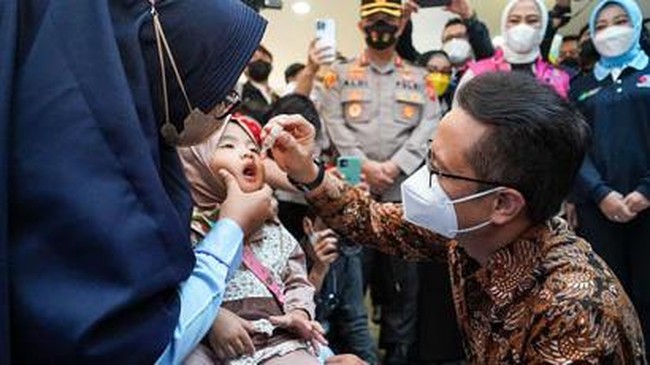
To overcome these hurdles, health authorities are urging cross-sector collaboration involving local governments, Posyandu health cadres, religious leaders, and the media. Officials stress that parental education—with a particular focus on engaging fathers in health decisions—is vital to reversing the trend. The Ministry aims to resolve the zero-dose crisis within a five-year window through targeted outreach and strengthened primary healthcare integration.
Readers seeking official health advisories and updates can monitor announcements from the Indonesian Ministry of Health. We welcome your perspectives and questions on public health initiatives—please share your thoughts in the comments below.