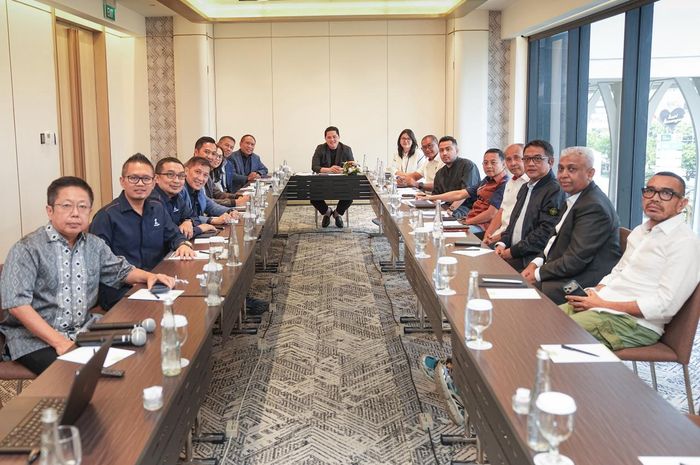
Indonesian football is preparing for a significant structural overhaul as the Football Association of Indonesia (PSSI) moves to modernize its domestic competition framework. During a strategic meeting on Wednesday, April 15, 2026, PSSI Chairman Erick Thohir revealed plans for a new football competition to be launched in the 2026/2027 season, designed to run concurrently with the existing league system.
The announcement comes as part of a broader effort to professionalize the sport’s management in the country. The new tournament is intended to complement a tiered league structure that includes the Super League as the top flight, followed by the Championship (second tier), Liga Nusantara (third tier), and Liga 4 (fourth tier). This integrated approach aims to create a more cohesive pyramid for national football development.
The roadmap for these changes was discussed during a meeting of the PSSI Executive Committee (Exco) alongside I.League. The primary focus of the session was the strengthening of national competitions, ranging from the professional tiers down to youth-level football. By finalizing regulations and programs early, PSSI and I.League intend to provide stakeholders with a more measurable and integrated planning process for the upcoming cycle via ANTARA News.
While the ambition is clear, the specific format and conceptual details of the new tournament remain under wraps. Erick Thohir noted that the association is currently finalizing the plans to ensure the competition can operate smoothly alongside the established league schedules without causing fixture congestion.
Strategic Alignment and Global Calendar Integration
A central pillar of the 2026/2027 planning is the synchronization of the domestic calendar with the international stage. PSSI and I.League are prioritizing the alignment of league dates with the national team’s agenda, as well as various local and international events. This shift is intended to eliminate conflicts between club duties and national team call-ups, fostering a more professional environment for players and coaches.
The early determination of regulations for the 2026/2027 season is described as a strategic move to ensure that all parties—from club owners to players—have a clear and predictable schedule. This level of foresight is a departure from previous seasons, where scheduling conflicts often hampered the performance of the national team in international competitions via tvOne News.
The Role of Technology in Competitive Value
As part of the push toward modernization, PSSI highlighted the continued implementation of the Video Assistant Referee (VAR). The technology is currently utilized in both the Super League and the Championship. According to the PSSI leadership, the presence of VAR has significantly increased the competitive value of these competitions by reducing officiating errors and ensuring fairer outcomes in high-stakes matches.

The New Competitive Hierarchy
To understand the impact of the new tournament, it is essential to appear at the established hierarchy that will exist alongside it. The Indonesian football pyramid is being structured as follows:
- Super League: The premier division and highest kasta of Indonesian football.
- Championship: The second-tier competition serving as the bridge to the top flight.
- Liga Nusantara: The third-tier competition focusing on regional representation.
- Liga 4: The fourth-tier, serving as the entry point for many aspiring clubs.
The new competition, while not yet named or detailed in terms of its format, will exist as a separate entity that runs parallel to these four tiers. This suggests a potential cup-style tournament or a specialized championship that provides additional match experience and revenue streams for the participating clubs.
Key Takeaways for the 2026/2027 Season
- Concurrent Competition: A new tournament will be introduced to run alongside the existing league structure.
- Tiered System: The national structure is solidified into four levels: Super League, Championship, Liga Nusantara, and Liga 4.
- Calendar Sync: League schedules will be strictly aligned with the national team’s agenda and global football calendars.
- Tech Integration: VAR remains a key component in the top two tiers to maintain competitive integrity.
- Early Planning: Regulations for the 2026/2027 season are being approved ahead of time for better integration.
What This Means for Indonesian Football
For the global observer, these moves signal Indonesia’s intent to move away from the fragmented scheduling and regulatory instability that has occasionally plagued its domestic game. By creating a clear pyramid and a synchronized calendar, PSSI is attempting to mirror the professional standards seen in top European and Asian leagues.
The introduction of a new tournament alongside the Super League and Championship could potentially increase the number of high-intensity matches played per season. If managed correctly, this could accelerate player development and increase the commercial appeal of the sport within the region. However, the success of this initiative depends heavily on the “maturing” of the plans mentioned by Erick Thohir, specifically regarding player workload and recovery times.
Stakeholders, including club owners and sponsors, are expected to benefit from the more “measurable and integrated” planning. With regulations set well in advance of the 2026/2027 kickoff, clubs can better manage their budgets, scouting, and squad rotations.
The next official update is expected as PSSI and I.League move from the planning phase to the detailed unveiling of the new tournament’s format and the finalization of the 2026/2027 regulatory handbook. We invite our readers to share their thoughts on these developments in the comments section below.
Keep reading