The Hidden Logistics of Heavy Packaging
Industrial container recycling represents a vital operational link for manufacturing plants, distribution warehouses, chemical producers, and food processing facilities across regional economies. When commercial operations handle bulk liquids, powders, and raw components, packaging assets such as steel drums, polyethylene vessels, and intermediate bulk containers accumulate rapidly. According to federal environmental frameworks, these durable enclosures cannot simply be discarded into standard municipal dumpsters once emptied. Remaining chemical residues, industrial sludge, and trapped vapors mean that improper handling can trigger severe workplace safety hazards, environmental liabilities, and regulatory penalties.
Navigating Federal Compliance Mandates
Managing this specialized waste stream requires structured internal protocols and partnerships with certified industrial container management providers. Facilities must navigate complex federal guidelines, including mandates enforced by the U.S. Environmental Protection Agency (EPA) under the Resource Conservation and Recovery Act (RCRA) and the U.S. Department of Transportation’s Pipeline and Hazardous Materials Safety Administration (PHASA). By establishing rigorous container segregation routines and utilizing qualified recycling networks, businesses can maintain strict regulatory compliance while advancing corporate sustainability objectives.
From Reconditioning to Scrap Destruction
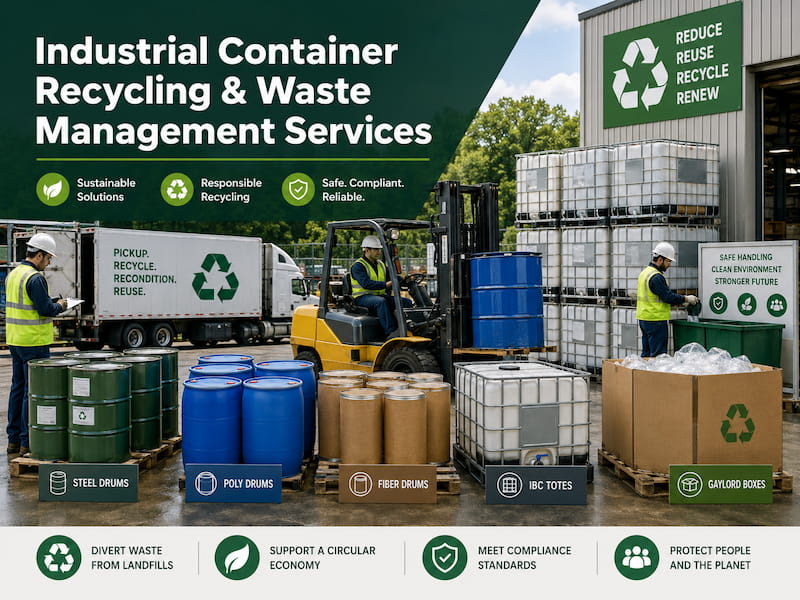
Industrial container recycling encompasses the systematic collection, inspection, cleaning, reconditioning, repurposing, material recovery, or destruction of packaging previously used to store or transport industrial commodities. Common assets processed by specialized facilities include steel drums, polyethylene and plastic pails, fiber packaging, corrugated Gaylord boxes, and intermediate bulk containers (IBC totes). The designated processing pathway depends heavily on a container’s structural integrity, material composition, previous contents, and contamination levels. A structurally sound steel drum may undergo high-pressure washing, leak testing, surface repainting, and recertification for secondary commercial use. Conversely, severely compromised units or packaging carrying sensitive proprietary branding are directed toward scrap metal recovery or secure physical destruction accompanied by an official certificate of destruction.
Mitigating Workplace Safety Hazards
Safety risks remain a primary driver behind specialized industrial packaging management. Even containers perceived as completely empty frequently harbor residual liquids, hazardous powders, or volatile vapors. According to federal safety advisories, improper cutting, crushing, or welding of uncleaned drums can ignite residual vapors or expose facility personnel to toxic chemical releases. Furthermore, transport regulations stipulate that packaging containing hazardous material residue remains strictly regulated during transit unless specific cleaning thresholds or regulatory exemptions have been legally satisfied. Environmental managers must evaluate both the physical condition of the container and its historical contents before scheduling transportation.
Audits, Documentation, and Point of Generation
Compliance begins at the point of generation within the facility. Under EPA hazardous waste generator standards, facility obligations depend directly on the volume and classification of waste generated during a given calendar month. Professional container management providers support these compliance workflows by conducting pre-pickup profile reviews, requesting safety data sheets when appropriate, supplying compliant material-handling equipment, and maintaining accurate chain-of-custody documentation. These service records—including weight tickets, manifests, and recycling certificates—provide essential verification during internal audits, environmental inspections, and corporate sustainability reporting.
Optimizing Storage and Performance Metrics
Operational efficiency also improves significantly when facilities establish designated storage areas for empty containers. By segregating packaging by material type and maintaining regular collection schedules, warehouse managers prevent empty drums from obstructing workspaces or creating accidental spill hazards. Industry specialists recommend that facility managers track core performance metrics, such as total containers collected, percentage successfully reconditioned, and total landfill volume avoided, to continually optimize their waste management operations.
Worth a look