
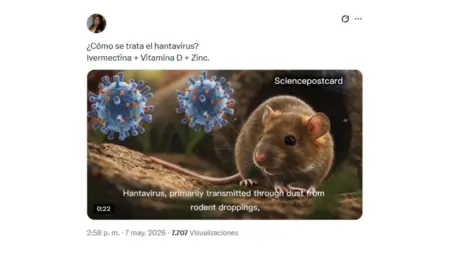
In the complex landscape of global health, the bridge between scientific discovery and public understanding is often fraught with noise. Throughout the pandemic, we have seen a recurring pattern: the emergence of “miracle cures” that promise simple solutions to a multifaceted viral threat. As a physician and journalist, I have watched with concern as anecdotal evidence and social media trends often outpace the rigorous, peer-reviewed data required to ensure patient safety.
One of the most persistent challenges has been the promotion of ivermectin, vitamin D, and zinc as primary treatments for COVID-19. While these substances have legitimate roles in medicine and nutrition, the evidence regarding their effectiveness of ivermectin, vitamin D, and zinc for COVID-19 as curative therapies remains insufficient. When we deviate from evidence-based medicine, we risk not only the health of the individual but the integrity of public health systems worldwide.
The danger is not merely in the substances themselves—many of which are safe when used as intended—but in the potential for patients to delay or forgo proven, life-saving interventions. From the perspective of internal medicine, the goal is always to provide the most effective intervention based on the highest quality of data available. In the case of these three substances, the data simply does not support their use as a standard of care for treating COVID-19.
The Ivermectin Controversy: Parasitic Treatment vs. Viral Reality
Ivermectin is a well-established medication used to treat various parasitic infections in humans and animals. Because of its anti-parasitic properties, some hypothesized that it might possess antiviral capabilities against SARS-CoV-2. However, the transition from a theoretical laboratory hypothesis to a clinical reality requires rigorous testing in human subjects through randomized controlled trials (RCTs).
The consensus among global health authorities is clear: there is no evidence that ivermectin is effective in treating COVID-19. The World Health Organization (WHO) has recommended that ivermectin only be used within the context of clinical trials to ensure that any conclusions are based on sound scientific evidence.
Similarly, the U.S. Food and Drug Administration (FDA) has issued strong warnings against using ivermectin to treat or prevent COVID-19, noting that taking large doses of the drug is dangerous and can cause serious harm, including nausea, vomiting, diarrhea, seizures, and coma.
From a clinical standpoint, the “evidence” often cited in favor of ivermectin usually stems from slight, non-randomized studies or observational data, which are prone to bias. When high-quality meta-analyses—which combine data from multiple large trials—are conducted, the supposed benefit of ivermectin vanishes. In medicine, we rely on these large-scale reviews because they filter out the “noise” of coincidence and placebo effects.
Vitamin D and Zinc: Support vs. Treatment
The conversation around vitamin D and zinc is different from that of ivermectin because we are dealing with essential nutrients rather than a pharmaceutical drug. Both play critical roles in the maintenance of a healthy immune system. Vitamin D helps modulate the immune response, and zinc is essential for the functioning of immune cells. What we have is where the confusion often begins: the difference between preventative nutritional support and acute therapeutic treatment.
While maintaining adequate levels of vitamin D and zinc is vital for overall health, there is a lack of evidence that administering these supplements as a “treatment” once a person has contracted COVID-19 significantly changes the clinical outcome. Many people are deficient in vitamin D, and correcting that deficiency is generally beneficial for health, but that is not the same as the supplement acting as a cure for a viral infection.
The National Institutes of Health (NIH) has monitored various trials regarding supplementation. While they acknowledge the importance of these nutrients, they have not found sufficient evidence to recommend them as a primary treatment for COVID-19. The biological plausibility—the idea that these nutrients should help—is not the same as clinical proof that they do help in a statistically significant way.
Distinguishing Nutrition from Medicine
To understand why this distinction matters, we must look at the mechanism of action. A treatment for an acute viral infection usually aims to stop the virus from replicating or to prevent the body’s immune system from overreacting (the “cytokine storm”). While zinc and vitamin D support the “machinery” of the immune system, they do not possess the targeted antiviral properties required to halt the progression of a severe COVID-19 infection in the way that approved antivirals do.
The Risks of Misinformation in Healthcare
As a physician, the most concerning aspect of the promotion of unproven treatments is the “opportunity cost.” When a patient believes that a supplement or an off-label drug is a cure, they may be less likely to seek professional medical care during the critical early window of infection. This can lead to a delay in receiving proven therapies, such as monoclonal antibodies or antiviral medications, which have been shown to reduce hospitalization and death.
the misuse of medications like ivermectin—particularly those formulated for livestock—poses an immediate toxicological risk. The human body cannot process the concentrations found in veterinary versions of these drugs, leading to preventable emergency room visits for drug toxicity.
The proliferation of this misinformation is often driven by a desire for autonomy and a distrust of large institutions. However, true medical autonomy is based on informed consent, and “informed” requires access to accurate, verified data. The scientific process is intentionally slow and skeptical because the cost of being wrong in medicine is measured in human lives.
Understanding Evidence-Based Medicine
For the general reader, it can be frustrating to hear that “more research is needed” or that a promising early study was later debunked. However, this is exactly how science is supposed to work. The hierarchy of evidence is designed to protect patients:

- Expert Opinion/Anecdotes: The lowest level of evidence. “My neighbor took this and got better” is an observation, not a proof, as the person likely would have recovered anyway.
- Observational Studies: These show correlations but cannot prove cause and effect.
- Randomized Controlled Trials (RCTs): The gold standard. By comparing a treatment group against a placebo group, researchers can determine if the medicine is actually responsible for the improvement.
- Systematic Reviews and Meta-Analyses: The highest level. These synthesize all available RCTs to find a definitive answer.
When we apply this hierarchy to ivermectin, vitamin D, and zinc for COVID-19, we find that while anecdotal reports and small observational studies were plentiful, the high-level RCTs and meta-analyses consistently show a lack of efficacy for these substances as primary treatments.
Practical Guidance for Patients
In an era of conflicting information, the best approach to health is a partnership with a licensed healthcare provider. If you are concerned about your immune health or are seeking treatment for a viral infection, consider the following steps:
- Consult a Professional: Always discuss supplements and medications with your doctor to ensure there are no contraindications with your current health status or other medications.
- Verify Your Sources: Rely on established global health organizations such as the WHO, the CDC, and national health ministries.
- Focus on Proven Prevention: Vaccination remains the most effective tool for preventing severe disease and death from COVID-19.
- Monitor Symptoms: If you experience shortness of breath or high fever, seek immediate medical attention rather than attempting home remedies.
Key Takeaways on COVID-19 Treatments
- Ivermectin: Not recommended for COVID-19 treatment outside of clinical trials by the WHO and FDA due to lack of evidence and potential toxicity.
- Vitamin D & Zinc: Essential for general immune health, but not proven as curative treatments for acute COVID-19 infections.
- The Danger: Using unproven treatments can lead to the delay of evidence-based care and potential drug toxicity.
- The Standard: Only treatments that pass rigorous, randomized controlled trials should be considered part of the medical standard of care.
The pursuit of health is a journey based on truth and verification. While the desire for a simple cure is understandable, the reality of medicine is that safety and efficacy must be proven before a treatment can be recommended. By adhering to evidence-based guidelines, we protect ourselves and our communities from the risks of the unknown.
For the most current guidance on COVID-19 care and approved treatments, please refer to the official advisories provided by your national health authority or the Centers for Disease Control and Prevention (CDC).
We invite our readers to share this article to help combat medical misinformation and to leave their questions in the comments section for our health editorial team to address.