
Managing global corporate partnerships is often described as a delicate dance. It requires a precise balance of aggressive strategy and gentle diplomacy, where the ability to align divergent business goals and corporate cultures can determine the success of a multi-million dollar collaboration. For Veselin Vuković, the chief alliances officer at Infobip, this complexity is a daily reality.
Infobip, a Croatian AI-first cloud communications platform, specializes in helping global brands create AI-powered interactions to engage customers and build trust. Although, the company is now applying that same AI-driven philosophy to its own internal operations. By integrating Infobip Microsoft 365 Copilot and Copilot Studio into its workflow, the organization is fundamentally changing how it handles the data-heavy burden of partnership management.
The shift is not merely about adopting new software; it is about transforming “data into decisions.” For Vuković and his team, the primary objective is to reduce the friction inherent in navigating large-scale technology and ISV partnerships, consulting organizations, and global mobile network operators. By leveraging generative AI, Infobip is moving away from manual, time-consuming data synthesis toward a model of rapid, fact-driven execution.
Accelerating the Path from Data to Decision
In the world of strategic alliances, information is abundant but often fragmented. Each partner brings a different set of needs, goals, and cultural norms. Previously, synthesizing this information to determine the best course of action for a specific partner could be a grueling process. According to reports from Microsoft News, Infobip has managed to cut its data analysis time from days to hours by utilizing Microsoft 365 Copilot.

For Vuković, who describes his decision-making process as “data- and fact-driven,” this acceleration is critical. The ability to quickly weigh available information allows the alliances team to be more responsive to partner needs, ensuring that the collaboration creates tangible value for the end customer rather than getting bogged down in corporate inertia.
This implementation is part of a broader company-wide adoption. Approximately 3,500 employees at Infobip began using Microsoft 365 Copilot roughly 18 months ago. This scale of adoption suggests that the company is treating AI not as a peripheral tool, but as a core component of its operating leverage.
Customizing AI with Copilot Studio
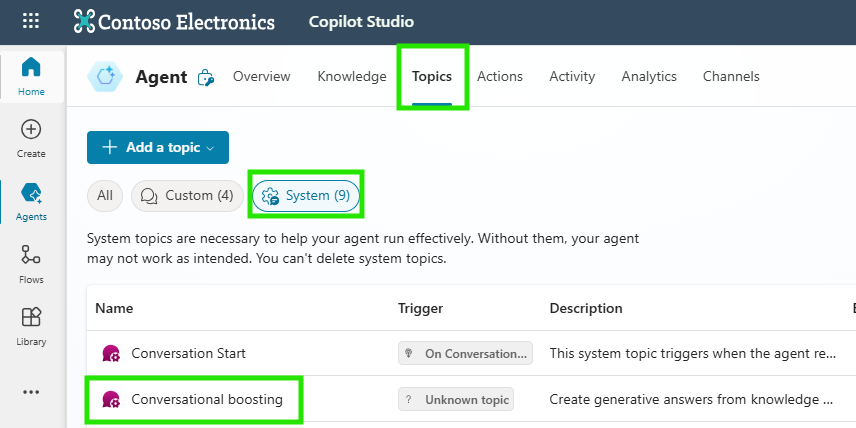
While Microsoft 365 Copilot provides general productivity gains, Infobip has pushed further by using Copilot Studio to build and deploy custom AI agents directly into Microsoft Teams. This allows the company to create purpose-built tools that are aligned with specific, nuanced business processes.

These custom agents generally fall into two categories: internal knowledge assistants and workflow-driven bots. By deploying these agents, Infobip can support its complex operations without requiring massive development efforts or extensive manual coding for every new internal require. This “low-code” approach to AI deployment means that the business can iterate on its internal processes in real-time, creating bots that can handle specific queries or automate repetitive coordination tasks across the organization.
“Copilot is a great tool to help make these decisions faster and more efficient,” Vuković stated regarding the impact of the technology on his daily operations.
The Strategic Impact of AI-First Operations
The integration of AI into partnership management addresses a common pain point in the enterprise software industry: the “transactional” trap. Many partnerships fail given that they remain transactional—focused on short-term wins rather than long-term alignment. Vuković emphasizes that successful partnerships require deep alignment on both business goals, and culture.
By automating the “grunt function” of data analysis and information retrieval, AI frees up human leaders to focus on the qualitative aspects of partnership management—the relationship building, the cultural alignment, and the high-level strategizing. When the data is already synthesized, the conversation shifts from “what is happening?” to “what should we do about it?”
This transition represents a broader trend in enterprise AI adoption. The most successful organizations are moving beyond using AI as a novelty for drafting emails or summarizing meetings. Instead, they are embedding AI into the very fabric of their operational workflows to create a measurable competitive advantage in responsiveness and execution.
Key Takeaways: Infobip’s AI Integration
- Efficiency Gains: Data analysis timelines were reduced from several days to just a few hours.
- Customization: Copilot Studio is used to deploy tailored AI agents in Microsoft Teams for internal knowledge and workflows.
- Scale: The rollout encompasses roughly 3,500 employees over an 18-month period.
- Strategic Goal: Moving from transactional business interactions to value-driven, aligned partnerships.
What So for the Future of Cloud Communications
As a leader in the conversational customer experience space, Infobip’s internal use of AI serves as a proof-of-concept for its external offerings. By proving that AI can streamline complex B2B alliances, the company reinforces its position as an “AI-first” platform.

The ability to deploy custom agents via Copilot Studio suggests a future where “the bot” is not just a customer-facing tool, but a sophisticated internal colleague capable of managing the intricacies of global corporate diplomacy. As these tools evolve, the barrier between data collection and strategic action will likely continue to disappear.
For now, Infobip continues to refine its AI agents, focusing on how these tools can further enhance the experience for their global partners and, the end users of their communication services. The next phase of this journey will likely involve deeper integration of these agents into automated partner onboarding and real-time performance tracking.
Do you think AI agents will eventually replace the need for human alliance managers, or will they simply make them more effective? Share your thoughts in the comments below.