
Individuals with heightened innate immune system responsiveness are more likely to develop symptomatic influenza following exposure, according to recent research into controlled human infection models. This finding suggests that the body’s rapid, non-specific immune reaction may inadvertently contribute to the clinical manifestations of the flu.
I have long observed that patients react to the same viral pathogens with widely varying degrees of severity. This new study provides a clearer biological rationale for these differences by analyzing how specific cellular pathways influence the progression from exposure to illness. Understanding these innate mechanisms is essential for developing more effective vaccines and personalized approaches to managing viral respiratory infections.
The Role of Innate Immunity in Influenza
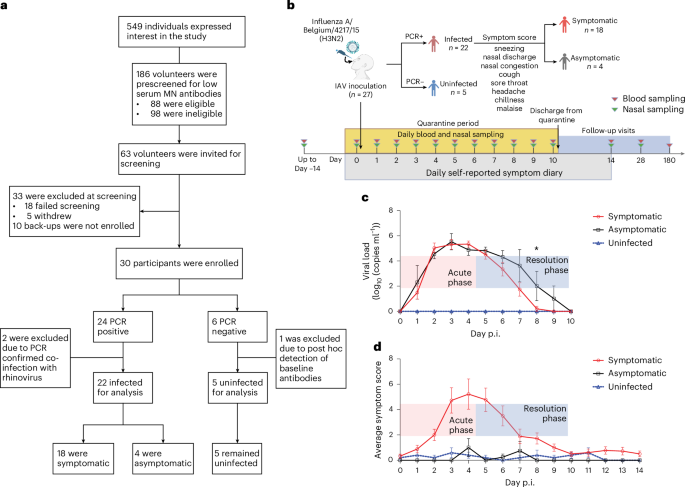
The human immune system is composed of two primary branches: the innate system, which acts immediately but non-specifically, and the adaptive system, which develops targeted responses over time. In a controlled human influenza infection study, researchers examined the baseline immune profiles of participants before and after exposure to the virus. The data indicated that individuals with increased innate cell responsiveness were more likely to become symptomatically infected.
This counterintuitive outcome highlights how an overactive early immune response can be associated with illness. When the innate system detects a pathogen, it releases signaling proteins to recruit immune cells. If this response is disproportionately high, it can lead to the systemic inflammation that patients recognize as the “sickness” associated with the flu.
Insights from Controlled Human Infection Models
Controlled human infection studies, or human challenge trials, involve the deliberate, monitored exposure of healthy volunteers to a pathogen. These trials are conducted in high-containment clinical environments. By monitoring participants from the moment of exposure, researchers can pinpoint how the immune system behaves during the incubation period.
The findings indicate that local and systemic immune profiling can serve as a predictor for clinical outcomes. Participants with higher levels of specific innate cell markers displayed a stronger correlation with symptomatic infection compared to those with lower baseline responsiveness. By identifying these biomarkers, clinicians may eventually be able to stratify patients based on their risk of developing severe symptoms, allowing for earlier intervention.
What This Means for Future Medical Practice
The shift toward understanding innate immunity marks a change in how we approach respiratory virus prevention. Traditionally, vaccine development has focused almost exclusively on the adaptive immune system—specifically, stimulating the production of antibodies. While antibodies are vital for neutralizing viruses, this research suggests that managing the innate system’s “volume” could be just as important for reducing the burden of disease.
For the average patient, this does not mean that having a “strong” immune system is a disadvantage. Rather, it underscores the importance of immune homeostasis—the ability of the body to respond to threats without overreacting. As we look ahead, the integration of these findings into clinical practice could lead to therapies that modulate the innate response, potentially easing the severity of seasonal influenza and other respiratory pathogens.
Next Steps in Influenza Research
The scientific community is now looking toward larger, more diverse cohorts to determine if these innate immune patterns hold true across different age groups and underlying health conditions. Further research is required to translate these findings into standardized clinical diagnostics.
Researchers are currently preparing for follow-up studies that will examine how pre-existing immunity from prior infections or vaccinations interacts with these innate markers. I encourage our readers to share their thoughts in the comments section below or join the discussion on our social media platforms as we continue to track this evolving area of medical science.