
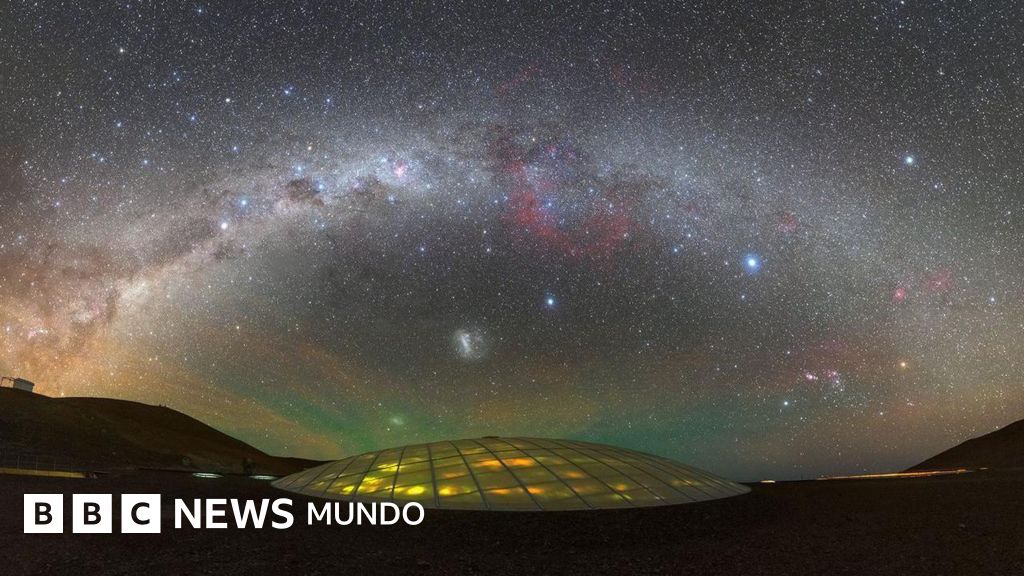
Located in the heart of Chile’s Atacama Desert, the Residencia hotel serves as a critical support hub for international researchers working at the Paranal Observatory. Operated by the European Southern Observatory (ESO), the facility provides essential housing and amenities for astronomers and engineers navigating one of the most arid and isolated environments on Earth. Its architecture, designed to blend into the desert landscape, reflects a functional approach to life in a high-altitude, extreme climate.
The facility is situated at an altitude of approximately 2,400 meters, a location chosen for its exceptionally clear skies and low atmospheric water vapor. According to the European Southern Observatory, the Paranal site hosts the Very Large Telescope (VLT), which is the world’s most advanced visible-light astronomical instrument. The Residencia was constructed to ensure that staff and visiting scientists have a sustainable, comfortable base while operating these complex systems, which function 24 hours a day, seven days a week.
Architectural Design and Environmental Integration
The hotel is famously built partially underground to minimize its visual impact on the environment and to mitigate the harsh, high-intensity sunlight characteristic of the Atacama region. Designed by the German architecture firm Auer Weber, the structure features a large, glass-domed atrium that acts as a central gathering space. This design choice provides natural light while maintaining a stable internal temperature, a necessary feature for researchers living in a region where daily temperature fluctuations can be extreme.

The building’s aesthetic is intentionally austere, mirroring the surrounding barren landscape of the Chilean desert. By utilizing materials that resonate with the local geology, the architects aimed to create a space that feels like an extension of the terrain rather than an intruder. The internal layout includes personal living quarters, dining areas, and recreational facilities, which are vital for maintaining the mental well-being of scientists who often spend weeks in isolation at the remote observatory.
Supporting High-Stakes Astronomical Research
Living at the Paranal Observatory requires strict adherence to environmental and operational protocols. Because the site is home to highly sensitive optical equipment, residents must minimize light pollution and dust. The Residencia serves as a “buffer zone,” allowing scientists to decompress after long shifts at the telescope consoles. This proximity is essential; the observatory is located over 100 kilometers from the nearest major city, Antofagasta, making the hotel a self-sufficient ecosystem.

Beyond its function as a hotel, the site has gained cultural recognition for its unique, isolated atmosphere. It famously served as a filming location for the 2008 James Bond film Quantum of Solace, where it was depicted as a remote desert hotel. While the fiction portrayed a center of international intrigue, the reality is a rigorous scientific environment where the primary objective is the collection of astronomical data. The European Southern Observatory, an intergovernmental organization with 16 member states, continues to manage the site as a cornerstone of global astronomical research.
Operational Sustainability in the Atacama
Operating a facility in one of the driest places on Earth presents significant logistical challenges, particularly regarding water and power. The Residencia is designed to be as energy-efficient as possible, utilizing passive solar heating and cooling techniques to reduce its carbon footprint. These measures are consistent with the broader mission of the ESO, which emphasizes sustainability in its telescope operations across the Atacama.
For researchers, the hotel provides a necessary reprieve from the technical demands of the VLT. The facility includes a swimming pool, a library, and communal dining, which serve to foster a sense of community among international teams. This social infrastructure is critical for the long-term success of collaborative projects involving scientists from various countries and institutions, all of whom must coordinate their efforts despite the challenges of distance and the extreme environment.
Future Outlook for the Paranal Site
The ongoing operations at Paranal remain a priority for the global scientific community. As new instruments are added to the VLT array and as the nearby Extremely Large Telescope (ELT) project progresses, the role of the Residencia as a hub for talent remains unchanged. The ESO regularly updates its operational schedules and facility guidelines, which are available through their official announcements portal for researchers and stakeholders.

There are no immediate plans to expand the physical footprint of the Residencia, as the priority remains the preservation of the desert’s pristine conditions for astronomical observation. Future updates regarding the facility’s status and accessibility for authorized personnel will be provided by the ESO through their official communication channels. Readers interested in the daily life of the researchers or the technical specifications of the observatory are encouraged to monitor the ESO’s public database for the latest project reports and site updates.
For those interested in the latest developments at the Paranal Observatory, the ESO maintains an active archive of technical papers and site news. Please feel free to share your thoughts or questions regarding this unique intersection of architecture and science in the comments section below.