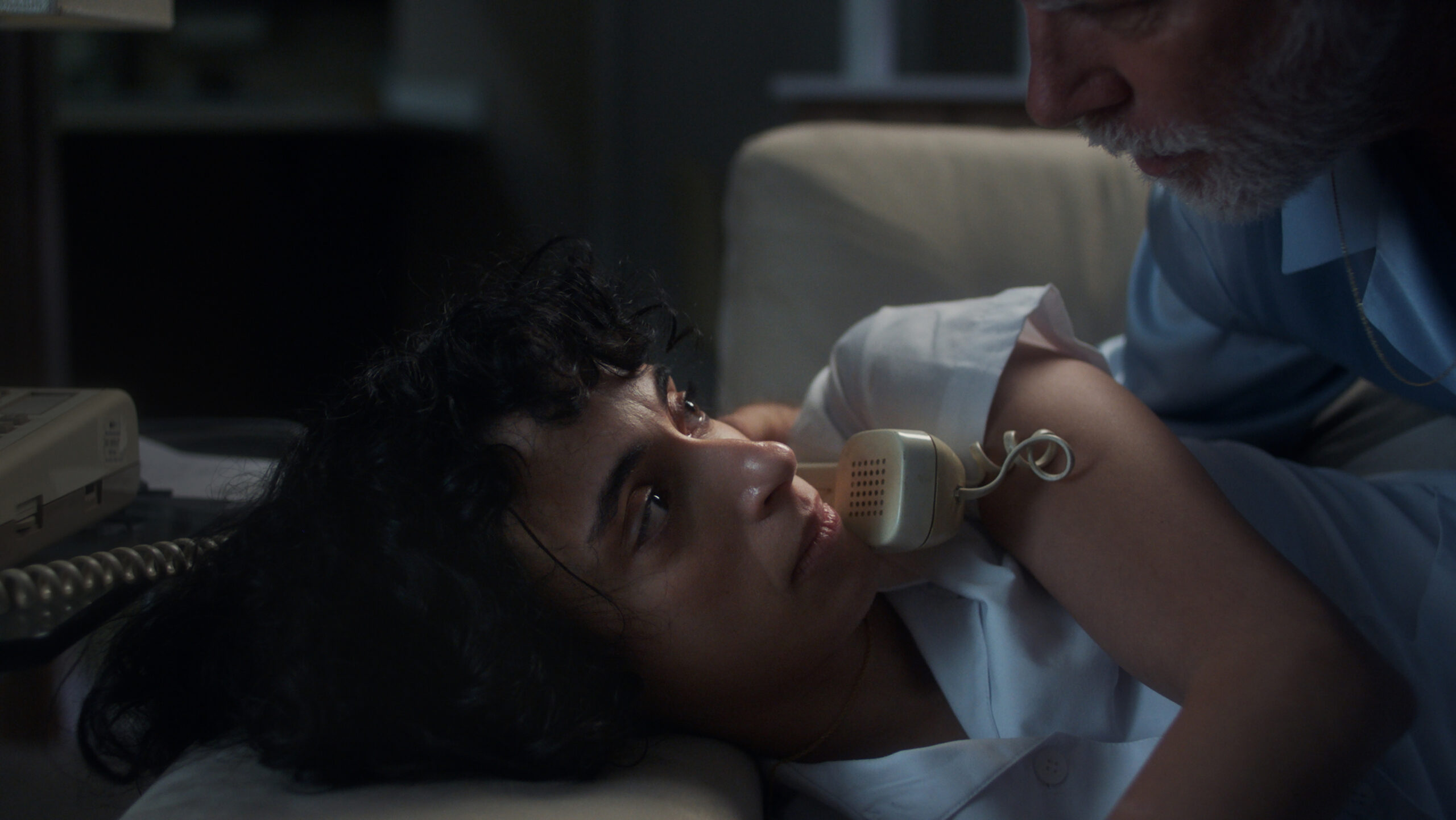
Writer-director Georgia Bernstein brought her psychosexual thriller Night Nurse to the 2026 Sundance Film Festival, where the film premiered in the NEXT section. The feature, which explores themes of codependency and manipulation, centers on a young caregiver who finds herself entangled in the unsettling life of an elderly patient targeted by a telephone scam. Bernstein, who drew inspiration from her own family’s experiences, describes the project as a deeply personal work that she did not fully understand until the creative process was complete.
The film stars Cemre Paksoy as Eleni, a caregiver working in a luxury retirement community, and Bruce McKenzie as Douglas, the patient who draws her into a complex game of desire. According to Bernstein, the production was a collaborative, family-oriented effort, with much of the filming taking place in her own grandmother’s home. The director noted that the project’s low-budget constraints necessitated practical solutions, including the involvement of her grandmother’s friends as background actors.
The Real-Life Origins of Night Nurse
The premise of Night Nurse emerged from a specific, unsettling event involving Bernstein’s grandmother. Toward the end of her life, her grandmother became the target of persistent telephone scams. One caller successfully impersonated Bernstein’s brother, claiming to be in a severe accident and asserting that she was the only person he could trust. While a bank teller intervened before any funds were wired, the incident left a lasting impression on the director.

Bernstein reflected on the “strangely intimate performance of the scammer,” noting how the incident highlighted the way fake crises can mirror real human vulnerabilities. This experience served as the catalyst for the film’s exploration of trust, manipulation, and the psychological weight of caretaking. Bernstein has observed that the film’s themes—specifically the loss of selfhood and the complexities of codependency—began to surface while she was navigating the end of a long-term relationship, leading her sister to joke that her subconscious had authored the script.
Production and Casting Choices
For the lead role of Eleni, Bernstein chose to cast her close friend, Cemre Paksoy. Although the director had Paksoy’s voice in mind during the writing process, she emphasized that the final performance surpassed her initial expectations. She described Paksoy’s contribution as “instinctive, emotional, alchemical,” noting that the actor brought a dimension to the character that could not have been planned during the drafting stage.

The production team, including director of photography Lidia Nikonova, maintained a specific creative energy throughout the shoot. Bernstein recalled an early moment when Nikonova joked about being “born to shoot lusting nurses,” a sentiment that she said radiated through the entire crew. These moments of collective alignment were, according to Bernstein, the most memorable aspects of the filmmaking process, despite the inherent challenges of working with limited resources.
Reflections on Directorial Growth
Bernstein’s path to directing was not linear. She initially aspired to be an actress but redirected her focus after a theater teacher in college provided candid feedback regarding her performance skills. She began directing shortly thereafter, though she admitted to feeling embarrassed about her ambitions for a long time, fearing the pursuit of filmmaking was “delusional.”
When asked about advice for other storytellers, Bernstein highlighted the value of working with friends and urged filmmakers to “get out of your own way.” Her creative influences include filmmaker Catherine Breillat, and she cited Contempt as a film she admires for its emotional resonance. As for the current climate for erotic thrillers, Bernstein expressed a sense of timing, suggesting that the industry is seeing a resurgence of the genre and that her film is “giving the people what they want.”

The film’s journey to Sundance was a moment of significant emotional release for the director. Upon learning of the selection, the first person she contacted was Paksoy. The two shared a celebratory, if slightly panicked, reaction to the news. As Night Nurse continues its festival run, Bernstein’s primary goal remains consistent: she hopes the film “stirs something” in the audience.
Updates regarding future screenings or distribution for Night Nurse will be provided via official festival channels and industry trade announcements. Readers interested in independent cinema are encouraged to follow coverage from the Sundance Institute for further news on the film’s release.