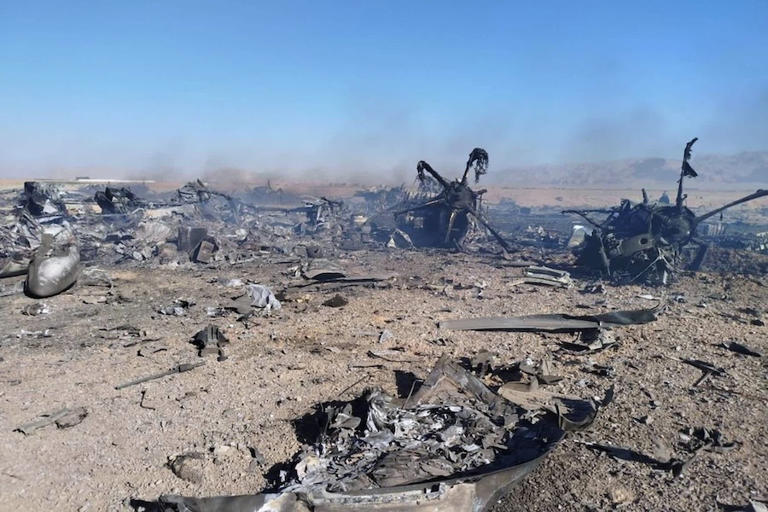
The United States has successfully recovered a missing service member from Iran following a high-stakes military operation in rugged, mountainous terrain. President Donald Trump announced the rescue shortly after midnight on Saturday, April 4, describing the mission as one of the most daring search and rescue operations in U.S. History.
The rescued individual, a highly respected Colonel and weapons system officer aboard an F-15E Strike Eagle, had been missing for nearly three days. The aircraft was shot down on Friday while conducting military operations in Iran, marking a significant escalation in regional tensions. While the pilot was rescued on the day of the crash, the Colonel evaded capture for more than a day, scaling difficult terrain while being hunted by Iranian forces according to reports from the Independent.
The rescue comes amid a volatile geopolitical climate, with the U.S. And Iran currently engaged in a sharp confrontation over the Strait of Hormuz. President Trump has issued an ultimatum to Tehran, demanding the reopening of the vital waterway by Tuesday at 8:00 P.M. Eastern Time, threatening to bomb power plants and other critical infrastructure if the blockade is not lifted as detailed by CNN.
Iranian authorities had previously attempted to incentivize the capture of the airman, with a state television anchor announcing a bounty for anyone who could hand over the officer alive. Despite these efforts, the U.S. Military deployed dozens of aircraft armed with lethal weaponry to retrieve the Colonel, who sustained injuries during the initial crash but is reported to be safe and sound.
The Rescue of the F-15E Weapons System Officer
The operation to recover the downed airman was a coordinated effort involving hundreds of troops and constant surveillance. According to the President’s statements on Truth Social, the officer’s location was monitored 24 hours a day by the Commander in Chief, the Secretary of War, and the Chairman of the Joint Chiefs of Staff.
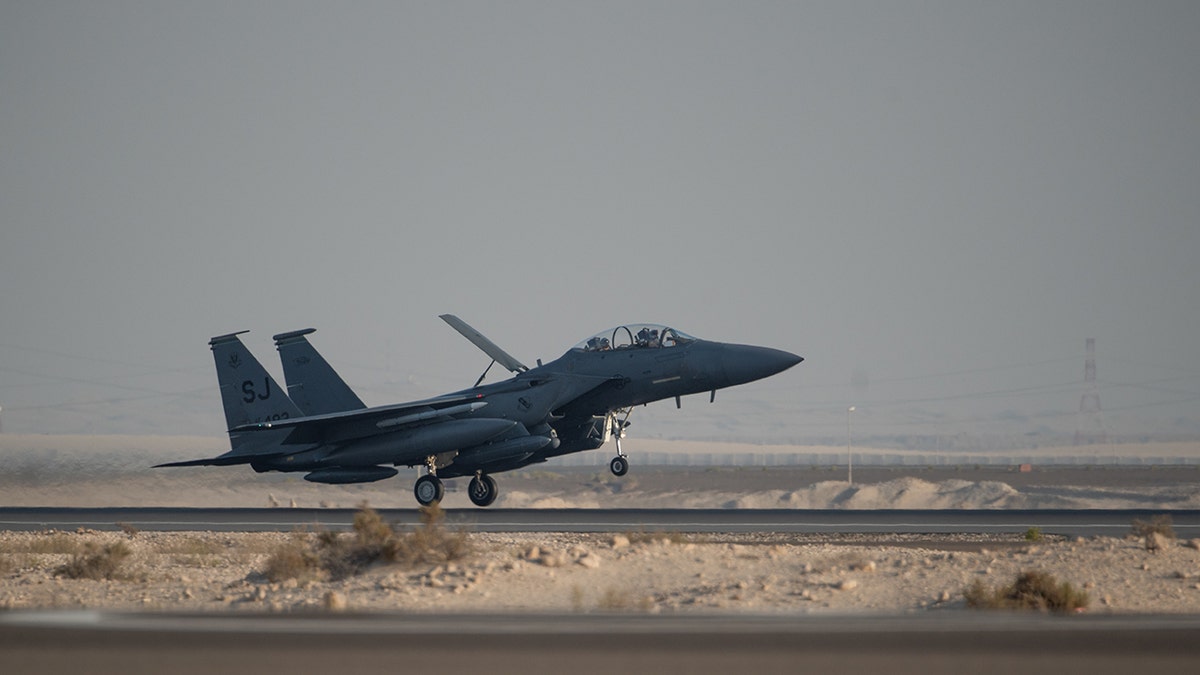
The Colonel’s ability to survive behind enemy lines in the treacherous mountains of Iran was critical to the mission’s success. He managed to avoid capture for over 24 hours, hiding and moving through rugged terrain while U.S. Forces planned the extraction. The mission concluded successfully in the early hours of Saturday, April 4 as announced by the White House.
The F-15E Strike Eagle is a dual-role fighter designed for long-range precision strikes. The loss of the aircraft and the subsequent rescue operation highlight the extreme risks currently associated with U.S. Military operations within Iranian airspace. The pilot of the same aircraft had been successfully rescued on the Friday of the shoot-down, leaving the Colonel as the sole remaining target for the rescue mission.
Escalating Tensions and the Strait of Hormuz Deadline
While the rescue is a tactical success for the U.S., the broader strategic situation remains precarious. The United States is currently pressuring Iran to lift an effective blockade on the Strait of Hormuz, a chokepoint essential for global oil shipments. President Trump has used profane language in recent threats, renewing his vow to target Iranian infrastructure if the waterway is not opened by the Tuesday deadline via PBS NewsHour.
Tehran has remained defiant in the face of these threats. Senior Iranian officials have stated that the Strait of Hormuz will remain blocked until Iran receives payment for war damages. This standoff has created a high-risk environment where further military miscalculations could lead to a wider conflict.
International diplomatic efforts are continuing in the background to prevent a full-scale war. Sources indicate that Oman has held last-ditch talks with Iran regarding the Strait of Hormuz, while Pakistan and Egypt have attempted to maintain open lines of communication between Washington and Tehran according to CNN.
Regional Fallout and Iranian Strikes on Israel
The tension between the U.S. And Iran is coinciding with direct military action between Iran and Israel. On Sunday, an Iranian strike targeted a six-story residential building in the northern Israeli city of Haifa. The attack resulted in the recovery of two bodies, with at least two other people reported missing under the rubble per reports from Haaretz via CNN.
Brigadier General Elad Edri, Chief of Staff of the Home Front Command, confirmed in a video statement that several other individuals inside the building were wounded and hospitalized. This strike underscores the expanding scope of the conflict, as Iran engages both the United States and its regional allies simultaneously.
Timeline of Recent Events
| Date/Time | Event |
|---|---|
| Friday, April 3 | U.S. F-15E Strike Eagle shot down over Iran. pilot rescued. |
| Saturday, April 4 (Midnight) | President Trump announces rescue of the F-15E Weapons System Officer. |
| Sunday, April 5 | Iranian strike on residential building in Haifa, Israel. |
| Tuesday, April 8 (8:00 PM ET) | Deadline for Iran to reopen the Strait of Hormuz. |
The current situation remains fluid. The world is now watching the Tuesday deadline to see if Iran will comply with the U.S. Demand to open the Strait of Hormuz or if the United States will follow through on its threats to target Iranian power plants and infrastructure. We will continue to monitor official updates from the White House and the Iranian government as this deadline approaches.
Join the conversation: How do you view the current diplomatic efforts to resolve the Strait of Hormuz blockade? Share your thoughts in the comments below.
Worth a look