
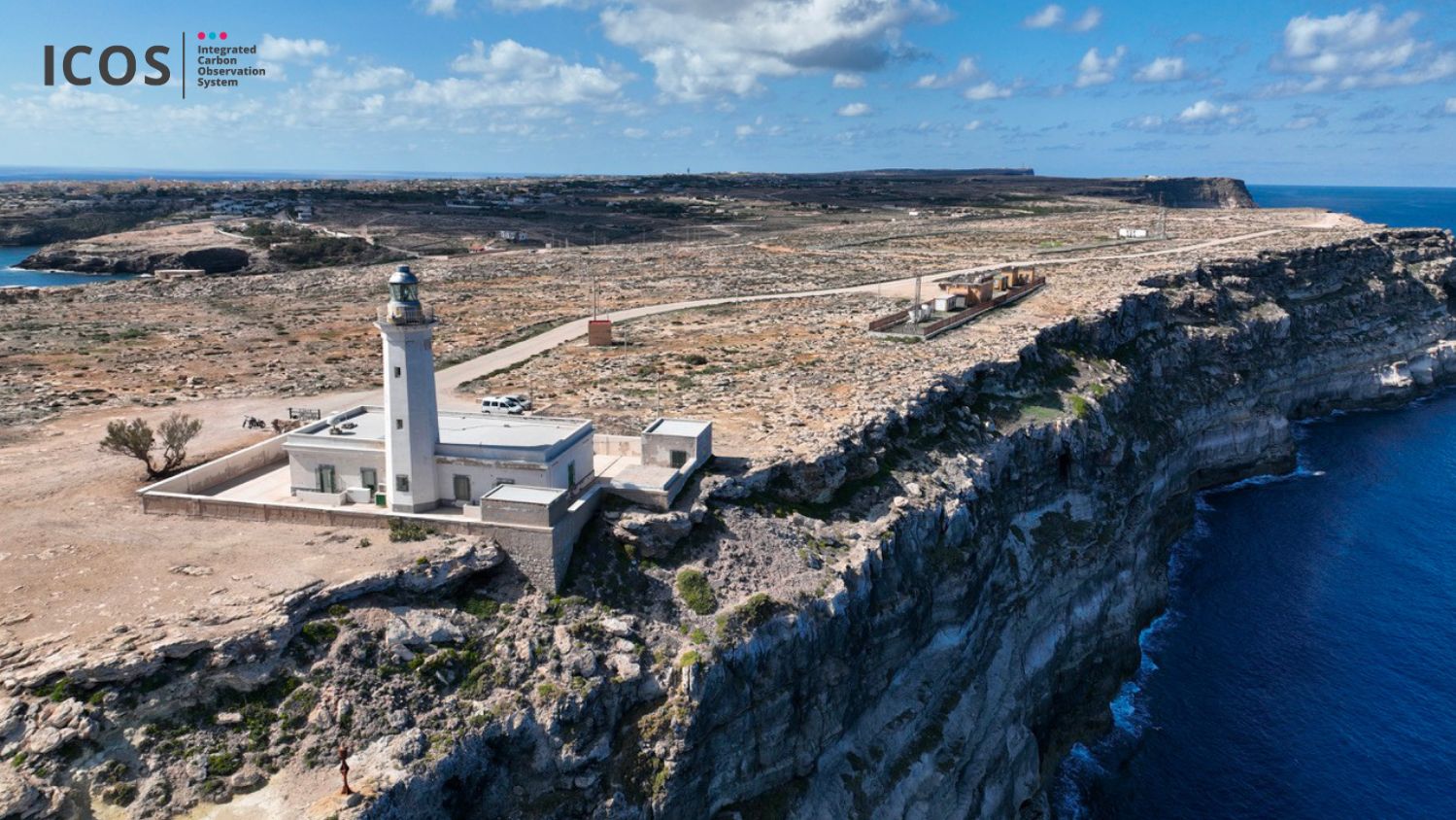
The ENEA climatic observatory in Lampedusa has achieved the highest level of European Union certification, confirming its role as a premier facility for atmospheric monitoring. This international recognition validates the station’s adherence to rigorous data quality standards, essential for tracking long-term climate trends across the Mediterranean basin.
Located on the southernmost point of Italy, the Lampedusa Climate Observatory—managed by the Italian National Agency for New Technologies, Energy and Sustainable Economic Development (ENEA)—serves as a critical node in global research networks. The certification confirms that the facility meets the technical and operational requirements set by the Integrated Carbon Observation System (ICOS), a European research infrastructure that provides standardized data on greenhouse gas concentrations.
Scientific Significance of the Lampedusa Facility
The Lampedusa observatory is uniquely positioned to measure atmospheric composition in an area highly sensitive to climate change. According to official ENEA documentation, the station provides high-precision measurements of greenhouse gases, aerosols, and solar radiation. These data points are vital for scientists attempting to model how the Mediterranean region—a recognized climate change “hotspot”—is responding to rising global temperatures.

The ICOS labeling process involves an extensive audit of a facility’s instrumentation, calibration procedures, and data processing workflows. By obtaining this certification, the Lampedusa site ensures its findings are interoperable with other major climate monitoring stations across Europe. This integration allows researchers to create a more comprehensive map of carbon cycles and their interaction with the atmosphere.
Role in Global Climate Monitoring
The work conducted at the observatory is led by a team of specialists, including researchers such as Tatiana Di Iorio from the ENEA Department of Sustainability. Their research focuses on understanding the complex relationship between atmospheric particles and the Earth’s energy balance. As noted in ICOS official reporting, the standardized nature of these observations is what allows for accurate, long-term climate forecasting.

The data collected at Lampedusa contributes to the broader understanding of how human-induced emissions interact with natural variability. Because the station operates continuously, it captures seasonal shifts and episodic events, such as the transport of Saharan dust, which can significantly influence local and regional temperatures.
Advancing Climate Policy Through Accurate Data
Reliable climate policy requires empirical evidence that is beyond reproach. The EU certification of the ENEA facility provides a transparent, verifiable foundation for policymakers who rely on scientific data to draft environmental regulations. By aligning with international standards, the Lampedusa observatory ensures that its contributions to the global Global Climate Observing System (GCOS) are recognized for their accuracy and consistency.
The integration of the Lampedusa station into the ICOS network means that its data is now more accessible to the international scientific community. This transparency is a key component of modern climate science, allowing for independent verification of results and fostering collaboration between institutions across different nations.
Next Steps for Atmospheric Research
With the certification process concluded, the ENEA team is shifting focus toward expanding the scope of their observations. Future activities include the continued maintenance of high-precision sensors and the training of personnel to ensure that data continuity remains unbroken. The next major report on the state of the Mediterranean climate, utilizing data from stations like Lampedusa, is expected to be integrated into the upcoming assessments from the Intergovernmental Panel on Climate Change (IPCC).
The observatory remains open to collaborative research projects that aim to utilize its specialized data sets. Readers interested in tracking ongoing climate updates from the ENEA can monitor the agency’s official portal for future publications and technical briefings regarding the Lampedusa site’s performance metrics.
Have thoughts on the importance of standardized climate monitoring? Share your perspective in the comments section below.