
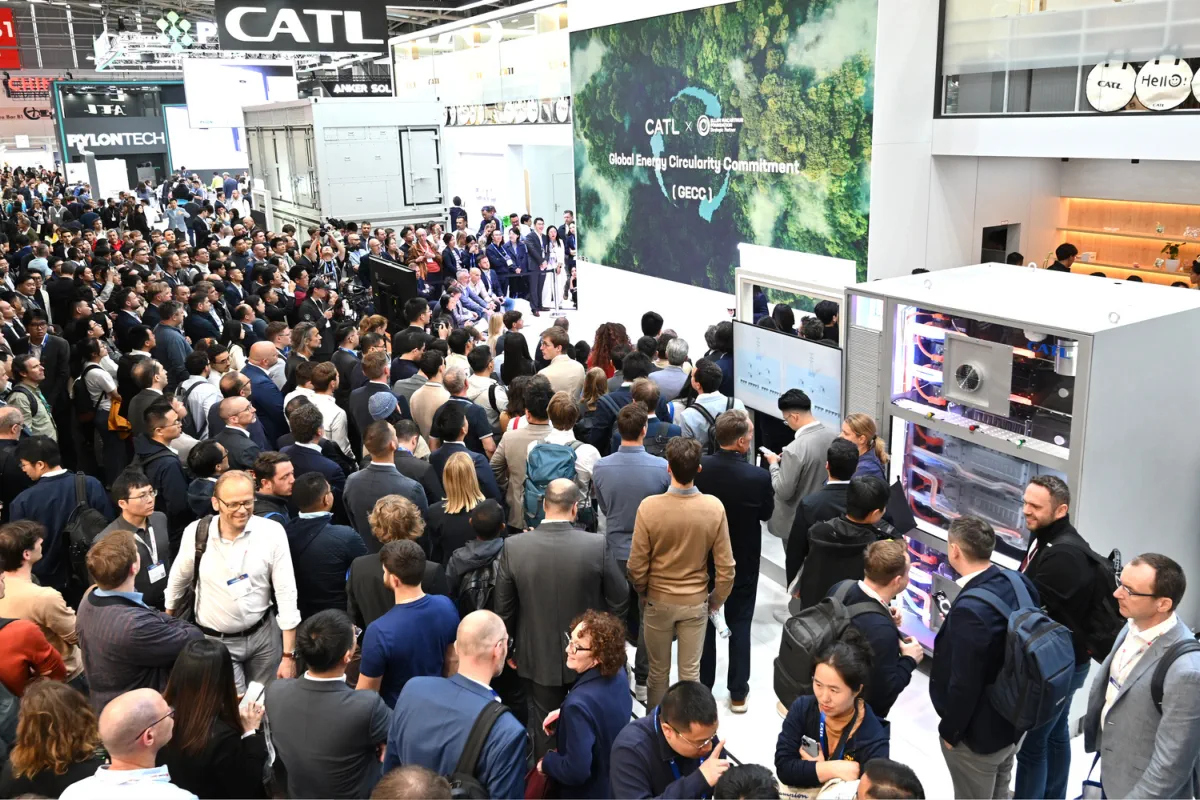
Solar energy expansion in Germany has reportedly saved the country approximately €20 billion in energy import costs, according to industry-related economic assessments. This financial offset comes as the renewable energy sector prepares for Intersolar Europe, a major trade exhibition focused on the technological transition toward a continuous, 24/7 renewable energy supply.
The reduction in import expenditures reflects a broader shift in Germany’s energy mix, as increased domestic photovoltaic (PV) capacity reduces the necessity for imported fossil fuels such as natural gas and coal. Industry observers note that the integration of solar power into the national grid has played a critical role in mitigating the economic volatility caused by fluctuations in global energy markets.
As the Intersolar Europe exhibition commences, the central theme for industry leaders is the “24/7 future.” This concept addresses the primary challenge facing renewable-heavy grids: maintaining a stable power supply when solar production is intermittent. The transition requires not only increased generation capacity but also significant advancements in energy storage, smart grid management, and cross-border interconnection.
How solar expansion reduced Germany’s energy import bill
The reported €20 billion in savings is linked to the avoided costs of purchasing energy from external suppliers. During periods of high solar irradiance, domestic PV systems provide a significant portion of Germany’s electricity demand, which limits the volume of electricity and gas that must be imported from neighboring countries or international markets. According to reports within the renewable energy sector, this domestic production acts as a hedge against the price spikes seen in the natural gas market following geopolitical shifts in Eastern Europe.
The economic impact of solar energy in Germany extends beyond direct import savings. The expansion of the solar industry supports domestic manufacturing, installation services, and maintenance sectors. However, the scale of the savings is heavily dependent on the capacity of the German grid to absorb this variable power. Without sufficient storage and grid upgrades, excess solar energy can lead to negative electricity prices, which complicates the long-term economic model for energy producers.
To maintain these savings, Germany’s energy policy, often referred to as the Energiewende, continues to prioritize the acceleration of renewable installations. The German government has set ambitious targets to increase the share of renewables in the gross electricity consumption to 80% by 2030. Achieving this requires a massive scaling of both solar and wind capacity, alongside a fundamental restructuring of how energy is distributed across the country.
Intersolar Europe: Moving toward 24/7 renewable supply
The Intersolar Europe exhibition serves as a primary venue for showcasing the technologies required to bridge the gap between intermittent solar generation and constant consumer demand. The “24/7” objective refers to the ability of a power system to match electricity consumption with carbon-free energy production every hour of the day, regardless of weather conditions or time of night.
Key technological pillars being highlighted at the event include:
- Battery Energy Storage Systems (BESS): Scaling up utility-scale lithium-ion and emerging long-duration energy storage (LDES) technologies to shift solar energy from midday peaks to evening demand.
- Smart Grids and AI: Utilizing artificial intelligence to predict weather patterns and manage demand-side response, allowing the grid to automatically adjust to fluctuations in solar output.
- Green Hydrogen Integration: Using excess solar power during peak production periods to power electrolyzers, creating hydrogen that can be stored and used for heating or industrial processes when solar generation is low.
- Hybrid Power Plants: Combining solar PV with wind or other renewable sources to create a more balanced and predictable generation profile.
Industry experts at the exhibition emphasize that the “24/7” transition is not merely a matter of adding more panels, but of creating a highly integrated and intelligent energy ecosystem. This involves moving away from centralized, fossil-fuel-based power plants toward a decentralized network of producers and consumers, often referred to as “prosumers.”
The role of solar in German energy security
The shift toward domestic solar production is increasingly viewed through the lens of national security. By reducing reliance on imported fossil fuels, Germany aims to insulate its economy from the geopolitical leverage held by energy-exporting nations. The ability to generate power domestically via solar PV provides a level of energy sovereignty that was previously unavailable under a gas-dependent model.
According to energy analysts, the decentralization of energy production through rooftop solar and community energy projects also increases the resilience of the power grid. A distributed network of energy sources is less vulnerable to single points of failure compared to a system reliant on a few large-scale power plants or international pipeline networks. However, this decentralization also necessitates a more complex management system to ensure grid frequency and voltage stability.
The geopolitical implications of this transition are significant for the European Union as a whole. As Germany, the EU’s largest economy, accelerates its solar deployment, it sets a precedent for regional energy integration. The development of a unified European electricity market, supported by robust interconnections, is essential to balancing the variable renewable output across different geographic regions.
Challenges to the solar energy transition
Despite the economic benefits and the progress in solar deployment, several hurdles remain for Germany’s energy transition. One of the most pressing issues is the bottleneck in grid expansion. The current transmission infrastructure was designed for a centralized model and struggles to transport electricity from the wind-rich north and the solar-rich south to the industrial centers in the middle of the country.
Additional challenges include:
- Land Use Conflicts: Balancing the need for large-scale solar farms with agriculture, biodiversity conservation, and local community interests.
- Supply Chain Dependencies: While solar energy increases energy independence, the manufacturing of PV modules and critical components remains heavily concentrated in certain global markets, particularly China.
- Regulatory Complexity: Navigating the various permitting processes for large-scale solar projects can lead to significant delays in deployment.
To address these issues, the German government and EU regulators are working on streamlining permitting processes and investing in “smart” grid technologies. The goal is to create a regulatory environment that encourages both rapid deployment and long-term stability in the energy market.
| Feature | Solar PV | Natural Gas (Imported) | Wind Power |
|---|---|---|---|
| Primary Benefit | Low operating cost; domestic production | Dispatchable (on-demand) power | High energy density; complementary to solar |
| Main Challenge | Intermittency (daylight dependent) | Geopolitical/Price volatility | Variable (wind dependent); land use |
| Role in 24/7 Goal | Primary daytime generation | Transitionary bridge fuel | Primary nocturnal/seasonal generation |
The progress of the solar industry will be closely monitored following the conclusion of Intersolar Europe, with particular attention paid to how new storage technologies are integrated into the commercial market. Official updates regarding grid expansion milestones and renewable energy targets are expected from the German Federal Ministry for Economic Affairs and Climate Action in the coming months.
What do you think about Germany’s path to energy independence? Share your thoughts in the comments below and share this article with your network.