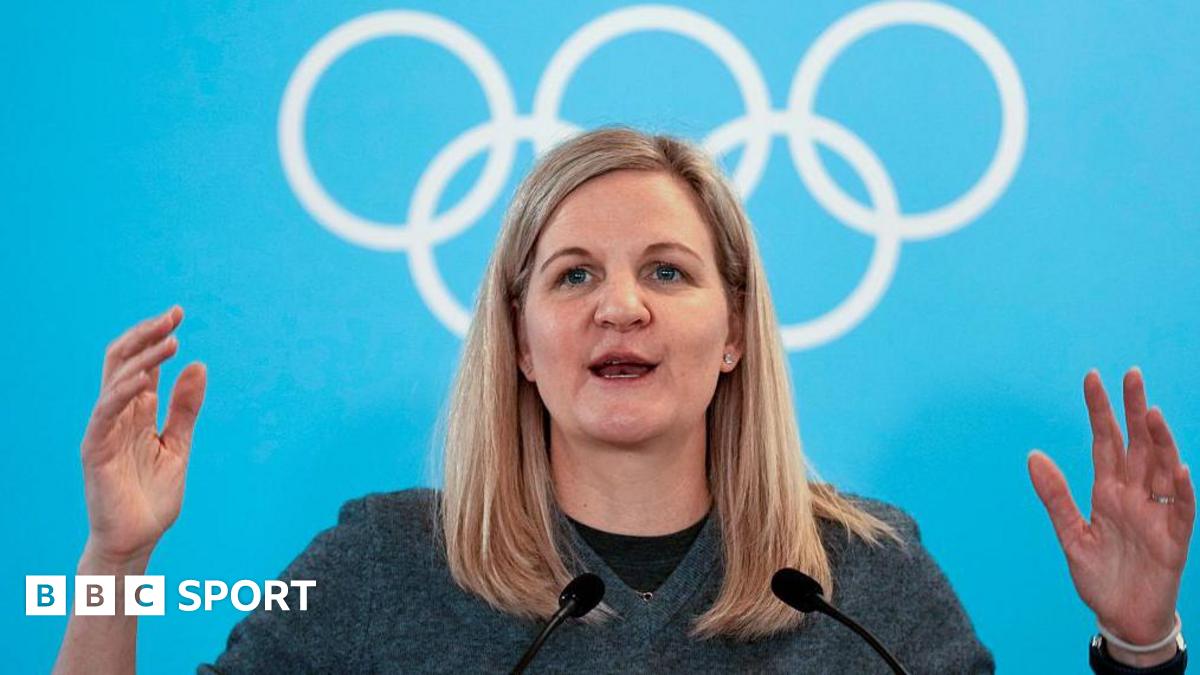
The International Olympic Committee (IOC) has fundamentally shifted its stance on gender eligibility, moving from a decentralized approach to a strict, centralized mandate. In a decision that marks a dramatic departure from previous guidelines, the governing body has announced that women’s sport categories will now be open exclusively to biological females.
This policy shift, spearheaded by IOC President Kirsty Coventry, aims to “protect fairness, safety and integrity” within female athletics. The new regulations represent a total reversal of the 2021 position held by former president Thomas Bach, who argued that sex eligibility criteria should be determined by individual sports rather than a one-size-fits-all mandate from the IOC.
The IOC’s biological female decision will be fully implemented starting with the 2028 LA Games. Under these new rules, eligibility for women’s competition across all IOC events will be determined via a one-time SRY gene screening. This medical test is designed to detect the presence of a Y chromosome and male sex development, effectively banning transgender women and athletes with differences in sex development (DSD) who have undergone male puberty from competing in female categories according to reports from BBC Sport.
The move comes during a transformative era for the organization. Kirsty Coventry, who was elected as the 10th IOC president on March 21, 2025, is the first woman, the first African, and at age 41, the youngest person to hold the position as detailed by BBC Sport. Her ascent to the presidency followed a landslide victory in Greece, where she secured 49 out of 97 possible votes, defeating rivals including Juan Antonio Samaranch Jnr and Lord Coe.
A Departure from the ‘Sport-by-Sport’ Framework
To understand the gravity of this decision, one must look at the trajectory of IOC policy over the last five years. In July 2021, Thomas Bach maintained that there was “no one-size-fits-all solution” for gender eligibility, suggesting that the specific physical requirements of each sport should dictate who is eligible to compete. This philosophy was reinforced in subsequent guidelines where the IOC stated it was not in a position to issue universal regulations for every sport.

The core of that previous approach was the belief that athletes should not be deemed to have an unfair or disproportionate competitive advantage due to sex variations. However, the current administration under President Coventry has discarded this flexibility in favor of a blanket ban. By implementing a biological requirement based on chromosomal screening, the IOC has effectively removed the autonomy of individual sporting federations to set their own inclusion criteria for the Olympic Games.
The Mechanics of the SRY Gene Screening
The centerpiece of the new eligibility protocol is the SRY gene screening. The SRY gene (sex-determining region Y) is the primary trigger for male sex development. By utilizing this screening, the IOC intends to create a binary biological threshold for entry into women’s events.
This method specifically targets the presence of a Y chromosome. For athletes with differences in sex development (DSD), the screening will identify those who have gone through male puberty, rendering them ineligible for the women’s category. This scientific approach is intended to eliminate the ambiguity that existed under previous hormone-based or self-identification models, ensuring that the “biological female” status is verified at a genetic level before competition in the 2028 LA Games.
The Impact of Kirsty Coventry’s Presidency
The shift in policy is inextricably linked to the leadership of Kirsty Coventry. A double Olympic swimming champion and former Zimbabwean sports minister, Coventry has brought a different perspective to the IOC presidency. Her election was viewed as a milestone for gender parity, occurring just one year after the Paris 2024 Games achieved full gender parity in athlete participation per BBC reporting.
Despite her image as a progressive leader—being the first woman and first African to lead the organization—her decision on biological eligibility has proven controversial. The contrast between her role as a symbol of diversity and her implementation of a restrictive biological mandate highlights the complex tensions currently facing international sport regarding inclusion and competitive fairness.
Key Changes in IOC Eligibility Policy
| Feature | Previous Approach (Bach Era) | New Approach (Coventry Era) |
|---|---|---|
| Decision Making | Left to individual sports | Centralized IOC mandate |
| Eligibility Criteria | Sport-specific guidelines | Biological female status |
| Verification Method | Varied (e.g., hormone levels) | One-time SRY gene screening |
| Target Implementation | Ongoing/Case-by-case | 2028 LA Games |
Remaining Challenges and Questions
While the IOC has provided a clear biological line, the fallout from the decision raises several critical questions for the sporting world. The most immediate concern is how this will affect athletes who do not fit neatly into binary biological categories but have previously competed in women’s events under different guidelines.
the transition to the 2028 LA Games creates a window of uncertainty for athletes currently training for international competition. The move to a genetic screening process may also spark legal challenges regarding privacy and the ethics of mandatory genetic testing for sports participation.
The decision also puts the IOC in a position of tension with various sporting federations that may have already established their own inclusive policies. While the IOC governs the Olympic Games, the conflict between Olympic eligibility and the rules of individual world championships could create a fragmented landscape for female athletes.
The overarching question remains: does a biological mandate truly solve the issue of fairness, or does it simply shift the controversy from the realm of hormone levels to the realm of genetics? As the 2028 Games approach, the global sporting community will be watching to see how these screenings are administered and who is ultimately excluded from the world’s biggest sporting stage.
The next major checkpoint for this policy will be the detailed rollout of the screening protocols leading up to the 2028 LA Games. We will continue to monitor official IOC communications regarding the implementation of these genetic tests.
Do you believe a centralized biological mandate is the only way to ensure fairness in women’s sports? Share your thoughts in the comments below and share this article with your network.
Keep reading