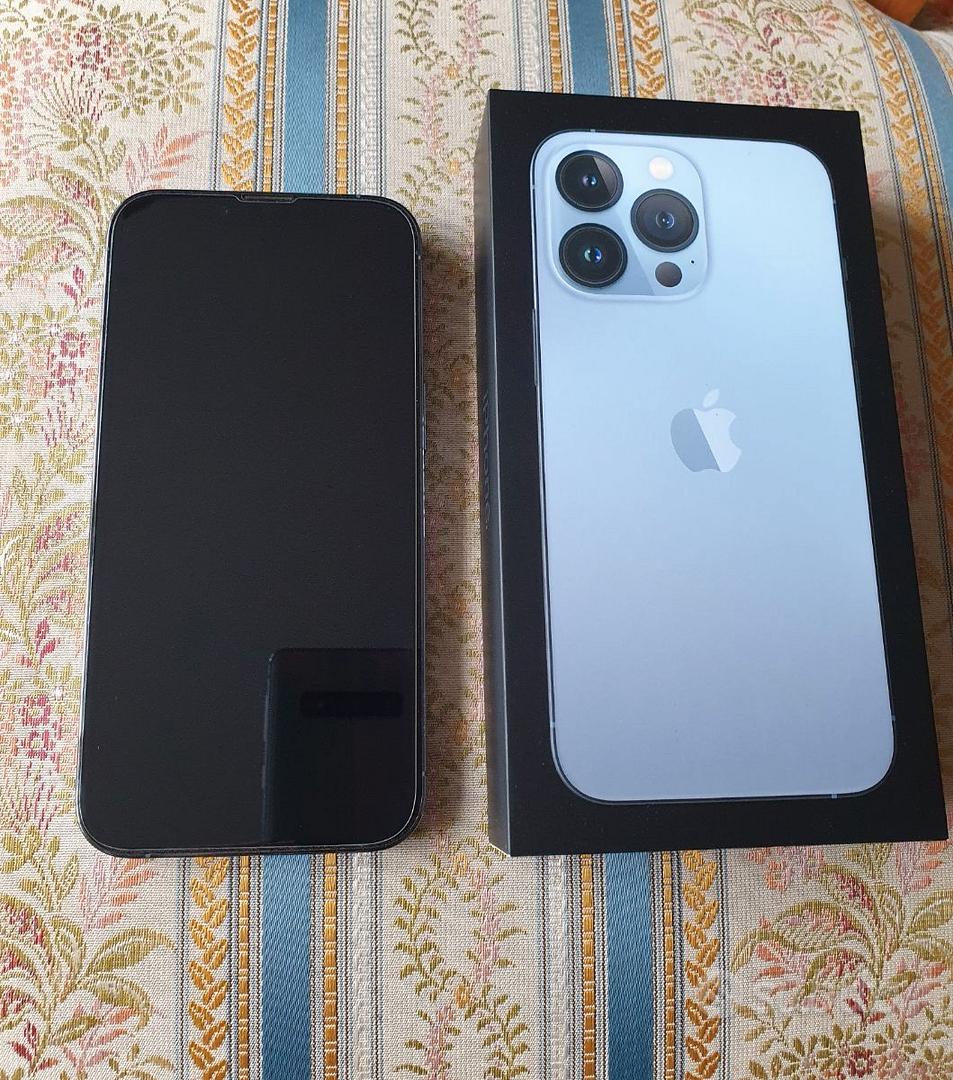
In the rapidly evolving landscape of consumer electronics, few devices manage to maintain their relevance long after their successor’s debut. As we navigate the mid-point of 2026, the smartphone market is dominated by the latest iterations of Apple Intelligence and the sleek silhouettes of the iPhone 17 series. Yet, for a significant segment of global users, the allure of the “Pro” experience doesn’t always require the latest price tag. This has kept the iPhone 13 Pro—particularly in its iconic Sierra Blue finish—firmly embedded in the secondary and refurbished markets.
For many, the iPhone 13 Pro represents a “sweet spot” in Apple’s hardware history. It was the era where the gap between the standard and Pro models widened significantly, introducing features that have since become industry standards. Whether you are a student looking for a reliable creative tool or a professional seeking a dependable backup device, the iPhone 13 Pro Sierra Blue 128GB remains a compelling option that balances legacy performance with a premium build.
Choosing a device from several generations back requires a nuanced understanding of where it still excels and where it begins to show its age. In an era of massive AI-driven chipsets, the 13 Pro’s architecture offers a glimpse into the foundations of the modern smartphone experience. By analyzing its core specifications and current software compatibility, we can determine if this specific configuration still holds value in 2026.
The Enduring Appeal of the A15 Bionic and ProMotion
At the heart of the iPhone 13 Pro is the A15 Bionic chip. While newer models have moved toward the A-series chips optimized for generative AI, the A15 remains a powerhouse for daily productivity, high-definition streaming, and moderate gaming. Its efficiency ensures that basic tasks remain snappy, avoiding the lag often associated with older “standard” models. According to Apple’s official technical specifications, the A15 Bionic features a 6-core CPU and a 4-core GPU, providing a level of performance that still outperforms many mid-range Android devices released more recently.

Perhaps the most significant “quality of life” feature of the 13 Pro is the ProMotion technology. This allows the Super Retina XDR display to dynamically adjust its refresh rate up to 120Hz. For the average user, this translates to fluid scrolling and a more responsive feel when navigating the interface. Once a user adapts to a 120Hz screen, returning to a standard 60Hz display—found on the base iPhone 13 or the newer entry-level “e” models—often feels like a regression in smoothness.
The build quality of the 13 Pro also stands the test of time. With a surgical-grade stainless steel frame and Ceramic Shield front, the device feels substantially more premium than the aluminum frames of the base models. The Sierra Blue color, specifically, was designed as a signature hue for this generation, offering a sophisticated, muted aesthetic that resists the “dated” look often associated with older tech trends.
Camera Capabilities: Cinematic Mode and Macro Photography
The iPhone 13 Pro was a pivotal release for mobile photography, introducing a triple-camera system that brought professional-grade tools to the palm of the hand. The system consists of a 12MP Wide, Ultra Wide, and Telephoto lens, supported by a LiDAR scanner for improved autofocus in low-light conditions and more accurate depth mapping. For those who prioritize photography over raw processing power, the 13 Pro continues to produce images with excellent color accuracy and dynamic range.

Two features, in particular, keep this model relevant for creators: Cinematic mode and Macro photography. Cinematic mode allows the camera to automatically shift focus between subjects, creating a shallow depth-of-field effect that mimics professional cinema cameras. Meanwhile, the Ultra Wide lens doubles as a Macro lens, enabling users to capture extreme close-ups of textures and slight objects with surprising clarity. These features, verified in Apple’s camera guides, ensure that the 13 Pro remains a viable tool for social media content creation in 2026.
However, compared to the iPhone 17 Pro, the 13 Pro lacks the advanced computational photography pipelines and the massive sensor sizes found in newer generations. While it captures stunning images, it cannot compete with the extreme zoom capabilities or the AI-enhanced low-light processing of the 2025-2026 flagship line. For the casual photographer, this is a negligible trade-off; for a professional, it is the primary reason to upgrade.
Evaluating the 128GB Storage and Sierra Blue Aesthetic
The 128GB storage capacity is the entry-level tier for the 13 Pro. In 2026, the adequacy of 128GB is a subject of debate. With high-resolution photos and 4K video files consuming more space than ever, users who record frequently will find 128GB restrictive. However, the integration of iCloud and other cloud storage solutions has mitigated this issue for many. For the average user who streams music and stores photos in the cloud, 128GB is sufficient for the OS and essential applications.
From a design perspective, the Sierra Blue is more than just a color; it’s a marker of the device’s identity. This specific shade of light blue was marketed as the “hero” color of the series, and it has maintained a high resale value due to its popularity. When purchasing a pre-owned 128GB model, the aesthetic condition of the Sierra Blue finish is a key indicator of how the phone was treated, as the stainless steel edges can show micro-abrasions over time if not protected by a case.
When considering the value proposition, the 128GB model is often the most affordable entry point into the Pro ecosystem. It allows users to experience the 120Hz display and the Pro camera system without the steep premium associated with 512GB or 1TB configurations, which are often overkill for the majority of consumers.
Buyer’s Guide: Purchasing a Pre-Owned iPhone 13 Pro
Because the iPhone 13 Pro is no longer sold new by Apple, most consumers encounter it via third-party marketplaces or refurbished retailers. To ensure you are getting a device in “perfect condition,” as often claimed in listings, a rigorous verification process is necessary. The most critical metric is battery health. Over several years, lithium-ion batteries degrade; a 13 Pro with a battery capacity below 80% will likely require a replacement to maintain a full day of usage.
Verification of “original components” is equally vital. In the secondary market, it is common to find devices with third-party screen or battery replacements. These often disable features like True Tone or cause “Unknown Part” warnings in the settings menu. To verify authenticity, users should navigate to Settings > General > About, where iOS lists any parts that have been replaced and whether they are genuine Apple parts.

Potential buyers should also check for the following:
- Screen Integrity: Check for “ghosting” or dead pixels, and ensure the ProMotion 120Hz is functioning smoothly.
- Port Functionality: Ensure the Lightning port (the last generation before the industry-wide shift to USB-C) charges consistently and transfers data.
- Face ID: Verify that the TrueDepth camera system is fully operational, as this is one of the most difficult and expensive components to repair.
- IMEI Status: Always verify that the device is not iCloud-locked or reported stolen by checking the IMEI against a global database.
| Feature | iPhone 13 (Standard) | iPhone 13 Pro | Impact on User |
|---|---|---|---|
| Display Refresh | 60Hz | 120Hz (ProMotion) | Smoother scrolling and animations |
| Camera System | Dual Camera | Triple Camera + LiDAR | Optical zoom and Macro capabilities |
| Build Material | Aluminum | Stainless Steel | Increased durability and premium feel |
| Processor | A15 Bionic | A15 Bionic (5-core GPU) | Better performance for gaming/editing |
Longevity and Software Support in 2026
One of the strongest arguments for buying an iPhone 13 Pro today is Apple’s track record for software support. While the device is now several generations old, it continues to receive the latest major iOS updates. This ensures that users have access to the newest security patches and core system features. While some of the most advanced “Apple Intelligence” features are reserved for the A17 Pro chip and newer, the 13 Pro still handles the vast majority of iOS functions with ease.
The transition to USB-C in newer models is the most tangible drawback of the 13 Pro. Users must maintain a Lightning cable, which is increasingly becoming a legacy accessory. However, for those already embedded in the Apple ecosystem with older accessories, this is a non-issue. The 13 Pro’s ability to run modern apps efficiently means that for the next two to three years, it should remain a fully functional, high-performance device.
the iPhone 13 Pro Sierra Blue 128GB is a testament to the longevity of well-engineered hardware. It avoids the obsolescence that plagues many other electronics by offering a “Pro” baseline that remains high even as the ceiling of technology continues to rise. For the budget-conscious consumer, it offers a path to a premium experience without the premium price.
The next major checkpoint for this device will be the release of the next iOS cycle in late 2026, which will likely determine the remaining lifespan of the A15 Bionic’s primary support. Until then, the 13 Pro remains a sophisticated, capable, and aesthetically timeless choice.
Do you still use an iPhone 13 Pro, or are you considering a move to the iPhone 17 series? Share your experiences with battery longevity and performance in the comments below.
Related reading