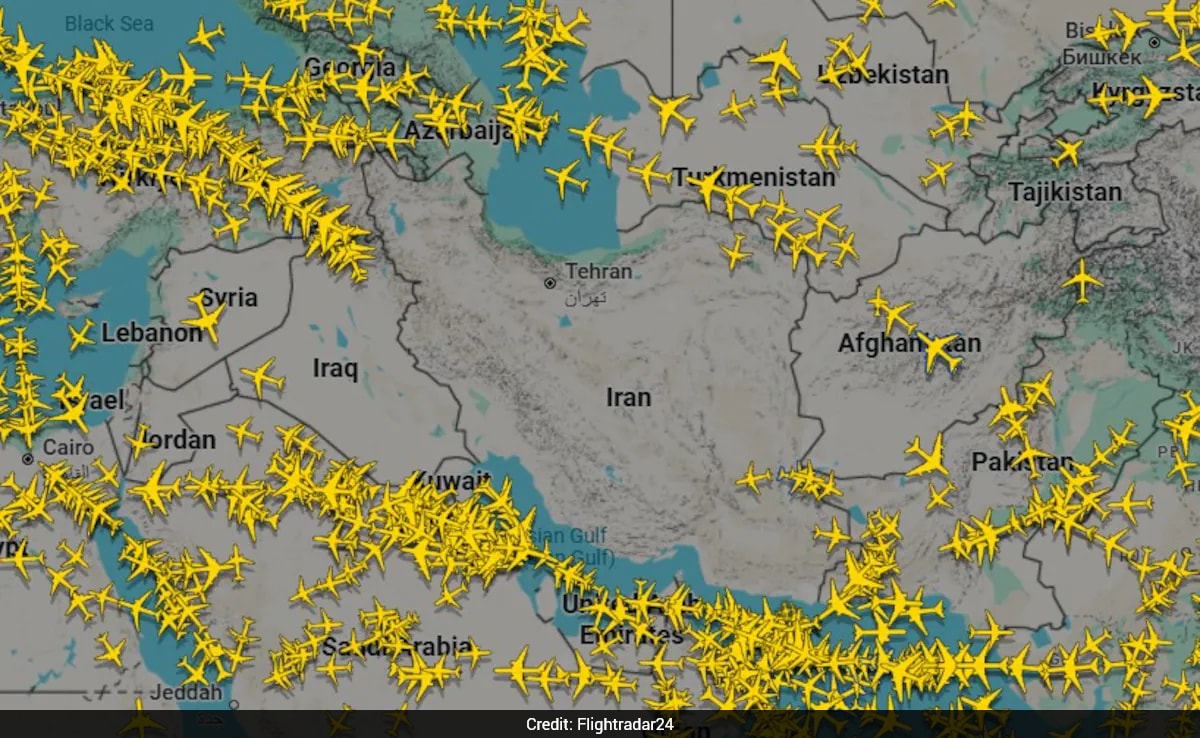
Sofia, Bulgaria – A surge in global tensions following pre-emptive strikes by Israel on Iran Saturday led to widespread disruption in air travel and an unprecedented spike in traffic to flight-tracking websites, including Flightradar24. The website experienced significant outages as users attempted to monitor the rapidly evolving situation, with airspace closures impacting numerous countries across the Middle East.
The crisis began early Saturday, with Israel announcing strikes on targets within Iran, prompting immediate responses from regional powers. Multiple countries, including Iran, Iraq, Kuwait, Bahrain, Qatar, and Jordan, swiftly closed their airspace to all commercial flights, creating a complex web of rerouting and cancellations. The situation unfolded with remarkable speed, leaving travelers stranded and airlines scrambling to adjust schedules. The disruption to civilian air travel underscores the immediate and far-reaching consequences of escalating geopolitical conflict.
Flightradar24 Overwhelmed by User Demand
As news of the strikes and airspace closures spread, Flightradar24, a popular platform for real-time flight tracking, became a focal point for those seeking information. The website experienced an overwhelming influx of users attempting to track both commercial and military aircraft movements in the region. This unprecedented demand led to login errors and intermittent outages, as the platform struggled to cope with the sheer volume of traffic. “We are aware that many users are still experiencing site availability issues. This is due to an unprecedented volume of traffic requests. Our engineers are working hard to resolve the issue. We appreciate your patience,” Flightradar24 stated in a post on X (formerly Twitter).
🚨 We are aware that many users are still experiencing site availability issues. This is due to an unprecedented volume of traffic requests. Our engineers are working hard to resolve the issue. We appreciate your patience. pic.twitter.com/zJW0fguEuy
— Flightradar24 (@flightradar24) February 28, 2026
The surge in traffic highlights the public’s reliance on such platforms during times of international crisis, demonstrating the critical role of real-time information in understanding unfolding events. The incident also underscores the vulnerability of even well-established online services to sudden and massive spikes in demand.
Widespread Airspace Closures and Flight Disruptions
The decision by multiple nations to close their airspace had a cascading effect on global air travel. Airlines were forced to reroute flights, often adding significant time and cost to journeys. Several major carriers, including Emirates, Qatar Airways, and Air India, announced cancellations and adjustments to their schedules. The closures impacted not only flights directly over the affected countries but also those traversing nearby airspace, creating widespread disruption across the Middle East and beyond.
According to reports, Qatar Airways flights departing on Saturday morning were observed circling over Kuwait and Saudi Arabia before returning to Qatari airspace, indicating the challenges of navigating the altered flight paths. The Dubai International Airport, the world’s busiest international hub, temporarily suspended all flight operations in response to the escalating tensions and reported missile strikes across Gulf Arab states. The scale of the disruption is significant, impacting thousands of passengers and disrupting global supply chains.
Escalation of Tensions and Regional Response
The strikes on Iran were reportedly launched by both the United States and Israel, targeting locations within Iran. Iran’s paramilitary Islamic Revolutionary Guard Corps responded by launching what they described as a “first wave” of drones and missiles targeting Israel. A nationwide warning was issued in Israel as the military reported intercepting incoming fire. The conflict quickly extended beyond Iran’s borders, with reports of attacks and heightened alert levels in neighboring countries.
Bahrain reported a missile attack targeting the US Navy’s 5th Fleet headquarters, while sirens and explosions were heard in Kuwait, home to US Army Central, and Qatar. Syria did not entirely shut its airspace, but key air traffic service (ATS) routes were closed. Muscat Airport in Oman temporarily closed, while Oman’s airspace remained open at the time of reporting. The rapid escalation of events underscores the fragility of peace in the region and the potential for wider conflict.
Impact on Global Aviation and Monitoring
The events of February 28th, 2026, serve as a stark reminder of the interconnectedness of global aviation and the potential for geopolitical events to rapidly disrupt air travel. The strain on flight-tracking services like Flightradar24 highlights the increasing demand for real-time information during crises. The incident also raises questions about the resilience of critical infrastructure in the face of cyberattacks or overwhelming demand.
The airspace closures and flight disruptions are expected to have a significant economic impact, affecting tourism, trade, and business travel. Airlines are facing substantial costs associated with rerouting flights and accommodating stranded passengers. The long-term consequences of the escalating tensions remain uncertain, but the immediate impact on global aviation is undeniable.
Looking Ahead: Monitoring the Situation
The situation remains highly fluid and is subject to change. Authorities are continuing to monitor the airspace and adjust flight paths as necessary. Passengers are advised to check with their airlines for the latest updates on flight schedules and travel advisories. The international community is closely watching the developments, with calls for de-escalation and a return to diplomatic solutions.
The next critical development will likely be Iran’s response to the initial strikes. Iranian officials have stated their intention to “respond decisively,” raising concerns about further escalation. The coming days will be crucial in determining whether the conflict can be contained or if it will spiral into a wider regional war. The United Nations Security Council is expected to convene an emergency session to discuss the situation and explore potential avenues for a peaceful resolution.
As the world watches, the events unfolding in the Middle East underscore the importance of international cooperation and the urgent demand for diplomatic efforts to prevent further escalation and protect civilian lives. We will continue to provide updates on this developing story as more information becomes available.
Do you have any questions or insights about the current situation? Share your thoughts in the comments below.
Keep reading