
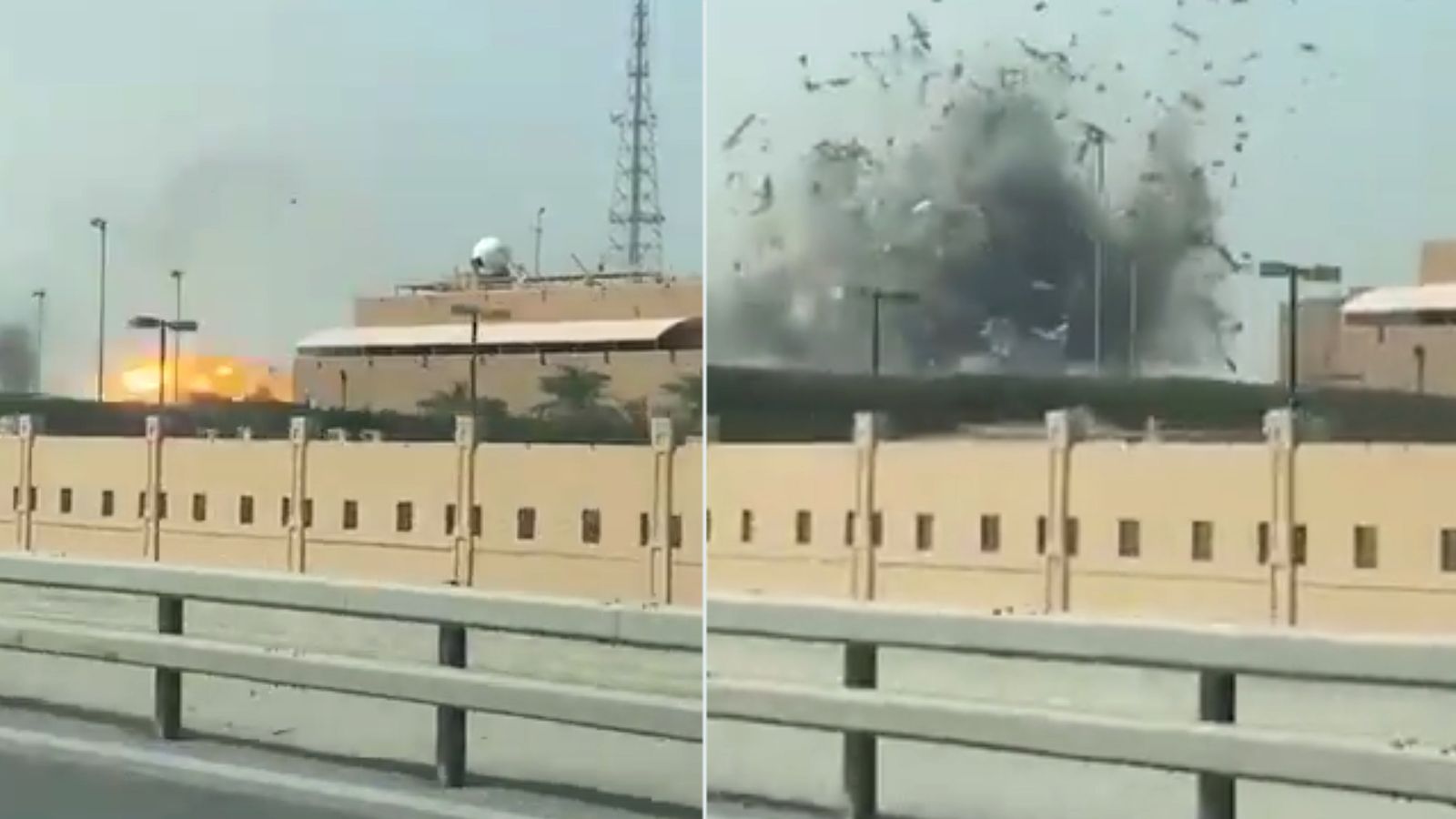
Tensions in the Middle East have escalated sharply following a series of military exchanges between U.S. And Iranian forces. The latest developments, reported by U.S. Central Command (CENTCOM), mark a significant test for the existing, albeit fragile, ceasefire that has struggled to hold since widespread conflict erupted earlier this year.
According to official statements released by CENTCOM, U.S. Forces intercepted a barrage of seven ballistic missiles launched by Iran toward Kuwait and Bahrain on June 5, 2026. Military assessments indicate that six of the projectiles were successfully intercepted, while a seventh failed to reach its intended target. There have been no reports of harm to U.S. Personnel resulting from this specific engagement.
Military Engagements in the Strait of Hormuz
The missile launches followed an earlier confrontation involving unmanned aerial systems. U.S. Forces reported shooting down four Iranian “one-way attack drones” that were identified as a threat to regional maritime traffic near the Strait of Hormuz. In response to these persistent threats, U.S. Military assets conducted strikes against Iranian coastal surveillance radar sites located in Goruk and on Qeshm Island, as detailed in reports from the BBC.
These strikes are the latest in a series of volatile encounters. The broader conflict, which saw wide-ranging joint U.S.-Israeli operations beginning February 28, 2026, has kept the region on high alert. The closure of the Strait of Hormuz—a critical artery for approximately 20% of the world’s oil and liquefied natural gas—remains a primary concern for global energy markets and international security stakeholders.
Ceasefire Negotiations at a Standstill
The recent exchange of fire occurs against a backdrop of stalled diplomatic efforts. Following the February military operations, an initial ceasefire was established; however, negotiations held in Pakistan during April failed to produce a lasting peace agreement. President Donald Trump has since signaled an open-ended extension of the ceasefire alongside the continuation of a U.S. Blockade until a definitive resolution is reached.
The humanitarian impact of the ongoing instability remains severe. Local officials have reported significant casualties following recent strikes, including an incident at Kuwait’s international airport on Wednesday where at least one person was killed and more than 60 were injured. While the Islamic Revolution Guard Corps (IRGC) has denied responsibility for the airport strike, attributing the damage to a U.S. Missile interceptor, CENTCOM has rejected this claim, characterizing the event as a “deliberate, calculated and unjustified attack.”
Looking Ahead: Regional Stability
As of June 6, 2026, the diplomatic path forward remains unclear. While reports from the International Atomic Energy Agency (IAEA) have suggested that representatives from the U.S. And Iran may be nearing an agreement on a nuclear framework, the reality on the ground continues to be defined by military brinkmanship. The U.S. Government continues to implement additional sanctions, most recently targeting Iranian oil smuggling operations, further complicating the geopolitical landscape.

Regional observers are closely monitoring CENTCOM updates for any signs of further escalation or a return to de-escalation protocols. With the ceasefire under immense pressure, the potential for miscalculation remains high. We will continue to provide updates as official statements are released by the involved parties and international monitoring bodies. We encourage our readers to stay informed through official government briefings and to share their perspectives on the diplomatic efforts currently underway to restore stability to the Gulf region.