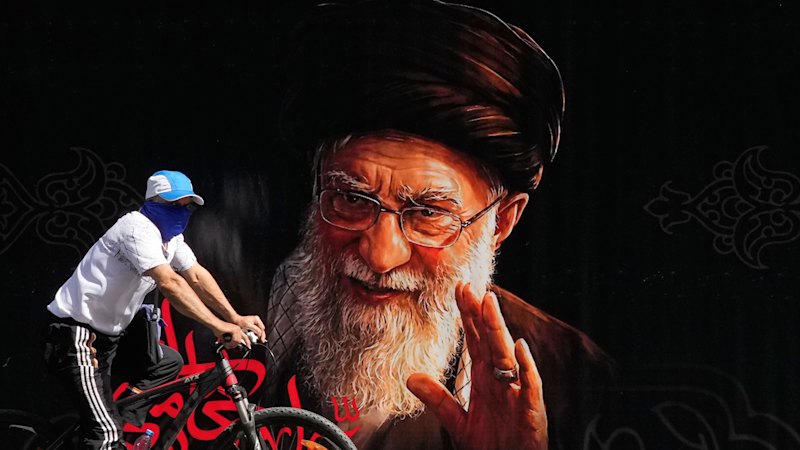
Tehran has entered a period of official mourning following the death of Iran’s Supreme Leader, Ali Khamenei, who died on the opening day of a major regional conflict. The coffin of the late leader was placed on public display in the capital on Thursday, marking the beginning of several days of state-organized funeral ceremonies intended to demonstrate national unity and continuity within the Islamic Republic’s power structure.
The state-managed funeral process, which began with the lying-in-state of the leader’s remains, serves as a focal point for the country’s leadership as they navigate the immediate aftermath of his passing during the escalation of hostilities. According to reports from the Reuters news agency, the government has declared a period of public mourning, and state media has broadcast continuous coverage of the processions, emphasizing the stability of the ruling system despite the sudden power vacuum.
The Funeral Procession and Public Response
The funeral rites for Ali Khamenei are structured to reflect the significance of his tenure as the supreme authority in Iran. The transition of power, governed by the Assembly of Experts, remains a subject of intense international observation. As noted by the Associated Press, the internal mechanisms for selecting a successor are specified in the Iranian Constitution, which mandates that the Assembly of Experts oversee the appointment of a new supreme leader to ensure the preservation of the clerical establishment.

State-affiliated organizations have mobilized to organize public gatherings in Tehran and other major cities. These events are designed to consolidate public support for the existing political order. Observers from the BBC have highlighted that the funeral serves not only as a mourning ritual but as a strategic display of the state’s internal cohesion at a time when the nation faces significant external military pressure.
Geopolitical Implications of the Leadership Transition
The death of Ali Khamenei occurs at a critical juncture for regional stability. Analysts at the Council on Foreign Relations suggest that the transition period will be heavily influenced by the ongoing military situation. Because the supreme leader held final authority over the Islamic Revolutionary Guard Corps (IRGC) and the country’s foreign policy, his absence creates an environment of uncertainty regarding Tehran’s next steps in the conflict.
While the state apparatus has emphasized a seamless transfer of responsibility, the international community remains focused on how the new leadership will manage the country’s military posture. The United Nations has called for restraint from all parties involved in the regional escalation, noting that the death of a high-ranking official during active hostilities significantly alters the diplomatic landscape.
Institutional Continuity and Next Steps
The Assembly of Experts, a body of 88 elected clerics, holds the constitutional mandate to identify and appoint a new supreme leader. Their deliberations are expected to be conducted with high levels of security. As reported by the Atlantic Council, the speed and transparency of this selection process will be key indicators of how the Iranian political elite intends to handle the current crisis.

The mourning period is scheduled to conclude with burial rites that will be attended by senior government officials and military commanders. The government has not yet provided a specific date for the formal announcement of a successor, though officials have indicated that the process will follow the established legal frameworks. For continued updates, readers may follow official announcements from the Office of the Supreme Leader, which remains the primary source for statements regarding the transition and state policy.
We will continue to monitor the situation as the funeral events progress and as the Assembly of Experts moves toward a final decision. Comments and shares are encouraged as we track these significant developments in global affairs.