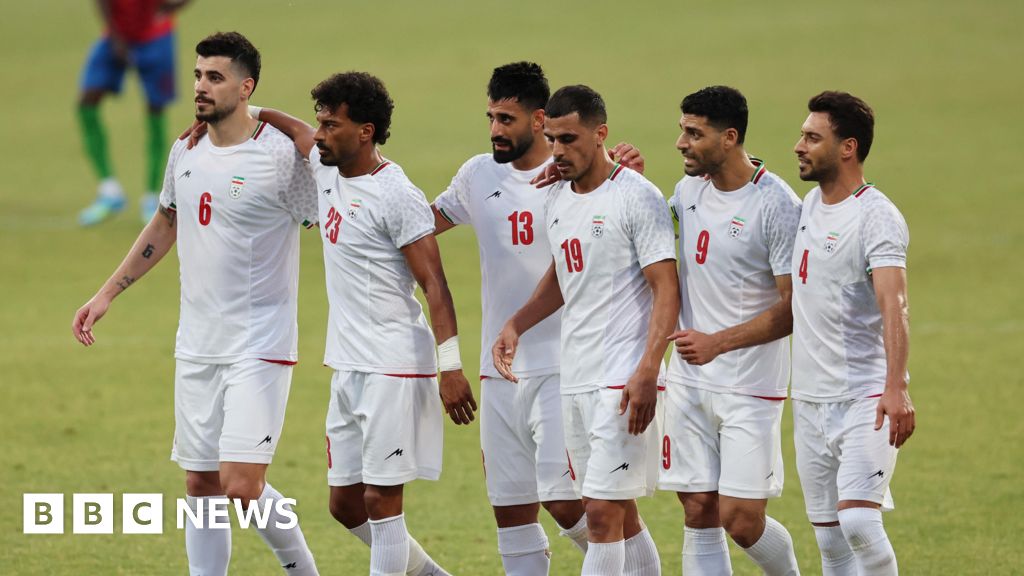
Iran’s national football team has been granted visas to enter the United States for the upcoming World Cup, though the delegation faces significant personnel gaps. While players have received authorization to compete, a substantial portion of the team’s support staff, including technical advisers and executive personnel, were denied entry, according to reports from the Iranian Embassy in Turkey.
The situation highlights a complex diplomatic backdrop just days before the start of the tournament. While U.S. officials confirmed the approval for the players, the Iranian government has publicly criticized the visa denials for the staff, characterizing the move as an attempt to exert pressure on the team. This development follows high-level discussions within the U.S. government regarding the vetting of the delegation to ensure that no individuals with ties to the Islamic Revolutionary Guard Corps (IRGC) are granted entry.
Visa Status and Diplomatic Friction
The confirmation that the Iranian players are permitted to compete in the United States came after months of uncertainty surrounding their participation. However, the Iranian Embassy in Turkey stated on Saturday that a “large portion” of the managerial and executive staff, as well as technical advisers, were not granted the necessary travel documents. The embassy’s account on X challenged the U.S. narrative regarding the visa process, asking: “Why do you not say that visas were denied to a large portion of the managerial and executive staff, technical advisers, and others who are an integral part of any national football team?”
This public rebuke was directed at U.S. Ambassador to Turkey Tom Barrack, who had previously praised the staff at the U.S. Embassy in Ankara for their work in processing applications for the Iranian delegation. In a post on X, Barrack had noted he was “proud of our outstanding team at the U.S. Embassy in Ankara for their work processing visas for Iran’s national football team on their road to the @FIFAWorldCup in the United States.”
The Iranian embassy further argued that by restricting the technical and support staff, the U.S. government is effectively complicating the team’s ability to participate under standard conditions. The embassy stated, “By extending your whimsical hostilities against the Iranian nation into the realm of sport, the U.S. government in practice is depriving Iran’s national team of its right to play in the World Cup under normal conditions and without undue pressure and stress.”
The U.S. Stance on Vetting and IRGC Ties
The decision to deny visas to specific members of the Iranian delegation aligns with the stated policy of the Trump administration. Earlier this week, during testimony on Capitol Hill, Secretary of State Marco Rubio indicated that the administration had no objection to the Iranian players entering the country for the World Cup. However, he emphasized that the government would not permit the Iranian regime to use the sporting event as a vehicle to gain entry for individuals affiliated with the IRGC.
“What we’re not going to allow is for them to embed in their delegation a bunch of people that we know have nothing to do with athletics and have ties to the IRGC or things of that nature, so we were going to watch that very closely,” Rubio said during his testimony. This vetting process appears to be the primary driver behind the discrepancy between the approval of the players and the rejection of a “large portion” of the support staff.
As the start of the competition approaches, the situation underscores the intersection of international sports and geopolitical tensions. The U.S. government has maintained a firm stance on the vetting of foreign delegations from countries with restricted diplomatic relations, focusing specifically on preventing the entry of individuals associated with designated groups. For now, the Iranian national team is expected to proceed with the tournament, albeit with a significantly reduced support structure.
Official updates regarding the tournament and further developments in the diplomatic process will be provided as they become available through official state channels. We invite readers to share their perspectives on the impact of political tensions on international sporting events in the comments section below.
Worth a look