
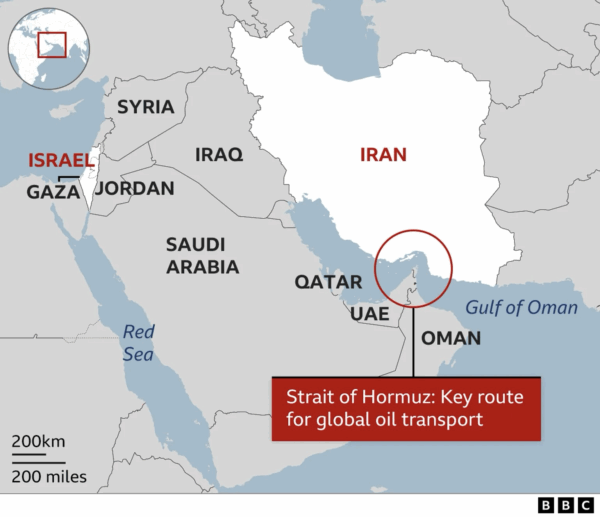
The global energy market is currently grappling with an oil shock that extends far beyond the immediate fluctuations of ticker prices. While a recent temporary ceasefire has triggered a sudden dip in oil prices, the underlying structural damage to the Persian Gulf’s energy infrastructure suggests that the oil shock is worse than you think.
The crisis, centered on the conflict between the U.S., Israel, and Iran, has effectively shuttered the Strait of Hormuz—a critical maritime choke-point through which roughly one-fifth of the world’s oil supply typically flows. This disruption is more severe than the historic oil shocks of the 1970s; while those crises represented a loss of 5% to 7% of global supply, the current disruption implies a loss of roughly 10% of the world’s oil supply according to analysis by The Conversation.
Despite hopes for a swift recovery, experts warn that the physical reality of damaged refineries and stalled shipping fleets will throttle global oil flows for months. The market is currently operating in a state of extreme volatility, where a diplomatic pause does not necessarily equate to a restoration of supply.
The Strait of Hormuz: A Bottleneck Under Control
The Strait of Hormuz remains the primary point of failure in the global oil supply chain. A United Nations panel reported on Monday that the strait is virtually closed to oil tankers and other ship traffic, with daily transits plummeting from approximately 130 in February to just six in March as reported by CBS News.

The operational reality on the ground contradicts the optimism of a ceasefire. Sultan Ahmed Al Jaber, CEO of Abu Dhabi National Oil Co, stated on Thursday that the strait remains effectively closed to traffic, noting that Iran has mandated that ships must obtain its permission to pass through. Al Jaber emphasized that access is being “restricted, conditioned and controlled.”
The scale of this maritime paralysis is visible in Southeast Asia. Henning Gloystein, managing director of energy, industry and resources at Eurasia Group, notes that at least 70 large empty crude oil tankers are currently anchored off the eastern coasts of Malaysia and Singapore. These vessels collectively have the capacity to hold at least 100 million barrels of crude oil—volumes that would normally be sourced from the Gulf and delivered to Asian refineries via CBS News.
Compounding Failures: Saudi Infrastructure Under Attack
While the closure of the Strait of Hormuz is the most visible disruption, Iran has simultaneously targeted the alternative routes and production facilities within Saudi Arabia, removing the “safety valves” the kingdom relies on during wartime.
Saudi Arabia’s East-West pipeline, designed to reroute oil away from the Strait of Hormuz to the Red Sea port of Yanbu, was recently attacked by Iran. The strike hit a pumping station, cutting the pipeline’s throughput by 700,000 barrels per day according to CNBC. This represents a critical blow, as the pipeline—which has a total capacity of 7 million barrels per day—has been Riyadh’s primary means of exporting crude while the Strait of Hormuz remains impassable.
The damage extends beyond transportation. Iranian attacks on the Manifa and Khurais production facilities have slashed Saudi Arabia’s output by an additional 600,000 barrels per day, and several refineries have as well been targeted per the Saudi Press Agency. These combined losses mean that even if the Strait of Hormuz were to reopen tomorrow, the physical capacity to produce and move oil has been severely degraded.
The Logistics of Recovery
The timeline for recovery is measured in months, not days. According to Henning Gloystein of the Eurasia Group, it will seize several months to repair the damaged oil refineries and energy infrastructure across the Persian Gulf. Shipping companies will require at least two months to resume operations once a war is suspended.
The logistical lag is further complicated by the distance tankers must travel. A voyage from the current anchorage in Singapore to the Gulf region takes approximately four weeks. Vessels currently idling in Asia could only begin delivering Middle Eastern crude roughly eight weeks after they depart their current positions via CBS News.
Market Volatility and Geopolitical Weapons
The current oil shock has highlighted the fragility of global energy markets and the effectiveness of energy as a geopolitical weapon. While the U.S. Agreed to a two-week ceasefire on Tuesday in exchange for Iran allowing ships to pass through the strait, the market remains jittery. President Trump stated in a news conference on Monday that Iran is negotiating “in solid faith” and that reopening the strait is a “very big priority.”
However, the “sudden fall” in oil prices following the ceasefire announcement may be misleading. The pause underscores the volatility of a market where a significant portion of supply is held hostage by political negotiations. The disruption has already propagated through global markets, hitting Asian buyers first before spreading to Europe.
The current crisis is layered upon existing market instabilities. Long-standing sanctions by the U.S. And its allies on nations including Russia, Iran, Venezuela, Cuba, and Iraq have already reduced the pool of freely marketable oil. More recently, G7 price caps and sanctions on Russian crude have reshaped trade flows, leaving the world more vulnerable to a shock in the Gulf.
Alternative Export Capacities
To understand why the disruption is so severe, one must appear at the limited capacity of alternative routes:
- Saudi East-West Pipeline: Can transport around 5 million barrels per day to the Red Sea (though currently hampered by attacks).
- UAE Pipeline to Fujairah: Can move approximately 1.5 million barrels per day, bypassing the strait.
- Iranian Exports: Iran has continued to export an estimated 1.5 million barrels of oil per day throughout the hostilities.
Despite these alternatives, the loss of the Strait of Hormuz still represents a massive deficit that cannot be easily filled by other producers according to The Conversation.
| Disruption Point | Impact/Loss | Status |
|---|---|---|
| Strait of Hormuz | ~10% of global oil supply | Effectively Closed |
| Saudi East-West Pipeline | 700,000 barrels per day | Damaged/Reduced |
| Manifa & Khurais Facilities | 600,000 barrels per day | Output Slashed |
| Shipping Fleet | 100 million barrels (idling) | Delayed/Anchored |
As the world watches the two-week ceasefire, the critical question remains whether shipping companies will dare to return to the Gulf given the volatility. The physical damage to infrastructure and the conditional nature of the strait’s “opening” mean that the energy crisis is far from resolved.
The next critical checkpoint will be the conclusion of the current two-week ceasefire agreement to witness if Iran adheres to the terms of allowing ship passage without restrictive conditions.
We invite our readers to share their perspectives on global energy security in the comments below. Please share this report with your network to keep others informed on the evolving geopolitical landscape.