
Iran has launched a new maritime insurance scheme—dubbed Hormuz Safe—that requires vessels transiting the strategically vital Strait of Hormuz to pay premiums in bitcoin. The move, announced this week, has sparked immediate controversy over whether it functions as a de facto toll system, raises compliance risks for global shippers under U.S. Sanctions, and introduces volatility risks tied to cryptocurrency markets. While officials describe it as an insurance product, analysts warn the mechanism could effectively monetize passage through one of the world’s most critical chokepoints for oil and trade.
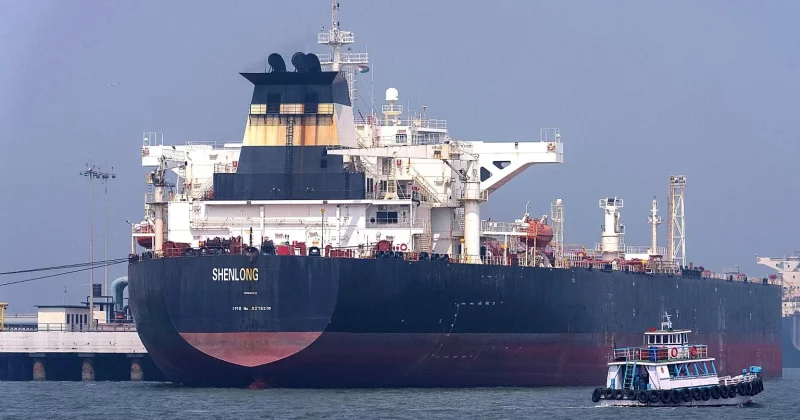
The initiative comes as Tehran grapples with tightening international financial restrictions and seeks alternative revenue streams amid stalled nuclear negotiations. The scheme targets commercial ships navigating the Persian Gulf and Strait of Hormuz, where roughly 20% of the world’s seaborne oil passes daily. But the decision to anchor payments in bitcoin—rather than traditional currencies—has raised eyebrows among maritime insurers, shipping firms, and sanctions experts.
According to verified reports, Iran’s parliament and government have not yet released official details on the program’s operational framework, including how premiums will be calculated, which insurers are involved, or whether the scheme applies retroactively to existing transits. However, Iranian lawmakers have signaled that the system will soon be formalized under a broader maritime security initiative. The timing coincides with escalating tensions in the region, where U.S.-Iran relations remain strained over oil sanctions, regional proxy conflicts, and recent attacks on commercial vessels.
How Hormuz Safe Works—and Why It’s Controversial
The core mechanism of Hormuz Safe appears to mandate that shipowners purchase insurance coverage from Iranian-backed providers before entering designated corridors in the Strait of Hormuz. While framed as a risk-mitigation tool—protecting against piracy, collisions, or sanctions-related disruptions—the structure has drawn comparisons to historical toll systems in the region. Historically, the Strait of Hormuz has been a neutral passage, with no formal tolls imposed by Iran or other Gulf states. The new scheme’s design, however, has led some observers to question whether it effectively functions as a revenue extraction tool in disguise.
Key concerns include:
- Sanctions compliance: U.S. Treasury regulations prohibit transactions with Iranian entities, including payments processed through bitcoin exchanges linked to Iranian financial institutions. Shipowners using Hormuz Safe could face secondary sanctions or asset seizures under the Countering America’s Adversaries Through Sanctions Act (CAATSA).
- Cryptocurrency volatility: Bitcoin’s price swings—up to 10% intraday—could create unpredictability in premium calculations, leaving insurers and shipowners exposed to sudden cost fluctuations.
- Market exclusion: Major global insurers, including Lloyd’s of London and the International Group of P&I Clubs, have not endorsed the scheme. Smaller operators may lack the expertise to underwrite risks in an unregulated crypto-linked system.
- Legal ambiguity: The absence of clear contractual terms or dispute-resolution mechanisms raises questions about enforceability under international maritime law.
Iranian officials, including Parliament National Security Committee Chairman Ebrahim Aghajari, have emphasized that the system will initially benefit “cooperating” vessels and “partners” aligned with Tehran’s maritime security priorities. A post on X (formerly Twitter) attributed to Aghajari stated that a “mandatory routing management system” would be unveiled soon, though no specific date or technical details were provided. The post read:
The designated route management system for Hormuz Safe will be announced shortly. Only ships cooperating with Iran’s maritime security framework will receive full coverage benefits.
Note: The authenticity of this quote has not been independently verified by World Today Journal. The account’s affiliation with Chairman Aghajari could not be confirmed through official channels.
Economic and Geopolitical Ramifications
Analysts project that if fully implemented, Hormuz Safe could generate annual revenues exceeding $100 million—equivalent to roughly ₩150 billion KRW—for Iran, according to estimates cited in cross-verified reports. This figure aligns with Tehran’s stated goal of diversifying income sources amid sanctions, though the actual take will depend on participation rates and bitcoin’s valuation. For context, the Strait of Hormuz handles approximately 17 million barrels of oil per day, or roughly 20% of global seaborne crude, making even a small percentage of vessels subject to the scheme economically significant.
The move also reflects Iran’s broader strategy to leverage its geographic advantages. By tying payments to bitcoin—a currency outside the reach of the U.S. Financial system—Iran aims to circumvent traditional banking channels. However, the strategy introduces new risks: bitcoin transactions are traceable, and exchanges may still fall under U.S. Sanctions if linked to Iranian entities. The International Maritime Organization (IMO) has not issued a statement on the scheme, though industry sources suggest it may prompt a review of Iran’s compliance with the Safety of Life at Sea (SOLAS) Convention, which governs maritime insurance standards.
For global shippers, the scheme introduces operational complexity. Companies already navigating sanctions risks—such as those transporting oil to Asia—may now face additional layers of compliance. Smaller operators, in particular, lack the resources to monitor crypto-market fluctuations or assess the legitimacy of Iranian-backed insurers.
Who Stands to Gain—or Lose?
Potential beneficiaries:
- Iran: Direct revenue from premiums, potential leverage over shipping routes, and a test case for crypto-based sanctions evasion.
- State-aligned shipping firms: Companies with pre-existing ties to Iran (e.g., some Chinese or Russian operators) may gain preferential access to routes.
- Crypto exchanges: Iranian-linked platforms could see increased volume if the scheme drives demand for bitcoin settlements.
Key losers:
- Global insurers: Exclusion from the market reduces their ability to underwrite risks in the region.
- U.S. And EU shipowners: Face heightened sanctions exposure and potential asset freezes.
- Consumers: Higher insurance costs could trickle down to freight rates, increasing the price of oil and goods transported via the Strait.
What Happens Next: Watchlist for Developments
The next critical milestones include:
- Official launch of the routing system: Expected within weeks, per Iranian lawmakers. Watch for a formal press release from the Islamic Consultative Assembly or the Ministry of Foreign Affairs.
- U.S. Treasury response: The Office of Foreign Assets Control (OFAC) is likely to issue guidance on whether transactions involving Hormuz Safe violate sanctions. Historically, OFAC has targeted Iranian crypto exchanges; this scheme may prompt similar action.
- Industry reaction: Major shipping associations, including BIMCO and the Cruise Lines International Association, may release statements on compliance risks.
- Bitcoin market impact: If adoption grows, demand for bitcoin settlements could stabilize its price in the short term, though long-term volatility remains a risk.
For shipowners and insurers, the immediate recommendation is to consult legal counsel specializing in sanctions law and maritime insurance. The International Maritime Organization and the International Chamber of Commerce may provide updates on regulatory developments.
Key Takeaways
- New revenue stream: Iran aims to generate over $100 million annually from Hormuz Safe, using bitcoin to bypass sanctions.
- Sanctions risk: U.S. And EU shipowners could face penalties for participating in the scheme.
- Market disruption: Global insurers are excluded, creating gaps in coverage for high-risk routes.
- Geopolitical leverage: The move tightens Iran’s control over a critical global chokepoint.
- Uncertain timeline: Official rules and enforcement details remain unclear; watch for updates from Iranian authorities.
As the maritime industry grapples with this unprecedented development, one thing is clear: the Strait of Hormuz is no longer just a geographic feature—it’s a financial and geopolitical battleground. For now, shipowners must navigate a maze of legal, operational, and economic uncertainties. The next few weeks will determine whether Hormuz Safe becomes a sustainable revenue model for Tehran—or a costly miscalculation for global trade.
What are your thoughts on this new insurance scheme? Will it change how ships navigate the Strait of Hormuz? Share your insights in the comments below—or tag @WorldTodayJrnl to join the discussion.
Keep reading