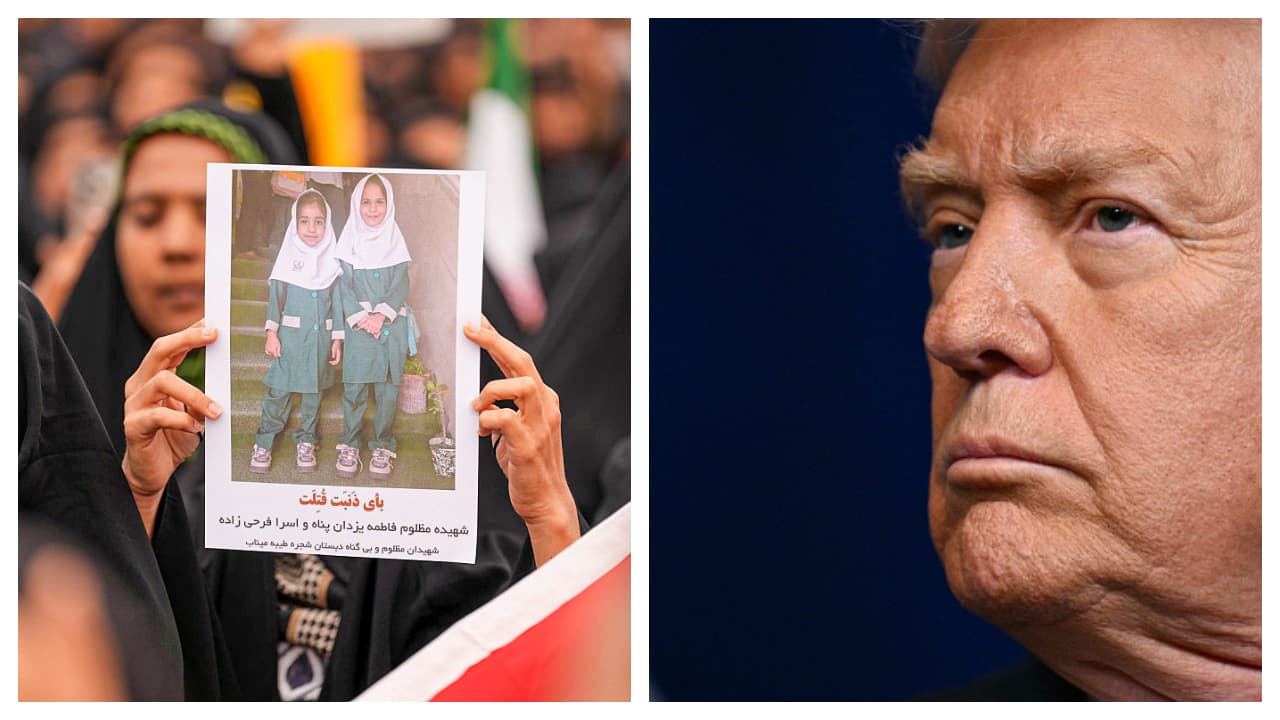
The escalating conflict between Israel and Iran, marked by direct military strikes and heightened rhetoric, continues to send ripples across the Middle East and beyond. Recent reports suggest a significant escalation following a large-scale offensive launched by the United States and Israel against Iran on February 28, 2026, an action that has triggered retaliatory strikes and raised fears of a wider regional war. The situation is further complicated by accusations and counter-accusations regarding responsibility for attacks, including claims that the U.S. May have been involved in a strike on a school in Iran.
The offensive, as reported by the Council on Foreign Relations and the Associated Press, was initiated after weeks of military buildup and threats from former U.S. President Donald Trump. Trump, in a post on Truth Social, stated the operation’s goals were to prevent Iran from acquiring a nuclear weapon and to “defend the American people by eliminating imminent threats from the Iranian regime.” He also urged Iranians to seize the opportunity to overthrow their government, a statement that has drawn international scrutiny. The strikes reportedly targeted sites in Tehran, Isfahan, Karaj, Kermanshah, Qum and Tabriz, with Israel Defense Force (IDF) strikes in Tehran resulting in the death of Iranian Supreme Leader Ayatollah Ali Khamenei, according to both Trump and Israeli officials.
Escalation and Retaliation
Iran swiftly retaliated with ballistic missile attacks targeting Israel and U.S. Facilities across the Middle East, including locations in Bahrain, Kuwait, Qatar, and the United Arab Emirates. However, as of March 5, 2026, reports indicate a significant decrease in the frequency of Iranian strikes. U.S. Central Command reported a 90% reduction in Iranian ballistic missile attacks and an 83% decrease in drone attacks, potentially offering some relief to neighboring Gulf states that had previously borne the brunt of Iran’s response. Despite this apparent de-escalation, the U.S. Continues to intensify its own attacks on Iranian soil, and Israeli strikes are reportedly causing panic in southern Beirut, according to CNN reporting.
The conflict has already resulted in casualties. On March 1, 2026, Israel’s paramedic service, Magen David Adom, reported treating several casualties, including a 10-year-old girl seriously injured in the Beit Shemesh region following rocket salvos from Iran. Reports from Lebanese and Iranian state media indicate that more than 1,320 people have been killed in the conflict thus far, a figure that the Trump administration warns will likely increase as the war escalates. The situation is further complicated by the involvement of NATO allies, who are being reluctantly drawn into the conflict, providing military support to protect allied interests, while also expressing criticism of the war’s trajectory.
Allegations of U.S. Involvement in School Attack
Amidst the ongoing conflict, serious allegations have surfaced regarding the responsibility for an attack on a school in Iran. Initial reports, circulating in both Asianet News Malayalam and Manorama Online, suggest that the U.S., rather than Israel, may have been responsible for the attack, which reportedly resulted in the deaths of 175 people. These claims directly contradict initial narratives and have prompted questions about the true extent of U.S. Involvement in the escalating conflict. However, independent verification of these claims remains challenging, and the reports should be treated with caution.
The reports from Asianet News Malayalam and Manorama Online raise significant questions about the accuracy of information being disseminated by the U.S. Government. The claim that “America said a lie” regarding the incident underscores a growing distrust of official statements and highlights the need for independent investigation. The reports specifically question the narrative surrounding the attack on the school, suggesting that the U.S. May have deliberately misled the public about the perpetrators.
Trump’s Stance and International Response
President Trump has taken a hardline stance, posting on Truth Social that there can be no deal with Iran “except UNCONDITIONAL SURRENDER.” In a CNN interview with Dana Bash, he stated he was unconcerned whether Iran becomes a democratic state, as long as the new leadership treats the U.S. And Israel “well.” This uncompromising position underscores the administration’s determination to exert maximum pressure on Iran and signals a willingness to pursue a confrontational approach.
European nations are also grappling with the implications of the conflict. Countries including Britain, France, and Spain have agreed to provide military support to protect their allies’ interests. However, many European leaders have also voiced criticism of the war, reflecting a growing concern about the potential for further escalation and the humanitarian consequences of the conflict. The situation presents a complex challenge for European policymakers, who must balance their commitment to transatlantic security with their desire to avoid a wider regional war.
The Death of Ayatollah Ali Khamenei
A pivotal moment in the recent escalation was the reported death of Iranian Supreme Leader Ayatollah Ali Khamenei. Confirmed by Iranian state media on February 29, 2026, Khamenei’s death marks a significant turning point in Iranian politics and could have far-reaching consequences for the region. Khamenei had been a dominant figure in Iranian politics for decades, shaping the country’s foreign policy and suppressing domestic dissent. His death leaves a power vacuum that could lead to instability and further conflict.
The circumstances surrounding Khamenei’s death are particularly sensitive, given the ongoing military conflict. The IDF strikes on Tehran, which reportedly resulted in his death, have been condemned by some as an act of aggression and a violation of international law. The loss of Khamenei is likely to fuel further retaliation from Iran and could escalate the conflict even further.
Regional Impact and Future Outlook
The conflict is having a devastating impact on the wider region. Strikes have been reported in the United Arab Emirates, with thick black smoke rising from a warehouse in the industrial area of Sharjah city. The ongoing violence is also causing widespread panic and displacement, with civilians fleeing their homes in search of safety. The humanitarian consequences of the conflict are likely to be severe, and international aid organizations are struggling to provide assistance to those in need.
Looking ahead, the situation remains highly volatile and unpredictable. The Trump administration’s uncompromising stance and the ongoing military strikes suggest that the conflict is likely to continue for the foreseeable future. The potential for miscalculation and escalation is high, and there is a real risk that the conflict could spiral out of control. The international community must work urgently to de-escalate the situation and find a peaceful resolution to the conflict. The next key development to watch will be the response from Iran to the continued U.S. And Israeli strikes, and any potential shifts in the political landscape following the death of Ayatollah Ali Khamenei.
As the situation continues to unfold, We see crucial to remain informed and engaged. Stay updated on the latest developments from reliable news sources and consider the implications of this conflict for global security and stability. Share this article with your network to raise awareness and encourage informed discussion.
Worth a look