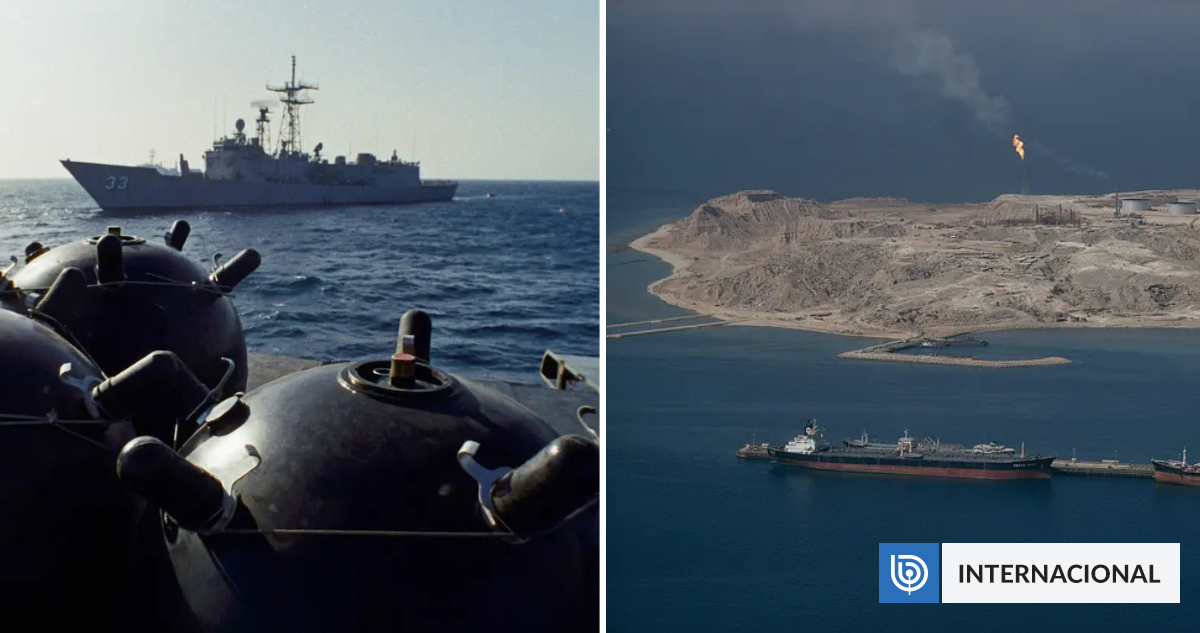
London, United Kingdom – Tensions in the Middle East escalated sharply on Tuesday as Iran announced its intention to deploy naval mines in the Strait of Hormuz, a critical waterway for global oil shipments. This move comes amid increasingly bellicose rhetoric from the United States, with President Donald Trump suggesting a potential military takeover of the strait and warning of devastating consequences should Iran impede maritime traffic. The situation has sparked international concern, raising fears of a wider conflict and further disruption to already volatile energy markets.
The Strait of Hormuz, a narrow passage connecting the Persian Gulf to the Gulf of Oman and the Arabian Sea, is a vital chokepoint for approximately 20% of the world’s oil supply, according to the U.S. Energy Information Administration. The EIA details the strategic importance of the strait, noting its vulnerability to disruption. Iran’s announcement of mine deployment, first reported by The Telegraph, is widely seen as a direct response to President Trump’s threats and a demonstration of Iran’s willingness to defend its interests in the region. The move also follows a period of escalating attacks targeting U.S. Military assets and infrastructure in the Middle East, including in Bahrain, Kuwait, the United Arab Emirates, and Saudi Arabia, as retaliation for the U.S.-Israeli campaign in the region.
Escalating Rhetoric and Mine Deployment
According to intelligence assessments, Iran is preparing to deploy between 2,000 and 6,000 naval mines, of Iranian, Chinese, and Russian origin, utilizing smaller vessels capable of carrying two to three mines each.
U.S. Intelligence assets have begun to witness indications Iran is taking steps to deploy some of its 2,000 to 6,000 naval mines of Iranian, Chinese and Russian-origin into shipping lanes across the Strait of Hormuz, utilizing smaller crafts that can carry 2 to 3 mines each,… pic.twitter.com/hhr4C7RJjY
— OSINTdefender (@sentdefender) March 10, 2026
The intent, as suggested by Iranian officials, is to target oil tankers attempting to transit the strait, potentially exacerbating the global energy crisis. Ebrahim Jabari, a senior advisor to the commander-in-chief of Iran’s Revolutionary Guard Corps (IRGC), stated on March 2nd that “The strait is closed. If anyone tries to pass, the heroes of the Revolutionary Guard and the regular navy will set those ships ablaze.” He further predicted oil prices would reach $200 per barrel, a claim that, while not yet realized, underscores the potential economic impact of the conflict.
President Trump, speaking from his golf club in Doral, Florida, on Monday, characterized the conflict with Iran as “remarkably complete,” claiming Iran’s military capabilities have been severely degraded. “They have no navy, no communications, they’ve got no air force. Their missiles are down to a scatter. Their drones are being blown up all over the place, including their manufacturing of drones,” Trump stated in an interview with CBS News. The U.S. Military has reported striking over 3,000 Iranian targets in the first week of operations. Despite these claims, the situation remains highly volatile, and independent verification of the extent of damage to Iranian military assets is limited.
Threats of Military Intervention and Oil Market Impact
Trump’s rhetoric has been particularly forceful, threatening Iran with overwhelming military force should they disrupt oil flows through the Strait of Hormuz. “If Iran does anything that stops the flow of oil through the Strait of Hormuz, it will be hit by the United States TWENTY TIMES MORE STRONGLY than it has been hit so far,” Trump declared on his Truth Social platform. He added, “Death, fire, and fury will reign over them, but I hope and pray that does not happen.” These statements have fueled concerns about a potential escalation of the conflict and a broader regional war.
The immediate impact of the escalating tensions has been felt in global oil markets. Brent crude oil prices surged by more than 30 percent on Sunday, briefly topping $119 a barrel, before declining somewhat. While prices have since retreated, they remain significantly higher than pre-war levels. The disruption to shipping through the Strait of Hormuz has effectively halted commercial traffic, further contributing to market uncertainty. Interestingly, major stock indices closed in positive territory on Monday, despite spending most of the day in the red, suggesting a complex market reaction to the unfolding events.
International Response and French Deployment
France has responded to the crisis by announcing the deployment of a defensive armed mission to the region, aimed at ensuring the continued flow of oil tankers through the Strait of Hormuz. This move signals a growing international effort to de-escalate the situation and protect vital shipping lanes. The French mission is intended to provide security and deter potential Iranian aggression, but its effectiveness remains to be seen. The United States has also been actively engaging with its allies to coordinate a response to Iran’s actions.
Adding another layer of complexity, Iran announced on Sunday the succession of Ayatollah Mojtaba Khamenei as the country’s new supreme leader, replacing his father. President Trump stated he had “no message” for the new leader, indicating a continued hardline stance towards Iran. This leadership transition occurs at a critical juncture, potentially influencing Iran’s decision-making and its approach to the ongoing conflict.
The Potential for a Wider Conflict
The current situation presents a significant risk of a wider regional conflict. Iran’s deployment of naval mines, coupled with Trump’s threats of military intervention, creates a dangerous escalation dynamic. The involvement of other regional actors, such as Saudi Arabia and Israel, further complicates the situation. Any miscalculation or unintended incident could quickly spiral out of control, with potentially devastating consequences for the Middle East and the global economy. The possibility of attacks on ships traversing the Strait of Hormuz, as threatened by Iranian officials, poses a direct threat to international trade and energy security.
The war, now in its 11th day as of Tuesday, has already seen attacks on Iranian targets as well as on U.S. And Israeli assets in neighboring countries, including Bahrain, Kuwait, the United Arab Emirates, and Saudi Arabia. The potential for further escalation remains high, and the international community is urging restraint and a diplomatic solution. However, with both sides seemingly entrenched in their positions, the prospects for a peaceful resolution appear increasingly dim.
Key Takeaways
- Iran has announced the deployment of naval mines in the Strait of Hormuz in response to U.S. Threats.
- President Trump has threatened overwhelming military force against Iran if it disrupts oil flows through the strait.
- Global oil prices have surged due to the escalating tensions and disruption to shipping.
- France has deployed a defensive armed mission to the region to protect oil tankers.
- The situation poses a significant risk of a wider regional conflict.
The coming days will be critical in determining the trajectory of the conflict. The international community will be closely monitoring Iran’s actions in the Strait of Hormuz and assessing the effectiveness of the French and U.S. Deployments. Further escalation appears likely unless a diplomatic solution can be found. World Today Journal will continue to provide updates on this developing story as it unfolds.
Do you have thoughts on this developing situation? Share your perspective in the comments below.