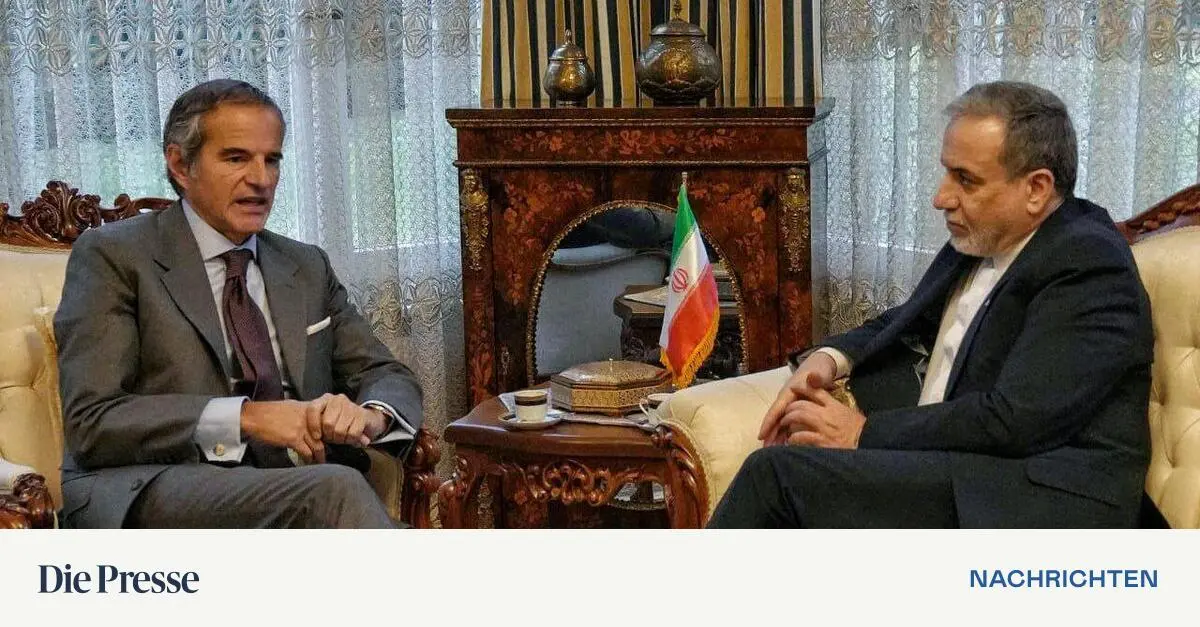
Geneva – Negotiations between the United States and Iran regarding Tehran’s nuclear program have shown a “step forward,” according to Rafael Grossi, Director General of the International Atomic Energy Agency (IAEA). However, Grossi cautioned that time is of the essence, emphasizing the urgency for a resolution as discussions continue under Omani mediation. The renewed diplomatic efforts come amid heightened tensions, including U.S. Threats of military action and concerns over Iran’s nuclear capabilities.
The latest round of indirect talks, facilitated by Oman, took place in Geneva this week, marking a resumption of dialogue for the first time since a 12-day conflict last June led to the collapse of previous negotiations. Grossi, in an interview with French television channel LCI, stated, “We made progress, but there is still work to be done, and the problem is that we don’t have much time.” He added that a “dialogue that is really beginning to take shape” is emerging, with both sides now discussing “concrete things” and outlining necessary steps. This represents a shift towards more substantive engagement, moving beyond preliminary discussions.
Progress and Persistent Challenges in Nuclear Talks
While acknowledging a “willingness on both sides to reach an agreement,” Grossi underscored the immense complexity of achieving a comprehensive deal. The negotiations center around limiting Iran’s nuclear program in exchange for sanctions relief, a framework initially established in the 2015 Joint Comprehensive Plan of Action (JCPOA). The JCPOA, which the U.S. Unilaterally withdrew from in 2018 under then-President Donald Trump, aimed to prevent Iran from developing nuclear weapons. The current talks seek to revive the agreement or establish a new framework to address concerns about Iran’s nuclear activities.
A key obstacle remains Iran’s suspension of some cooperation with the IAEA and its restriction of access for inspectors to sites previously targeted in military actions by Israel and the United States. Tehran has accused the UN nuclear watchdog of bias and criticized its failure to condemn those strikes. Restoring full IAEA access is crucial for verifying Iran’s compliance with any potential agreement and ensuring transparency in its nuclear program. The IAEA’s ability to conduct impartial inspections is fundamental to building trust and confidence in the process.
The United States has urged Iran to reach a deal, with the White House stating it would be “wise” to do so. However, President Trump has repeatedly hinted at military action against Iran, initially in response to the authorities’ crackdown on anti-government protests in January. This dual-track approach – diplomacy coupled with the threat of force – adds to the pressure on Iran and complicates the negotiation process. The potential for escalation remains a significant concern for regional and international stability.
Regional Implications and International Concerns
The situation is further complicated by broader regional dynamics. Russia’s Foreign Minister Sergey Lavrov recently warned the U.S. Against any military strike on Iran, citing the risk of a nuclear incident. Lavrov, in an interview with Saudi Arabian television channel Al-Arabiya, pointed to previous attacks on Iranian nuclear facilities under IAEA control, stating that such actions carried “real risks of a nuclear incident.” RTÉ News reported on these warnings, highlighting the potential for wider conflict in the region.
Lavrov emphasized that no country in the region desires increased tensions, characterizing the situation as “a game with fire.” He called for restraint and a focus on finding a solution that allows Iran to pursue a peaceful nuclear program. This statement reflects Russia’s interest in de-escalation and its support for a diplomatic resolution to the crisis. Russia, along with China and the European Union, is a party to the JCPOA and has consistently advocated for its preservation.
Israel, a staunch critic of Iran’s nuclear program, views a nuclear-armed Iran as an existential threat. Israeli officials have repeatedly stated that they will not allow Iran to develop nuclear weapons, and have hinted at taking unilateral action if necessary. This position adds another layer of complexity to the negotiations, as any agreement must address Israel’s security concerns. The potential for Israeli military intervention remains a significant wildcard in the equation.
The Role of the IAEA and Verification Challenges
The International Atomic Energy Agency plays a critical role in verifying the peaceful nature of Iran’s nuclear program. Based in Vienna, the IAEA is tasked with monitoring Iran’s nuclear facilities and ensuring that its activities are not diverted towards weapons development. However, the agency’s work has been hampered by Iran’s restrictions on access for inspectors and its lack of cooperation in addressing outstanding questions about past nuclear activities. The Associated Press reported that Iranian Foreign Minister Abbas Araghchi met with IAEA Director-General Rafael Grossi in Geneva ahead of the U.S. Talks, signaling a potential effort to address these concerns.
Iran maintains that its nuclear program is solely for civilian purposes, such as electricity generation and medical isotopes. However, Western powers and Israel suspect that Iran is pursuing a clandestine weapons program, citing evidence of past research and development activities. Resolving these discrepancies and establishing a robust verification mechanism are essential for building trust and ensuring the long-term sustainability of any agreement.
Recent Developments and Future Prospects
Following the recent talks in Geneva, Iranian officials stated that Tehran and Washington had agreed on a set of guiding principles for a potential deal. However, U.S. Vice President JD Vance cautioned that significant differences remain. The specifics of these guiding principles have not been publicly disclosed, but they reportedly cover issues such as sanctions relief, nuclear restrictions, and verification measures. The challenge now is to translate these principles into a concrete agreement that addresses the concerns of all parties involved.
The resumption of talks represents a positive step, but the path to a resolution remains uncertain. The limited timeframe highlighted by Grossi underscores the urgency of the situation. Failure to reach an agreement could lead to further escalation of tensions, potentially triggering a military conflict with devastating consequences for the region and the world. The international community is closely monitoring the negotiations and urging both sides to engage in good faith and find a diplomatic solution.
The current situation is a delicate balancing act, requiring careful diplomacy and a willingness to compromise. The stakes are high, and the consequences of failure are severe. The coming weeks and months will be critical in determining whether a lasting resolution can be achieved, or whether the world will face a renewed crisis over Iran’s nuclear program.
Key Takeaways
- Negotiations between the U.S. And Iran on the nuclear program have resumed, with a “step forward” reported by the IAEA.
- Time is a critical factor, as both sides face pressure to reach an agreement amid heightened tensions.
- Restoring full IAEA access to Iranian nuclear facilities is essential for verification and transparency.
- Russia has warned against military action against Iran, citing the risk of a nuclear incident.
- Significant differences remain between the U.S. And Iran, despite reported agreement on guiding principles.
The next significant development is expected to be further rounds of indirect negotiations between the U.S. And Iran, likely facilitated by Oman. The timing and location of these talks have not yet been announced. World Today Journal will continue to provide updates on this evolving situation as it unfolds. We encourage readers to share their perspectives and engage in constructive dialogue in the comments section below.