
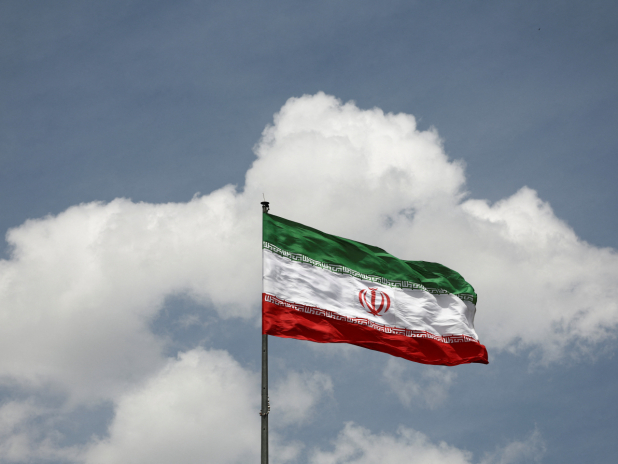
Iran Claims It Anticipated U.S. Naval Blockade, Says All Necessary Preparations Are in Place
In a sharp escalation of tensions in the Persian Gulf, Iran has declared it foresaw the possibility of a U.S. Naval blockade and has taken “all necessary arrangements” to counter it. The statement, delivered by Iranian military officials on Tuesday, comes amid growing concerns over the potential for a broader conflict in the region following weeks of heightened rhetoric and military posturing between Tehran and Washington.
The Strait of Hormuz, a critical chokepoint for global oil shipments, has once again turn into the focal point of geopolitical friction. Iranian officials have long warned that any attempt to block the waterway—a move the U.S. Has not confirmed but has historically threatened—would be met with a forceful response. Now, Tehran is signaling it is not only prepared for such a scenario but has already taken proactive steps to mitigate its impact.
“We have anticipated all possible scenarios, including a naval blockade by the United States, and have made all necessary arrangements to ensure the security of our interests and the free flow of navigation in the Persian Gulf,” said Brigadier General Abolfazl Shekarchi, spokesman for Iran’s Armed Forces, in a statement carried by the state-run Islamic Republic News Agency (IRNA). Shekarchi did not provide specifics on what those arrangements entailed, but analysts suggest they could include increased naval patrols, the deployment of anti-ship missiles, and coordination with regional allies.
The Strait of Hormuz: A Flashpoint for Global Energy Markets
The Strait of Hormuz, a narrow 21-mile-wide passage between Iran and Oman, is one of the world’s most strategically vital waterways. Approximately 21 million barrels of oil—roughly one-fifth of global petroleum supplies—pass through the strait daily, making it a linchpin of the global energy market. Any disruption to shipping in the area could send oil prices soaring, with ripple effects across economies already grappling with inflation and supply chain instability.
Iran has repeatedly asserted its right to control the strait, which lies within its territorial waters, and has conducted military drills in the area to demonstrate its capability to close it if provoked. In 2019, former U.S. President Donald Trump threatened to block Iranian oil exports through the strait, a move Tehran vowed to counter with force. While no formal blockade has been imposed, the current standoff has revived fears of a potential confrontation that could disrupt global trade.
U.S. And Iranian Rhetoric Intensifies
The latest Iranian statement follows a series of escalatory remarks from both Washington and Tehran. On Monday, U.S. Officials reiterated their commitment to ensuring “freedom of navigation” in the Persian Gulf, a long-standing policy aimed at countering Iranian influence in the region. While the U.S. Has not publicly announced plans for a blockade, Iranian officials have framed recent American military deployments—including the positioning of additional naval assets in the Gulf—as a precursor to such a move.
“The United States has a history of using economic and military pressure to achieve its political goals, and we are fully aware of its intentions,” Shekarchi said. “Our armed forces are on high alert, and we will respond decisively to any threat to our sovereignty or the security of our waters.”
The U.S. Fifth Fleet, based in Bahrain, has not commented on the Iranian claims but has previously stated that its presence in the region is aimed at deterring “malign activity” by Iran. In recent weeks, the U.S. Has conducted joint naval exercises with regional allies, including Saudi Arabia and the United Arab Emirates, further stoking Iranian suspicions of coordinated efforts to contain its influence.
Regional and Global Implications
The prospect of a U.S.-Iran confrontation in the Persian Gulf has raised alarms among global leaders, who fear the economic and humanitarian consequences of a prolonged disruption to oil shipments. The European Union, China, and Russia have all called for de-escalation, urging both sides to exercise restraint. French Foreign Minister Stéphane Séjourné, speaking at the United Nations on Monday, stated that Iran must make “significant concessions” to avoid further conflict, though he did not specify what those concessions should entail.
“The situation in the Persian Gulf is a powder keg, and any miscalculation could have catastrophic consequences,” said Valeria Talbot, a senior research fellow at the International Institute for Strategic Studies (IISS). “Iran’s ability to disrupt shipping in the Strait of Hormuz is not in question, but the real concern is whether either side has a clear exit strategy if tensions spiral out of control.”

For Iran, the stakes are particularly high. The country’s economy has been crippled by U.S. Sanctions, and any further restrictions on its oil exports could exacerbate domestic unrest. At the same time, Tehran has sought to project strength, framing its military preparedness as a necessary response to what it describes as American aggression. Iran’s permanent representative to the United Nations, Amir Saeid Iravani, recently accused the U.S. Of acting “like pirates and terrorists” in the region, a characterization that underscores the depth of mistrust between the two nations.
What Happens Next?
Analysts warn that the current standoff could escalate rapidly if either side misinterprets the other’s intentions. While neither Iran nor the U.S. Has expressed a desire for direct conflict, the risk of accidental clashes—such as those that occurred in 2019 when Iran shot down a U.S. Drone or in 2020 when a U.S. Airstrike killed Iranian General Qasem Soleimani—remains a pressing concern.
For now, both sides appear to be engaged in a high-stakes game of brinkmanship, with Iran seeking to deter U.S. Action through displays of military readiness and the U.S. Aiming to maintain its strategic dominance in the region. The next critical checkpoint will likely come in the form of further military maneuvers or diplomatic statements, with the international community closely monitoring developments.
In the meantime, global energy markets are bracing for potential volatility. Oil prices have already seen fluctuations in response to the rising tensions, and analysts predict further spikes if the situation deteriorates. For countries dependent on Gulf oil, including China, India, and Japan, the prospect of a prolonged disruption is a growing concern.
Key Takeaways
- Iran claims it has anticipated a potential U.S. Naval blockade of the Strait of Hormuz and has made “all necessary arrangements” to counter it.
- The Strait of Hormuz is a critical chokepoint for global oil shipments, with roughly 21 million barrels passing through daily.
- U.S. And Iranian rhetoric has intensified in recent weeks, with both sides accusing the other of escalatory behavior.
- Global leaders, including the EU and UN, have called for de-escalation, warning of the economic and humanitarian consequences of a conflict.
- The next critical checkpoint will likely involve further military maneuvers or diplomatic statements, with the international community on high alert.
The situation remains fluid, and World Today Journal will continue to provide updates as latest developments emerge. We encourage readers to share their perspectives in the comments below and to follow our coverage for the latest on this evolving story.