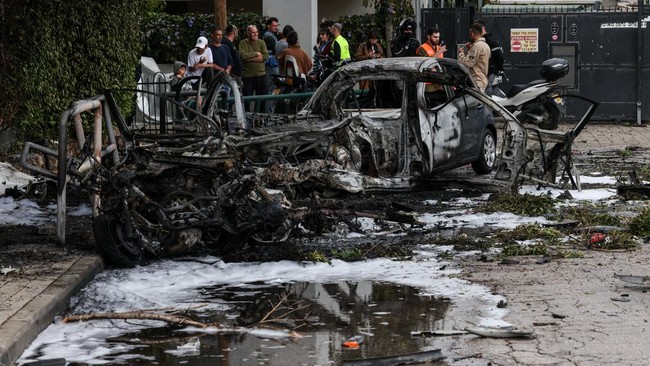
Sofia, Bulgaria – Tensions in the Middle East escalated dramatically over the weekend as Iran launched a direct attack on Israel, resulting in significant damage and raising fears of a wider regional conflict. While details continue to emerge, reports indicate substantial damage to infrastructure, with images circulating of destroyed buildings and vehicles. The attack comes amid ongoing regional instability and a complex web of geopolitical factors, including the war in Gaza and Iran’s nuclear program. This latest escalation has prompted international calls for de-escalation and restraint, but as of Monday, Iran has signaled its unwillingness to consider a ceasefire while Israeli and U.S. Military operations continue.
The immediate trigger for the Iranian attack remains a point of contention, though it is widely believed to be in retaliation for a suspected Israeli airstrike on the Iranian consulate in Damascus on April 1st, which killed several Iranian officials, including senior commanders of the Islamic Revolutionary Guard Corps (IRGC). Reports indicate that Iran views the consulate strike as a violation of its sovereignty. The scale and directness of Iran’s response – launching over 300 drones and missiles – represent a significant shift in the dynamics between the two nations, moving beyond proxy conflicts to a direct military confrontation.
Iran’s Response and Regional Implications
The Iranian attack, primarily consisting of drones and ballistic missiles, targeted multiple locations within Israel. Israeli officials have confirmed that the majority of the incoming projectiles were intercepted by Israel’s air defense systems, including the Iron Dome, as well as assistance from the United States, the United Kingdom, and Jordan. However, despite the successful interceptions, damage was sustained, and the psychological impact of a direct attack on Israeli territory is considerable. The attack underscores Iran’s growing military capabilities and its willingness to directly challenge Israel and its allies.
The situation is further complicated by the ongoing war in Gaza. Iran has consistently supported Hamas and other Palestinian militant groups, and the conflict has served as a catalyst for increased regional tensions. The potential for the Gaza conflict to escalate and merge with the direct confrontation between Iran and Israel is a major concern for international policymakers. The United States has reaffirmed its commitment to Israel’s security and has warned Iran against further aggression. President Biden has convened meetings with his national security team to assess the situation and coordinate a response.
International Reactions and Calls for De-escalation
The international community has largely condemned Iran’s attack and called for de-escalation. The United Nations Security Council is scheduled to convene to discuss the situation, and Secretary-General António Guterres has urged restraint from all parties. Several countries, including the United States, the United Kingdom, and Germany, have expressed their support for Israel’s right to defend itself, while also emphasizing the need to avoid a wider regional war. Unlike FIFA’s statement regarding the 2026 World Cup, which has not been directly impacted by the current conflict, many nations are prioritizing immediate diplomatic efforts. The potential for the conflict to disrupt global energy markets and supply chains is also a significant concern.
However, Iran has indicated it will not negotiate a ceasefire while military actions by the U.S. And Israel continue. This stance, as reported by Reuters, suggests a hardening of positions and a potential for prolonged conflict. The Iranian president has outlined conditions for ending the “war,” including recognition of Tehran’s rights, compensation for past grievances, and guarantees against further aggression. These demands, as articulated by the Iranian president, represent a significant challenge to ongoing diplomatic efforts.
The Role of the United States
The United States has played a crucial role in mediating the conflict and providing support to Israel. The U.S. Military assisted in intercepting Iranian drones and missiles, demonstrating its commitment to Israel’s security. However, the U.S. Is also seeking to de-escalate the situation and prevent a wider regional war. President Biden has reportedly spoken with Israeli Prime Minister Benjamin Netanyahu and urged him to exercise restraint in any response. The U.S. Is also engaging in diplomatic efforts to communicate with Iran and encourage a return to negotiations.
Former President Donald Trump has also weighed in on the situation, stating that “no one can be targeted” in Iran. This claim, made on his social media platform, contrasts with the current U.S. Policy of supporting Israel’s right to defend itself. The differing perspectives highlight the complex political landscape surrounding the conflict.
Looking Ahead: Potential Scenarios and Challenges
The situation remains highly volatile, and several potential scenarios could unfold in the coming days and weeks. Israel could launch a retaliatory strike against Iran, potentially escalating the conflict further. Alternatively, a ceasefire could be negotiated, but this appears unlikely given Iran’s current stance. The involvement of other regional actors, such as Hezbollah in Lebanon and various proxy groups, could also complicate the situation. The risk of miscalculation and unintended consequences is high.
The long-term implications of this escalation are significant. The conflict could further destabilize the Middle East, exacerbate existing humanitarian crises, and disrupt global energy markets. It could also lead to a renewed arms race in the region and undermine efforts to address other pressing challenges, such as terrorism and climate change. The international community faces a critical challenge in preventing a wider war and promoting a lasting peace.
Key Takeaways:
- Iran launched a direct attack on Israel in retaliation for a suspected Israeli strike on its consulate in Damascus.
- Israel, with assistance from the U.S., the UK, and Jordan, intercepted the majority of incoming projectiles.
- International calls for de-escalation have been widespread, but Iran has rejected a ceasefire while military actions continue.
- The conflict carries the risk of escalating into a wider regional war with significant global implications.
The situation is rapidly evolving, and further developments are expected in the coming days. World Today Journal will continue to provide updates and analysis as the situation unfolds. Readers are encouraged to follow official sources for the latest information and to engage in constructive dialogue about this critical issue.
Related reading