
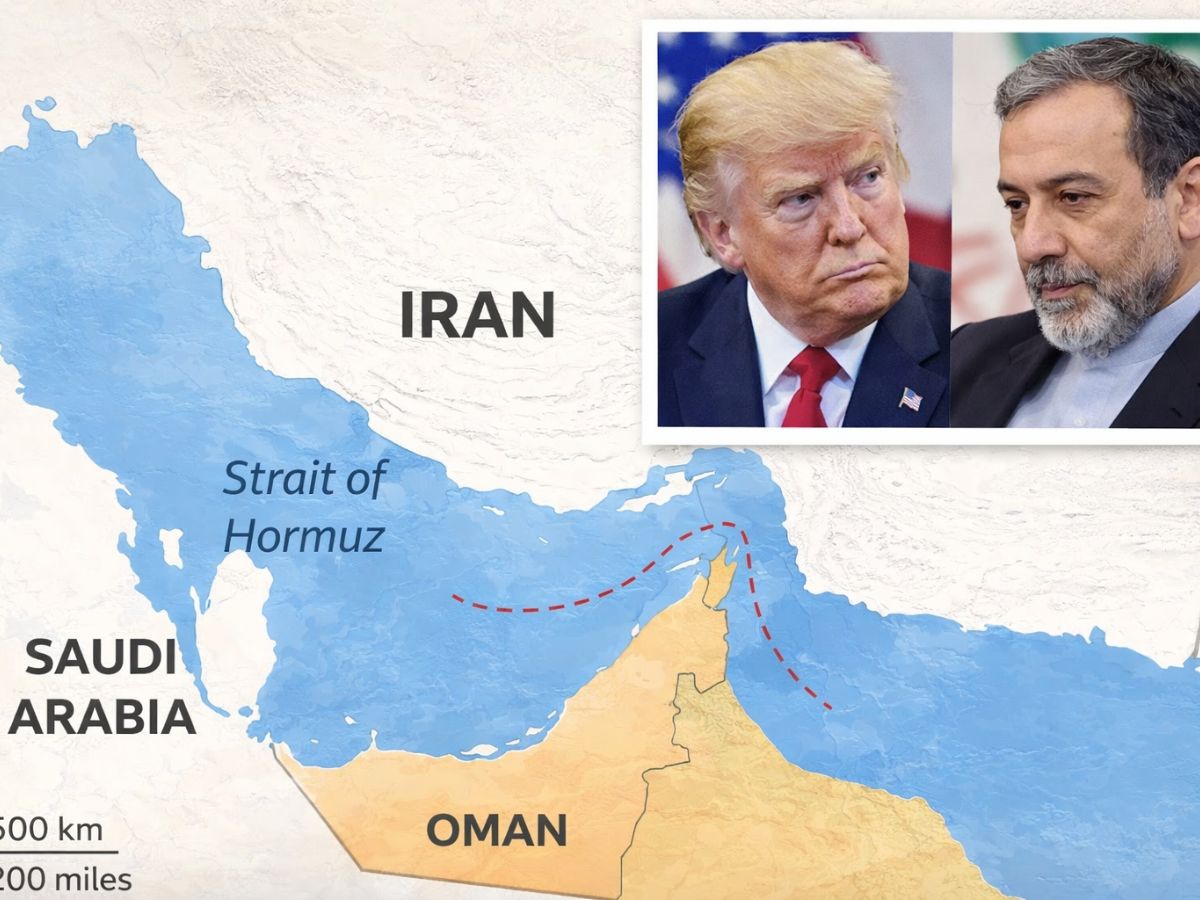
Iran’s threats to disrupt shipping in the Strait of Hormuz are undermining U.S. efforts to revive the 2015 nuclear deal, with Tehran prioritizing control over the waterway as leverage in negotiations—even at the cost of a potential cease-fire collapse, according to diplomatic sources and military assessments. The standoff has intensified as both sides accuse each other of backtracking, with U.S. officials warning that Iran’s actions risk triggering a broader regional conflict that could destabilize global oil markets.
At the heart of the dispute lies Iran’s strategic dominance over the Strait of Hormuz, through which roughly 20% of the world’s seaborne oil passes daily. Tehran has repeatedly signaled its willingness to escalate tensions in the waterway—a move that could force the U.S. to either concede on sanctions relief or risk direct confrontation. “Iran is playing a high-stakes game, betting that the West’s reliance on energy security will force concessions,” said a senior Iranian official in November 2023, though U.S. officials dismiss such claims as bluffs designed to extract maximum leverage.
The latest escalation follows a series of Iranian military drills near the strait in early 2024, which U.S. Central Command described as “provocative” and a deliberate attempt to test Western resolve. Meanwhile, the U.S. has accelerated military deployments in the region, including the repositioning of aircraft carriers and missile defense systems, in response to what officials call “credible threats” to commercial shipping.
Why the Strait of Hormuz Is Iran’s Ultimate Bargaining Chip
The Strait of Hormuz has long been Iran’s most potent tool in its geopolitical arsenal. Located between Oman and Iran, the 21-mile waterway is the narrowest chokepoint for global oil exports, making it vulnerable to blockades or disruptions. Tehran has repeatedly demonstrated its ability to harass or seize vessels passing through, as seen in 2019 when it temporarily seized a British-flagged tanker, the Stena Impero, in a move that sent oil prices surging.

Analysts at the International Institute for Strategic Studies (IISS) note that Iran’s strategy hinges on three key factors: economic pressure, regional influence, and the perception of impunity. “By threatening to close the strait—or even partially disrupt traffic—Iran forces the U.S. and its allies into a dilemma,” said IISS Senior Fellow Ali Vaez. “Do they risk a military confrontation to protect shipping, or do they accept temporary disruptions that could destabilize global markets?”
U.S. officials, speaking on condition of anonymity, have privately acknowledged that Iran’s threats carry weight. A senior administration source told Politico in January that while the U.S. has contingency plans for a strait closure, the economic fallout—including potential spikes in oil prices—would complicate efforts to isolate Iran further. “We’re walking a tightrope,” the source said. “Every time we push back on Iran’s nuclear program, they respond by tightening the noose on the strait.”
How Iran’s Escalation Risks Derailing U.S. Diplomacy
The current impasse in U.S.-Iran talks stems from a breakdown in negotiations over the Joint Comprehensive Plan of Action (JCPOA), the 2015 nuclear deal that former U.S. President Barack Obama struck with Iran. After the Trump administration withdrew from the accord in 2018 and reimposed sanctions, Iran began gradually violating the deal’s limits on uranium enrichment. The Biden administration has since sought to revive the agreement, but progress has stalled over disputes about sanctions relief, Iran’s regional proxies, and its ballistic missile program.

Iran’s latest moves in the Strait of Hormuz—including public threats to “close” the strait if sanctions aren’t lifted—have complicated efforts to restart talks. U.S. Special Envoy Robert Malley, who leads the indirect negotiations, has warned that Iran’s actions are “counterproductive”, undermining trust and making it harder to secure concessions from Tehran. “Iran is using the strait as a hostage in these negotiations,” Malley said in a February 2024 press briefing. “That’s not how diplomacy works.”
Yet Iran’s calculus appears to be that the U.S. has little choice but to engage. A 2023 Brookings Institution report found that while the U.S. could theoretically militarily enforce freedom of navigation in the strait, doing so would risk escalation with Iran’s regional allies, including Hezbollah in Lebanon and the Houthis in Yemen. “Iran knows the U.S. is reluctant to use force unless absolutely necessary,” the report states. “That’s why they’re betting on a strategy of controlled escalation—enough to pressure the U.S. at the negotiating table, but not so much as to trigger a full-blown war.”
What Happens Next: Three Possible Scenarios
With negotiations at a standstill, three potential outcomes emerge, according to regional experts:
- Diplomatic Breakdown: If Iran continues to escalate in the Strait of Hormuz—such as by seizing vessels or mining the waterway—the U.S. may abandon talks entirely, opting instead for a sanctions-only approach, which could further isolate Tehran but also risk prolonged economic instability in the region.
- Limited Concessions: The U.S. may offer partial sanctions relief in exchange for Iran’s commitment to not disrupt shipping, though this would likely fall short of Tehran’s demands for full reinstatement of the JCPOA. Analysts at the Center for International and Area Studies (CIAS) suggest this scenario is the most likely, given the Biden administration’s reluctance to make sweeping concessions.
- Military Escalation: In the event of a major incident—such as an Iranian attack on a U.S. ally’s vessel—a direct confrontation could erupt. The U.S. has prepositioned forces in the region, including the USS Eisenhower carrier strike group, but a full-scale military response would risk drawing Iran’s proxies into the conflict, potentially sparking a wider war.
For now, both sides appear locked in a game of brinkmanship. Iran’s Supreme Leader Ayatollah Ali Khamenei has reiterated that the country will never relinquish control over the strait, while U.S. President Joe Biden has warned that “all options are on the table” to protect American interests.
Who Stands to Lose the Most?
The stakes of this standoff extend far beyond U.S.-Iran relations. Several key players could face severe consequences if tensions escalate:

- Global Oil Markets: Any disruption in the Strait of Hormuz could send oil prices soaring, with spot prices already rising by as much as 5% in recent weeks due to geopolitical fears. Economies reliant on imported oil—including India, China, and much of Europe—would bear the brunt of higher fuel costs.
- Regional Allies of Iran: Countries like Iraq, Syria, and Yemen, which rely on Iranian support, could face further instability if Tehran’s focus shifts entirely to containing the U.S. in the strait. The International Crisis Group has warned that such a shift could lead to power vacuums in these nations.
- U.S. Allies in the Gulf: Saudi Arabia, the UAE, and Israel have all expressed concern over Iran’s actions. Riyadh, in particular, has accused Iran of destabilizing the region, while Israel has warned of potential retaliation for any Iranian aggression.
What’s Next: Key Checkpoints and Deadlines
The next critical juncture in the standoff is March 15, 2024, when U.S. and Iranian negotiators are scheduled to meet again in Qatar for indirect discussions. The talks are expected to focus on three core issues:
- Sanctions Relief: The U.S. has proposed a phased approach, lifting some sanctions in exchange for Iran’s commitment to limit uranium enrichment. Iran has demanded the full reinstatement of the JCPOA before any concessions.
- Regional Proxies: The U.S. is pressing Iran to reduce support for groups like Hezbollah and the Houthis, while Tehran insists this is a non-negotiable issue of sovereignty.
- Ballistic Missiles: The U.S. wants Iran to halt its missile program, which it argues violates the spirit of the JCPOA. Iran maintains its missiles are for defensive purposes and will not be negotiated away.
In the meantime, the U.S. Department of Energy has issued a statement urging energy companies to diversify supply chains and reduce reliance on Strait of Hormuz oil routes. The Organization of the Petroleum Exporting Countries (OPEC) has also signaled it may adjust production quotas in response to potential disruptions.
For readers seeking updates, the U.S. Department of State provides regular briefings on nuclear negotiations, while the International Atomic Energy Agency (IAEA) offers technical assessments of Iran’s nuclear program.
As the situation evolves, World Today Journal will continue to monitor developments and provide verified updates. We encourage readers to share their insights or concerns in the comments below, and to follow our coverage for the latest on this critical geopolitical flashpoint.