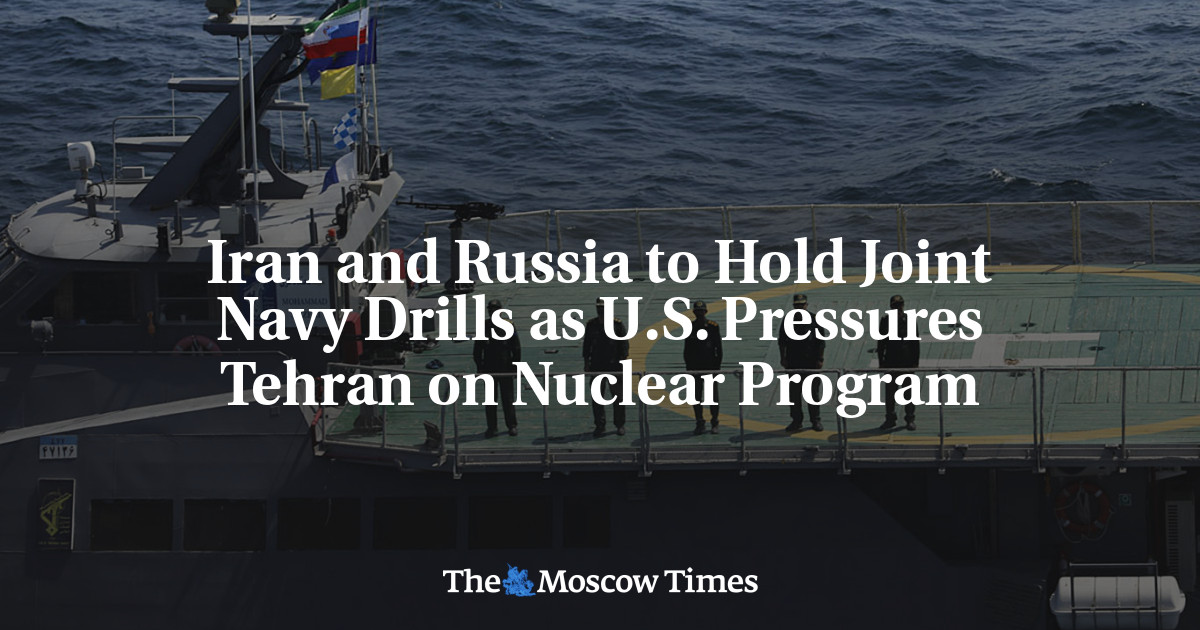
Amid ongoing diplomatic efforts to revive the 2015 nuclear deal, Iran and Russia are set to conduct joint naval drills this week, a move signaling deepening military cooperation between the two nations. The exercises are taking place as U.S. And Iranian officials continue talks in Switzerland, mediated by Oman, aimed at de-escalating tensions and addressing concerns over Iran’s nuclear program. This display of naval coordination underscores a shifting geopolitical landscape in the Middle East and raises questions about the effectiveness of current diplomatic strategies.
The Russian Defense Ministry announced the drills on Wednesday, with Iranian state media confirming the joint exercises. A video released by the Russian military showed the arrival of the Russian corvette Stoiky at Bandar Abbas, Iran’s primary naval base on the Gulf of Oman. According to the Russian Defense Ministry, the joint exercises are intended to “ensure the safety of civilian navigation” in the region. The drills are scheduled to begin on Thursday and will take place in both the Gulf of Oman and the Indian Ocean, according to Iranian media reports.
The timing of these naval exercises is particularly noteworthy, coinciding with a period of heightened tensions and diplomatic activity. The United States has maintained a strong military presence in the Middle East, increasing its deployment of aircraft and naval forces as part of a pressure campaign on Iran. Simultaneously, Iran has been conducting its own military exercises, including maneuvers launched on Monday by the ideological arm of its armed forces in the Strait of Hormuz, a critical waterway for global oil shipments. These actions are widely seen as a demonstration of Iran’s military capabilities and a challenge to U.S. Influence in the region.
Deepening Russia-Iran Ties and Regional Implications
The joint naval drills represent a further strengthening of the relationship between Russia and Iran, two countries increasingly aligned against what they perceive as Western interference in their respective regions. This growing partnership has been fueled by shared strategic interests, including opposition to U.S. Policies and a desire to counter Western influence in the Middle East. In addition to the naval exercises, Russia, Iran, and China are planning further joint drills in the Strait of Hormuz, an initiative dubbed “Marine Security Belt 2026,” according to reports from South Korean news outlet Chosun Ilbo. This trilateral cooperation signals a potential shift in the regional balance of power.
The Strait of Hormuz, a narrow waterway connecting the Persian Gulf to the Gulf of Oman and the Arabian Sea, is of immense strategic importance, serving as a critical passageway for approximately 20% of the world’s oil supply. Iran has repeatedly threatened to close the strait in response to perceived threats, and on Tuesday, announced a partial closure for a few hours during its own drills, citing “security” reasons. Such actions raise concerns about potential disruptions to global energy markets and the stability of the region. The increased naval presence of Russia and China in the area adds another layer of complexity to the already volatile situation.
Nikolai Patrushev, a key aide to Russian President Vladimir Putin, emphasized the importance of ensuring freedom of navigation in the region, stating that the Russian, Iranian, and Chinese navies are working together to protect maritime security. This statement reflects a broader Russian narrative of promoting stability and countering perceived threats to international trade routes. However, Western analysts view these exercises with skepticism, suggesting they are intended to signal defiance against Western powers and demonstrate a willingness to challenge the existing regional order.
Nuclear Talks and U.S. Pressure on Iran
The naval exercises are unfolding against the backdrop of ongoing negotiations between Iran and the United States, aimed at reviving the Joint Comprehensive Plan of Action (JCPOA), commonly known as the Iran nuclear deal. The JCPOA, originally agreed upon in 2015, placed restrictions on Iran’s nuclear program in exchange for the lifting of economic sanctions. However, the agreement was abandoned by the U.S. In 2018 under the administration of President Donald Trump, who reimposed sanctions on Iran and escalated tensions.
Current U.S. Officials have accused Iran of continuing to pursue a nuclear weapon, allegations that Iranian officials vehemently deny. Washington and its European allies maintain that Iran’s nuclear program poses a significant threat to regional and international security. Amid the diplomatic efforts, the U.S. Military has significantly increased its presence in the Middle East, deploying additional aircraft and naval forces to the region as a show of force and a deterrent against Iranian aggression.
Despite the heightened tensions, there have been indications of progress in the recent talks mediated by Oman. Both Iranian and American officials have acknowledged making headway in addressing key sticking points, although significant differences remain. The Kremlin has also expressed cautious optimism, with officials suggesting that there is still time for the U.S. And Iran to reach a negotiated settlement. However, the ongoing naval exercises and Iran’s continued pursuit of its nuclear program cast a shadow over the prospects for a swift resolution.
The Broader Geopolitical Context
The escalating tensions between Iran and the U.S., coupled with the growing alignment of Russia and China with Iran, are reshaping the geopolitical landscape of the Middle East. The region is increasingly characterized by a complex web of alliances and rivalries, with multiple actors vying for influence. The U.S. Has traditionally been the dominant power in the region, but its influence is being challenged by the rise of recent players, including Russia and China.
Russia’s involvement in the region has been growing in recent years, particularly through its military support for the Syrian government and its deepening ties with Iran. China, meanwhile, is expanding its economic and political influence in the Middle East through its Belt and Road Initiative, a massive infrastructure development project that aims to connect China with Europe, Africa, and the Middle East. These developments are raising concerns among U.S. Policymakers about the potential erosion of American influence in the region.
The situation is further complicated by the ongoing conflicts and instability in several countries in the Middle East, including Syria, Yemen, and Iraq. These conflicts have created a breeding ground for extremist groups and have exacerbated regional tensions. The U.S. And its allies are working to contain these threats, but their efforts are hampered by the complex political dynamics and the lack of a unified approach.
As diplomatic efforts continue, the upcoming days will be crucial in determining the future trajectory of the Iran nuclear deal and the broader geopolitical landscape of the Middle East. The joint naval drills between Iran and Russia serve as a stark reminder of the growing challenges facing the international community in addressing the complex issues facing the region. Further developments in the nuclear talks, as well as the actions of key regional and international actors, will be closely watched in the coming weeks.
Key Takeaways:
- Iran and Russia are conducting joint naval drills in the Gulf of Oman and Indian Ocean, signaling increased military cooperation.
- The exercises coincide with ongoing nuclear talks between Iran and the U.S., mediated by Oman.
- Russia, Iran, and China are planning further joint drills in the Strait of Hormuz, highlighting a potential shift in regional power dynamics.
- The U.S. Has increased its military presence in the Middle East in response to Iran’s nuclear program and regional activities.
- The situation remains volatile, with the potential for further escalation if diplomatic efforts fail.
The situation remains fluid, and further updates on the naval exercises and the nuclear talks are expected in the coming days. We encourage readers to share their perspectives and engage in constructive dialogue in the comments section below.
Keep reading