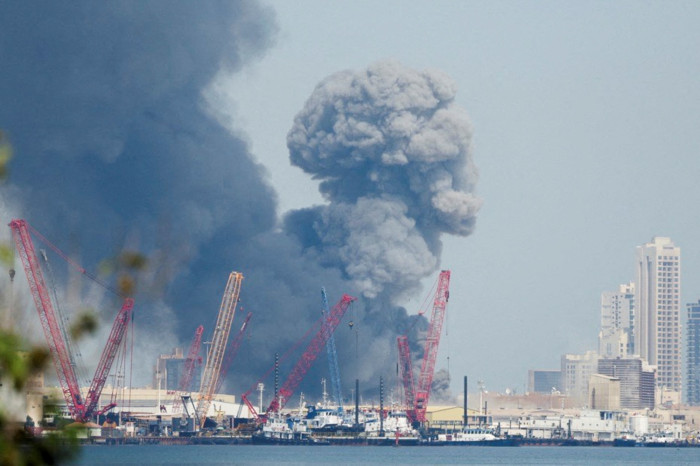
Manama, Bahrain – A wave of disruption has swept across global air travel as escalating tensions in the Middle East prompted widespread airspace closures on Saturday, February 28, 2026. The closures, triggered by Iranian retaliatory strikes targeting U.S. Bases across the region following recent joint U.S.-Israeli actions, have led to thousands of flight delays and cancellations, stranding passengers and forcing airlines to reroute flights, often adding significant time and cost to journeys. The situation underscores the vulnerability of international air travel to geopolitical instability, particularly in a region critical to east-west flight paths.
The immediate catalyst for the disruption was Iran’s targeting of U.S. Military facilities in response to earlier strikes within Iranian territory. Reports indicate plumes of smoke rising from a U.S. Naval base in Bahrain, confirming the Iranian claim of a successful counterstrike. This action prompted a swift response from several Gulf nations, prioritizing the safety of their airspace and civilian aircraft. The ripple effect has been felt globally, impacting major international carriers and travelers worldwide. The current crisis highlights the interconnectedness of global aviation and the speed with which regional conflicts can translate into worldwide travel chaos.
As of 1030 GMT on Saturday, FlightAware, a leading flight tracking website, reported over 9,600 flights delayed globally and more than 500 cancellations, with a significant concentration in the Middle East. FlightAware’s live tracking data provides a real-time view of the unfolding disruption, illustrating the scale of the impact on air travel. Qatar Airways, one of the world’s largest international airlines, has effectively halted operations due to the closure of Qatari airspace, leaving thousands of passengers scrambling to adjust travel plans. The United Arab Emirates and Kuwait swiftly followed suit, closing their airspace as well, further exacerbating the crisis.
Airspace Closures and Airline Responses
The decision by Qatar, the UAE, and Kuwait to close their airspace was a precautionary measure taken in response to the escalating conflict. Qatar’s Civil Aviation Authority confirmed the temporary closure, directly impacting Qatar Airways’ extensive network. The UAE and Kuwait, both having been targeted by Iranian strikes, cited security concerns as the primary reason for their airspace restrictions. This has led to widespread cancellations and rerouting, particularly for flights connecting Asia with Europe and North America. The disruption is particularly acute for airlines reliant on the Gulf region as a key transit hub.
Several major airlines have already announced significant adjustments to their schedules. Turkish Airlines has suspended flights to ten Middle Eastern nations, while Deutsche Lufthansa and Indian carriers, including Indigo and Air India, have reduced services to the region. Emirates, the world’s largest international airline, acknowledged disruptions to several flights due to the airspace closures. Notably, an Emirates A380 superjumbo en route to San Francisco was forced to turn back to Dubai, illustrating the immediate and dramatic impact on long-haul travel. British Airways has cancelled flights to Tel Aviv, Bahrain, and Amman through March 3rd, demonstrating the anticipated duration of the disruption. These cancellations are not merely logistical adjustments; they represent significant financial losses for airlines and considerable inconvenience for passengers.
Regional Security Concerns and Military Responses
Beyond the immediate impact on air travel, the situation highlights heightened security concerns across the Middle East. Jordan’s air force conducted drills to “defend the kingdom’s skies” and subsequently reported intercepting two ballistic missiles, demonstrating the region’s active defense posture. Kuwait’s military also confirmed engaging incoming missiles, further illustrating the escalating tensions. These defensive actions underscore the potential for broader regional conflict and the vulnerability of civilian infrastructure. The airspace closures are not simply a matter of inconvenience; they are a direct consequence of a volatile security environment.
Israel’s Ministry of Transport announced the closure of its airspace and advised citizens to avoid airports, reflecting the direct threat perceived from the Iranian strikes. Iran, in turn, also shut down its own airspace, likely as a precautionary measure and potentially to restrict surveillance. The coordinated nature of these closures emphasizes the widespread impact of the conflict and the interconnectedness of regional security. The EU Aviation Safety Agency (EASA) issued a safety advisory recommending that air operators avoid all flight levels and altitudes in the region, citing a high risk to civil aviation due to potential spillover risks, misidentification, and interception failures. Russia’s air transport authority, Rosaviatsia, followed suit, cancelling all commercial flights to both Israel and Iran “until further notice.”
Historical Precedent and Long-Term Implications
This is not the first time airspace closures in the Middle East have disrupted global air travel. A similar situation occurred last year following an Iranian strike on a U.S. Military base, causing widespread chaos and stranding tens of thousands of passengers. The recurring nature of these disruptions highlights the inherent risks of operating in a politically unstable region. Over the past two years, the skies over the Middle East have been repeatedly restricted, forcing airlines to cancel profitable routes, increase fuel costs, and navigate through previously avoided airspace, such as Afghanistan. This adds significant operational complexity and financial burden to the aviation industry.
The current crisis is likely to exacerbate these existing challenges. The Middle East serves as a crucial artery connecting east-west air traffic, and prolonged airspace closures could necessitate significant rerouting, adding hours to flight times and increasing fuel consumption. This, in turn, could lead to higher ticket prices for passengers and reduced profitability for airlines. The long-term implications of the escalating conflict remain uncertain, but the immediate impact on air travel is undeniable. The situation underscores the need for airlines and passengers to remain vigilant and adaptable in the face of ongoing geopolitical instability.
Looking Ahead
The immediate future of air travel in the Middle East remains uncertain, contingent on the de-escalation of the current conflict. As of February 28, 2026, airlines are continuing to monitor the situation closely and adjust their schedules accordingly. Passengers are strongly advised to check with their airlines for the latest updates on flight status and potential disruptions. The situation is fluid, and further airspace closures or adjustments are possible. The next key development to watch will be any diplomatic efforts to de-escalate the conflict and restore stability to the region.
The ongoing disruption serves as a stark reminder of the fragility of global air travel and the profound impact of geopolitical events. While airlines are working to mitigate the effects of the airspace closures, passengers should prepare for potential delays, cancellations, and rerouting. The situation highlights the importance of travel insurance and flexible booking options. The long-term consequences of the conflict on the aviation industry and regional stability remain to be seen.
What are your thoughts on the current situation? Share your experiences and insights in the comments below. Don’t forget to share this article with your network to retain others informed.
Worth a look