
Rising tensions in the Middle East reached a critical threshold this week as regional instability intensified, characterized by reports of military escalations involving maritime chokepoints and regional naval assets. While state-affiliated media outlets in Iran have alleged drone operations targeting the United States Fifth Fleet in Bahrain, international monitoring agencies and defense officials continue to evaluate the veracity of these claims amid a broader pattern of heightened alert across the Persian Gulf.
The situation remains fluid, with global markets and maritime authorities closely watching the Strait of Hormuz, a narrow waterway essential for the transit of approximately 20% of the world’s total oil consumption, according to data from the U.S. Energy Information Administration. As of this reporting, there has been no independent confirmation of direct strikes on U.S. naval vessels in Bahrain, though the geopolitical atmosphere remains volatile following a series of regional skirmishes.
Status of the U.S. Fifth Fleet and Regional Security
The United States Fifth Fleet, headquartered in Manama, Bahrain, serves as the primary naval command for U.S. operations in the Persian Gulf, the Red Sea, and the Arabian Sea. Despite reports circulating through regional media channels alleging drone-based targeting of these assets, the U.S. Navy has not issued a statement confirming any such engagement or damage to its fleet. Officials from the U.S. Naval Forces Central Command maintain that their posture in the region remains focused on maritime security and freedom of navigation.
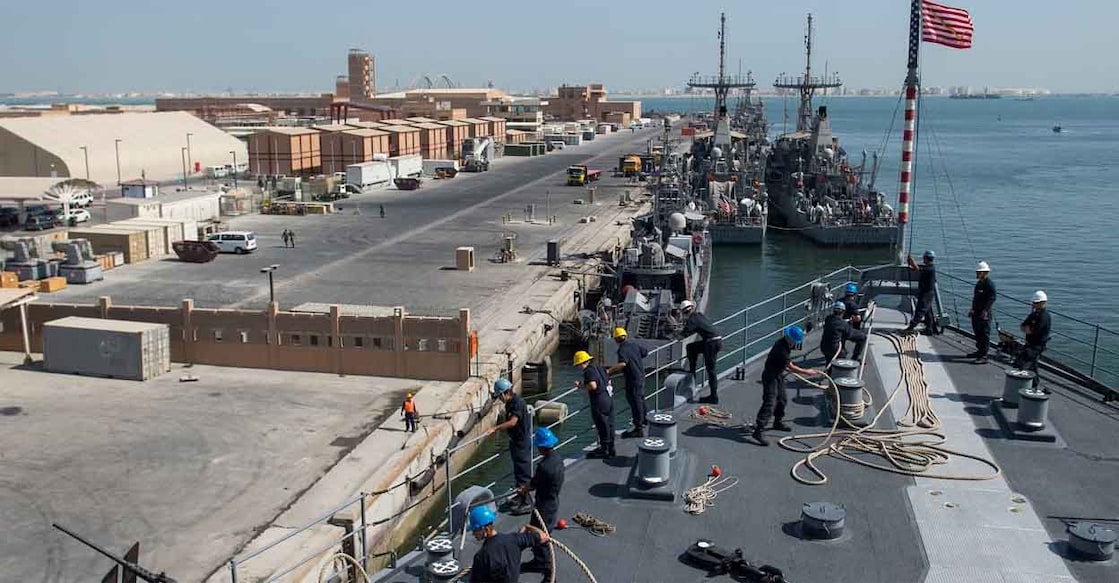
The discrepancy between state-run media narratives and official U.S. reporting highlights the complexity of the information environment in the region. Analysts often point to the “gray zone” of conflict, where psychological operations and posturing are used to project strength without necessarily crossing the threshold into open, conventional warfare. Monitoring the official maritime traffic databases provides a more accurate picture of vessel movement than unverified claims of physical combat.
Maritime Traffic and the Strait of Hormuz
The Strait of Hormuz remains the focal point of global economic concerns. Any disruption to traffic through this corridor carries immediate implications for global energy prices and supply chain stability. While some reports have suggested a closure or significant restriction of the strait, international shipping lanes have largely remained operational, albeit under heightened security protocols. The International Maritime Organization continues to provide guidance for commercial vessels operating in high-risk zones, emphasizing the importance of maintaining communication with regional coastal authorities.

Historically, threats to close the Strait of Hormuz are used by regional actors as a diplomatic lever. However, a total closure would be an unprecedented action that would likely trigger an immediate, unified response from the international community. Current intelligence assessments suggest that while the risk of localized incidents has increased, the fundamental flow of commercial shipping continues to be managed through established international maritime law and naval patrols.
Strategic Impact on Global Energy Markets
Energy analysts are closely tracking the rhetoric emanating from Tehran and Washington. The correlation between regional instability and oil price volatility is well-documented; historically, spikes in geopolitical tension in the Persian Gulf have led to immediate, if sometimes temporary, increases in crude oil benchmarks. According to the International Energy Agency, the market’s sensitivity to these events is rooted in the narrowness of the Hormuz passage and the lack of viable, large-scale alternatives for oil transit.
Investors and policy makers are advised to rely on primary sources, such as official statements from the U.S. Department of Defense or the U.S. Department of State, rather than unverified social media reports or state-controlled news outlets. The volatility observed in current trading sessions reflects this caution, as market participants wait for verifiable data before adjusting positions based on the potential for long-term supply disruptions.
What Happens Next: Monitoring the Situation
The next phase of this development will likely be defined by the results of ongoing intelligence gathering by coalition forces in the region. Observers should look for updates from the U.S. Central Command (CENTCOM), which serves as the primary authority for military actions and assessments in the Middle East. Any deviation from the current status quo—such as a confirmed maritime incident or a formal change in naval posture—will be documented through official press releases from these entities.
As the situation develops, we encourage readers to monitor our sports and geopolitical coverage for further updates. For those interested in the broader context of maritime security, the United Nations Convention on the Law of the Sea (UNCLOS) provides the legal framework under which these waters are meant to be governed. Please share this report with your network and join the conversation in the comments section below regarding the impact of these events on global trade and regional stability.
Worth a look