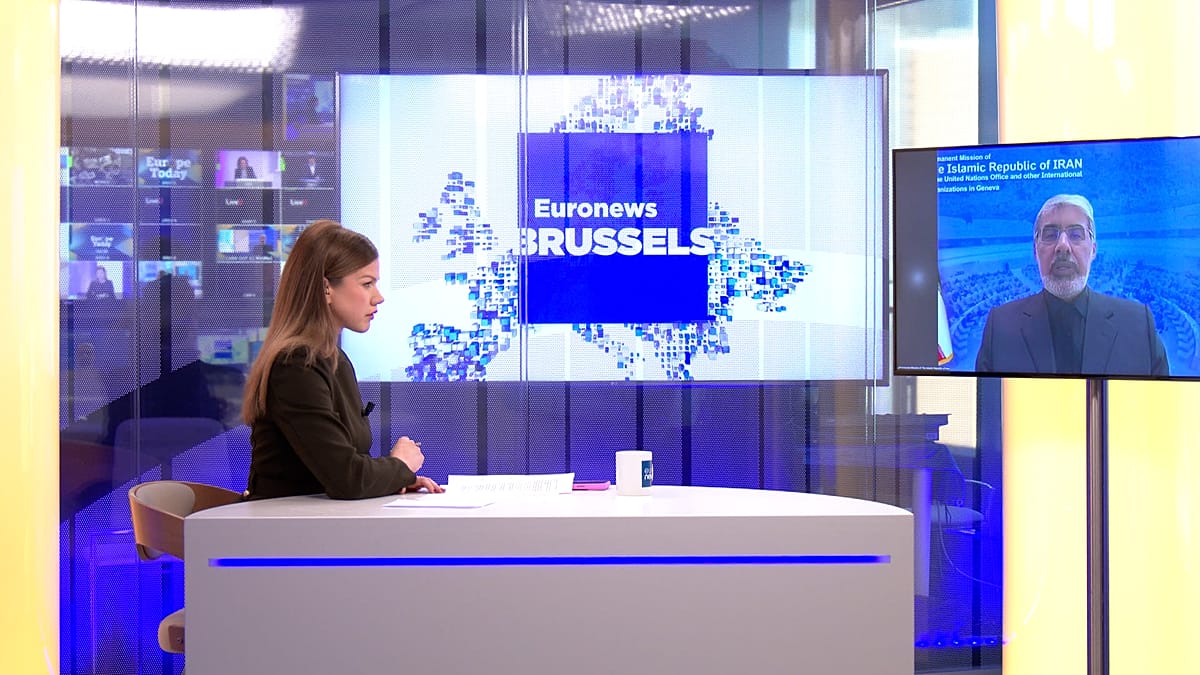
The escalating tensions in the Middle East took a concerning turn this week as Iran’s ambassador to the United Nations in Geneva, Ali Bahreini, signaled a potential broadening of targets should conflict continue. While reiterating that Tehran does not target civilian sites in the Gulf region, Bahreini stated that any installation or base used to attack Iran could be considered a legitimate target, raising the specter of retaliatory strikes extending into Europe. This declaration comes amid a backdrop of increasing regional instability, including a recent drone attack on a British base in Cyprus and reported Iranian involvement in attacks on civilian infrastructure.
Bahreini’s comments, made during an interview with Euronews’ “12 Minutes With” program, represent a hardening of Iran’s stance as the conflict enters its third week. The ambassador accused the United States and Israel of attacking civilian targets within Iran, citing a recent raid on a school in Minab that Iranian authorities claim resulted in the deaths of 168 people, most of them children. These accusations, still, remain unconfirmed by independent sources. The situation is further complicated by reports of attacks attributed to groups aligned with Iran, such as Ashab al-Kahf, which has threatened to target French interests in Iraq and the region following the death of a French soldier in Iraqi Kurdistan. The broader context of this conflict involves a complex web of geopolitical interests and proxy conflicts, making de-escalation a significant challenge.
Iran’s Warning: Expanding the Scope of Potential Targets
The core of Bahreini’s message was a clear warning: Iran will defend its territory by any means necessary. “I seek to be clear, our armed forces have announced a doctrine according to which any installation, any base used to attack Iran becomes a legitimate target for our military forces,” he stated. When pressed on whether this doctrine extended to sites located in Europe, Bahreini responded that Iran would act based on what it deemed necessary to ensure its security and prevent further aggression. This statement has understandably raised concerns among European nations, particularly those hosting military bases used by the United States, and NATO. The potential for escalation beyond the immediate region is now a central worry for international policymakers.
This warning follows a series of incidents that have demonstrated Iran’s reach and willingness to project power. On March 2, 2026, a drone suspected of Iranian origin struck the RAF Akrotiri base in Cyprus, as reported by Euronews. Two subsequent drones targeting the base were intercepted. The British Ministry of Defence believes the initial drone was launched by a pro-Iranian militia operating in Lebanon or western Iraq. This incident prompted the United Kingdom to authorize the United States to use British bases for defensive actions. Turkey, which hosts the Incirlik Air Base used by the U.S. Military, has also been drawn into the conflict, with NATO intercepting two Iranian missiles entering Turkish airspace.
Diplomatic Efforts and Conflicting Narratives
Despite the escalating rhetoric, diplomatic channels remain open. Iranian President Masoud Pezeshkian reportedly spoke with Turkish President Recep Tayyip Erdogan, with Erdogan expressing concern over the violation of Turkish airspace. Pezeshkian, according to Bahreini, assured Erdogan that there had been no intentional attack on Turkey. NATO has affirmed its readiness to defend the territory of its members, but has indicated no immediate plans for formal action against Iran. This cautious approach reflects the complex geopolitical considerations at play and the desire to avoid a wider regional war.
However, a significant disconnect exists between Iran’s public statements and the realities on the ground. While Bahreini denied that Tehran is targeting civilian sites in the Gulf region, journalists from Euronews reporting in Dubai and Doha have documented attacks on civilian infrastructure, including airports, residential buildings, and hotels. Bahreini dismissed these reports as “not verified,” a claim that contradicts the on-the-ground reporting of credible news organizations. This discrepancy underscores the challenges of verifying information in a conflict zone and the potential for disinformation.
Recent Apology and Internal Political Shifts
In a surprising move, President Pezeshkian recently issued an apology to Iran’s Gulf neighbors for the attacks, stating that Iranian armed forces had been instructed not to attack neighboring countries unless provoked. This gesture, however, occurred before the appointment of Mojtaba Khamenei, a hardline ayatollah, raising questions about the long-term implications for Iran’s foreign policy. The appointment of Khamenei signals a potential shift towards a more uncompromising stance, potentially undermining recent diplomatic overtures. The internal dynamics within Iran are therefore a crucial factor in understanding the trajectory of the conflict.
Economic Impacts and International Concerns
The ongoing conflict is already having significant economic repercussions, most notably a surge in oil prices. U.S. President Donald Trump attempted to frame the price increase positively, suggesting it would ultimately benefit Americans, a statement that has been met with skepticism. The uncertainty surrounding the conflict’s duration and ultimate objectives, as articulated by Trump’s own conflicting statements – initially claiming the war was “practically over” before suggesting it “could go beyond” – further exacerbates economic anxieties. The instability in the Middle East is disrupting global supply chains and contributing to inflationary pressures.
Pezeshkian has outlined conditions for ending the conflict, including the recognition of Iran’s “legitimate rights,” reparations, and international guarantees against future aggression. Bahreini echoed this sentiment, stating that Iran’s goal is to end the “vicious cycle of negotiations and attacks” and to convince adversaries that “they cannot defeat Iran.” These demands highlight the deep-seated grievances and mistrust that fuel the conflict, making a peaceful resolution exceedingly tricky.
The situation remains highly volatile. The potential for miscalculation or escalation is significant, and the risk of a wider regional war looms large. The international community is grappling with how to de-escalate the conflict and prevent further loss of life. The United Nations Security Council has held emergency meetings, but divisions among member states have hampered efforts to reach a consensus on a coordinated response. The coming days and weeks will be critical in determining whether a diplomatic solution can be found or whether the conflict will spiral out of control.
The next key development to watch will be the response from NATO regarding the Iranian missile incursions into Turkish airspace. While currently there are no indications of a formal activation of Article 5, the situation remains fluid and could rapidly change. Continued monitoring of diplomatic efforts between Iran and regional powers, as well as the United States, will also be crucial.
What are your thoughts on the escalating tensions in the Middle East? Share your perspectives in the comments below, and please share this article with your network to raise awareness about this critical situation.
Related reading