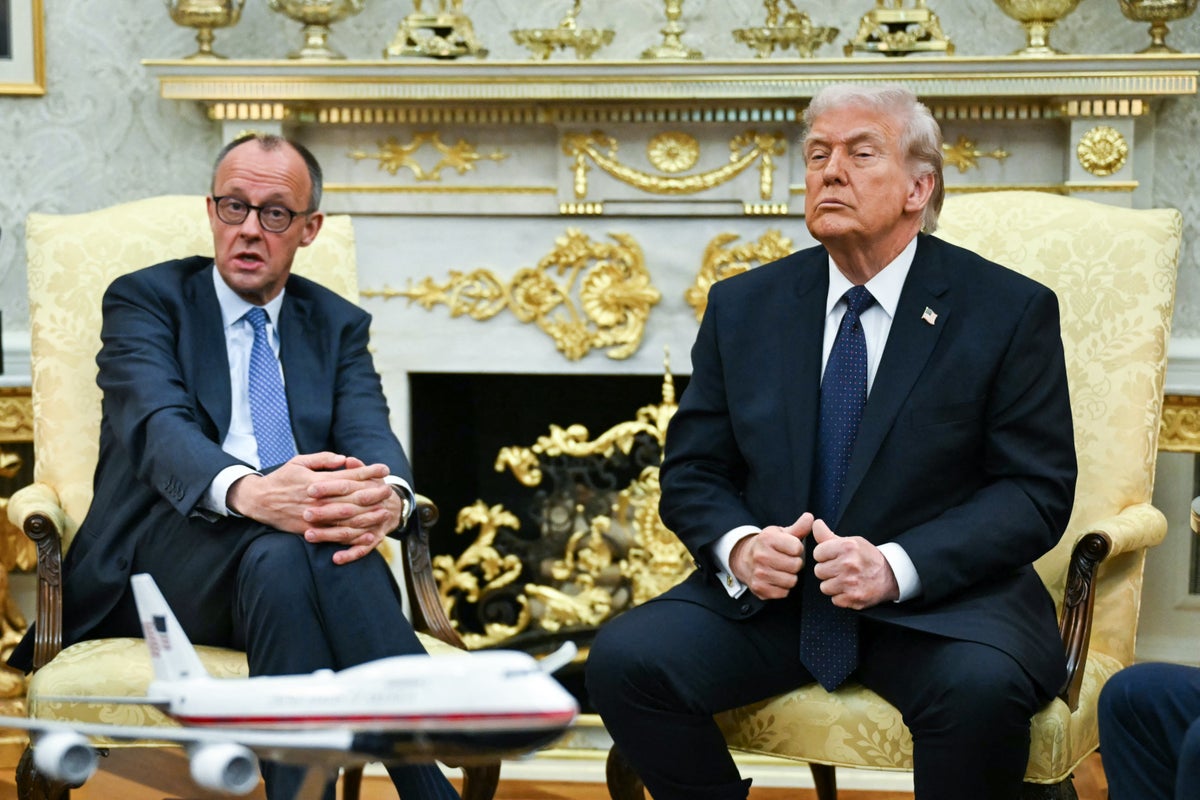
Washington, D.C. – Amidst escalating tensions surrounding the ongoing conflict in Iran, U.S. President Donald Trump indicated on Tuesday that the United States is considering a reduction of its troop presence in Germany. This announcement follows sharp criticism from German Chancellor Friedrich Merz regarding the handling of the conflict and its broader strategic implications, further straining transatlantic relations.
Merz’s comments, delivered during a school visit in Marsberg, Germany, on Monday, were unusually direct. He stated that the United States is being “humiliated” by Iran in the conflict, asserting that Washington lacks a clear strategy for de-escalation or a viable exit plan. “The Iranians are clearly stronger than expected and the Americans clearly have no truly convincing strategy in the negotiations either,” Merz said, according to reporting from Deutsche Welle. He drew parallels to past U.S. Military engagements in Afghanistan and Iraq, highlighting the challenges of both entering and exiting protracted conflicts.
Escalating Tensions and European Concerns
The conflict with Iran has been a significant point of contention between the U.S. And its European allies. While the U.S. Has taken a hardline stance, many European nations have advocated for a diplomatic solution and expressed concerns about the potential for wider regional instability. The economic repercussions of the conflict are also weighing heavily on European economies, including Germany’s. Merz specifically noted that the situation is “costing us a great deal of money” and is having a “direct impact on our economic output.”

The German Chancellor’s criticism extends beyond strategic concerns to the perceived effectiveness of Iranian negotiators. Merz suggested that Iranian officials are “obviously negotiating very skilfully” or, alternatively, “very skillfully not negotiating,” a pointed observation regarding the lack of tangible progress in diplomatic efforts. He also accused the Iranian leadership, particularly the Islamic Revolutionary Guard Corps, of “humiliating an entire nation.”
Trump’s Response and Troop Reduction Considerations
President Trump’s announcement regarding potential troop reductions in Germany appears to be a direct response to Merz’s criticism and a broader pattern of European reluctance to fully align with U.S. Policy in the region. Speaking to reporters on Tuesday, Trump stated that Germany has not “stepped up” to contribute adequately to the financial burden of maintaining a U.S. Military presence. He also reiterated long-standing complaints about Germany’s energy dependence on Russia, framing it as a national security risk.
“We’re protecting Germany, and they’re not paying for it,” Trump said. “We’re going to be looking at a substantial reduction of troop levels in Germany. We’ll make a decision very quickly.” The exact number of troops potentially affected remains unclear, but sources within the Pentagon suggest that several thousand personnel could be relocated to other NATO member states, particularly those on the eastern flank of the alliance.
NATO Allies Express Concern
The prospect of a significant U.S. Troop reduction has sparked concern among other NATO allies. Former NATO Secretary General Jens Stoltenberg, speaking to CNBC, emphasized the dangers of escalation and the need for continued dialogue. “Wars are dangerous, and escalation is still a distinct possibility while talks remain tetchy and uncertain,” Stoltenberg warned. He urged all parties to prioritize de-escalation and a return to diplomatic negotiations.
Several European diplomats, speaking on condition of anonymity, expressed fears that Trump’s decision is driven more by domestic political considerations than by strategic necessity. They argue that a weakened U.S. Military presence in Europe could embolden Russia and undermine the alliance’s collective security.
Germany’s Economic Impact and Offer of Assistance
The economic consequences of the conflict in Iran are becoming increasingly apparent in Germany. As Merz highlighted, the disruption to global oil supplies and increased geopolitical uncertainty are negatively impacting German economic output. Germany continues to offer its assistance in securing shipping lanes through the Strait of Hormuz, a critical waterway for global oil transportation, but maintains that this assistance is contingent upon a cessation of hostilities.
“We are maintaining our offer to deploy minesweepers to facilitate reopen the Strait of Hormuz, through which a large portion of global oil supplies pass,” Merz stated. “However, a prerequisite for this is that hostilities must first come to an end.”
The Broader Strategic Implications
The escalating tensions between the U.S. And Germany, coupled with the ongoing conflict in Iran, raise broader questions about the future of the transatlantic alliance. The Trump administration’s “America First” foreign policy has consistently challenged traditional alliances and multilateral institutions, leading to friction with key partners.

Analysts suggest that the current crisis could accelerate a long-term trend toward a more fragmented and less predictable global order. The potential for further escalation in the Middle East, combined with growing geopolitical competition between the U.S., China, and Russia, creates a complex and volatile international landscape.
Key Takeaways
- German Chancellor Friedrich Merz has publicly criticized the U.S. Handling of the conflict with Iran, stating the U.S. Is being “humiliated.”
- President Trump is considering reducing U.S. Troop levels in Germany in response to Merz’s comments and ongoing disagreements over financial burdens.
- NATO allies have expressed concern about the potential implications of a U.S. Troop reduction for European security.
- The conflict in Iran is having a negative economic impact on Germany and other European nations.
The situation remains fluid, and further developments are expected in the coming days. The U.S. State Department has announced that it will hold a press briefing on Friday to provide an update on the situation in Iran and the potential troop reductions in Germany. The international community will be closely watching these developments as they unfold, seeking a path toward de-escalation and a peaceful resolution to the conflict.
Sofia, Bulgaria – As the world watches the unfolding situation, the need for continued diplomatic efforts and a commitment to multilateralism remains paramount. The future of transatlantic relations and global stability may well depend on the ability of all parties to find common ground and prioritize peaceful solutions.
What are your thoughts on the escalating tensions? Share your comments below and let us know what you consider should be done to de-escalate the situation.
Keep reading
- VP Business Unit Head, Vaccines – GSK (Mississauga, Canada)
- US Strikes Iran and Strait of Hormuz Crisis: Oil Prices Surge as Tensions Escalate
- Pokémon GO 2026: Top Events and Updates for the Week of July 13-19 (world-today-news.com)
- Mayor Mulvaney-Stanak Updates Burlington City Council on Community Search Results (news-usa.today)