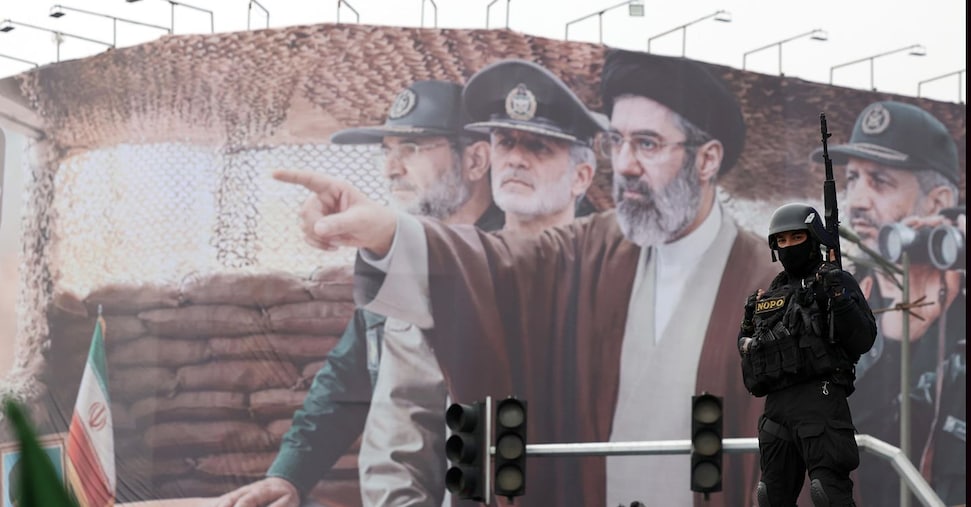
The economic fallout from the escalating conflict between the United States, Israel, and Iran is reverberating across global markets, triggering anxieties about oil supply disruptions and broader geopolitical instability. As the war enters its tenth day, with attacks targeting oil storage facilities in Tehran on March 8, 2026, the economic consequences are becoming increasingly apparent. The conflict, which began with US-Israel strikes, has already sent global oil prices soaring past $100 per barrel, a level not seen since Russia’s invasion of Ukraine in 2022. This surge in prices is fueling concerns about inflation and potential recessionary pressures worldwide. The situation is further complicated by the recent appointment of Mojtaba Khamenei as Iran’s latest supreme leader, following the death of his father, Ayatollah Ali Khamenei, a move that analysts suggest signals a continuation of hard-line policies.
The immediate impact of the war is most acutely felt in the energy sector. Iran, a significant oil producer, has seen its production capacity curtailed by the attacks, exacerbating existing supply constraints. The United States, in response to the escalating tensions, has reportedly authorized the purchase of Russian oil, a move that underscores the desperate search for alternative energy sources. This decision, while aimed at stabilizing global markets, has drawn criticism from some quarters, given the ongoing geopolitical tensions with Russia. The disruption to Iranian oil production is not merely a supply issue; it also impacts refining capacity and logistical networks, creating a ripple effect throughout the energy value chain. The conflict’s impact on oil prices is a central concern for policymakers globally, as it directly affects transportation costs, manufacturing expenses, and consumer prices.
The Shifting Sands of Global Oil Markets
The surge in oil prices is not uniform across all grades. Brent crude, a global benchmark, has experienced a particularly sharp increase, reflecting concerns about supply disruptions in the Middle East. West Texas Intermediate (WTI), the US benchmark, has also risen, but to a lesser extent, due to increased domestic production. But, the long-term implications of the conflict extend beyond immediate price fluctuations. The potential for further escalation, including attacks on critical infrastructure in other oil-producing nations, looms large. This uncertainty is driving speculative activity in the oil markets, further amplifying price volatility. The International Energy Agency (IEA) is closely monitoring the situation and has indicated its willingness to release strategic oil reserves if necessary, but the effectiveness of such measures remains uncertain given the scale of the potential disruptions.
Beyond oil, the conflict is also impacting natural gas markets. Iran is a major natural gas producer, and disruptions to its exports could lead to shortages in Europe and Asia, particularly during the upcoming winter months. The United States, a significant exporter of liquefied natural gas (LNG), is poised to benefit from increased demand, with gas prices already rising. According to reports, the war is adding approximately $870 million per week to US gas revenues. However, this benefit is tempered by concerns about the potential for retaliatory attacks on US energy infrastructure. The European Union, heavily reliant on natural gas imports, is scrambling to diversify its energy sources and reduce its dependence on Russian gas, a challenge that has been significantly complicated by the conflict in Iran. The push for renewable energy sources is gaining momentum, but the transition will take time and require substantial investment.
Iran’s Leadership Transition and Regional Implications
The death of Ayatollah Ali Khamenei and the subsequent appointment of his son, Mojtaba Khamenei, as the new supreme leader have added another layer of complexity to the situation. The swift consolidation of power behind Mojtaba Khamenei, backed by key institutions such as the Islamic Revolutionary Guard Corps (IRGC), has been met with concern by international observers. US President Donald Trump has labeled the appointment a “big mistake,” suggesting a continuation of hard-line policies that could further escalate tensions. Russia, however, has expressed its support for the new leadership, reiterating its commitment to strengthening ties with Iran. Israel’s foreign minister has remained ambiguous about whether the new supreme leader will be considered a target, stating, “You’ll have to wait and spot.” This ambiguity underscores the high stakes and the potential for further escalation.
The conflict is also widening across the Middle East, with increased tensions in Lebanon and Syria. Hezbollah, a powerful Iranian-backed militant group in Lebanon, is reportedly preparing for potential involvement in the conflict, raising the specter of a regional war. Israel has already launched strikes on Hezbollah targets in Beirut, further escalating tensions. The potential for the conflict to spill over into other countries, such as Iraq and Yemen, is a major concern for regional and international actors. The United States has urged its citizens to leave the Middle East, citing the heightened security risks. The conflict is also exacerbating existing humanitarian crises in the region, with millions of people already displaced by years of conflict and instability.
Economic Repercussions Beyond Energy
The economic consequences of the war extend far beyond the energy sector. Global supply chains are being disrupted, leading to increased costs for businesses and consumers. The conflict is also impacting financial markets, with stock prices falling and investors seeking safe-haven assets. The uncertainty surrounding the conflict is dampening business investment and consumer spending, further slowing economic growth. The tourism industry, already reeling from the COVID-19 pandemic, is facing further setbacks as travelers avoid the region. The conflict is also impacting trade flows, with shipping routes being disrupted and tariffs being imposed. The potential for a prolonged conflict poses a significant threat to the global economy, potentially triggering a recession.
The impact on specific countries varies. The United States, while benefiting from increased gas exports, is also facing higher energy prices and increased military spending. Europe, heavily reliant on energy imports, is particularly vulnerable to supply disruptions. China, a major importer of Iranian oil, is facing challenges in securing its energy supplies. Russia, already subject to sanctions, is potentially benefiting from increased oil prices, but also faces the risk of further isolation. Developing countries, with limited financial resources, are particularly vulnerable to the economic fallout of the conflict, potentially leading to increased poverty and instability. The conflict is also exacerbating existing inequalities, with the poor and vulnerable bearing the brunt of the economic hardship.
Key Takeaways
- The war between the US, Israel, and Iran is causing significant disruptions to global oil markets, driving prices above $100 per barrel.
- The appointment of Mojtaba Khamenei as Iran’s new supreme leader signals a continuation of hard-line policies, potentially escalating tensions.
- The conflict is widening across the Middle East, with increased tensions in Lebanon, Syria, and other countries.
- Global supply chains are being disrupted, leading to increased costs for businesses and consumers.
- The economic fallout of the conflict poses a significant threat to the global economy, potentially triggering a recession.
As the conflict continues, the economic consequences are likely to worsen. The potential for further escalation, including attacks on critical infrastructure, remains a significant risk. Policymakers around the world are grappling with how to mitigate the economic fallout and prevent a wider conflict. The situation remains fluid and unpredictable, and the long-term implications are still uncertain. The next key development to watch will be the outcome of ongoing diplomatic efforts to de-escalate the conflict and secure a ceasefire. We encourage readers to share their thoughts and perspectives on this critical issue in the comments below.