
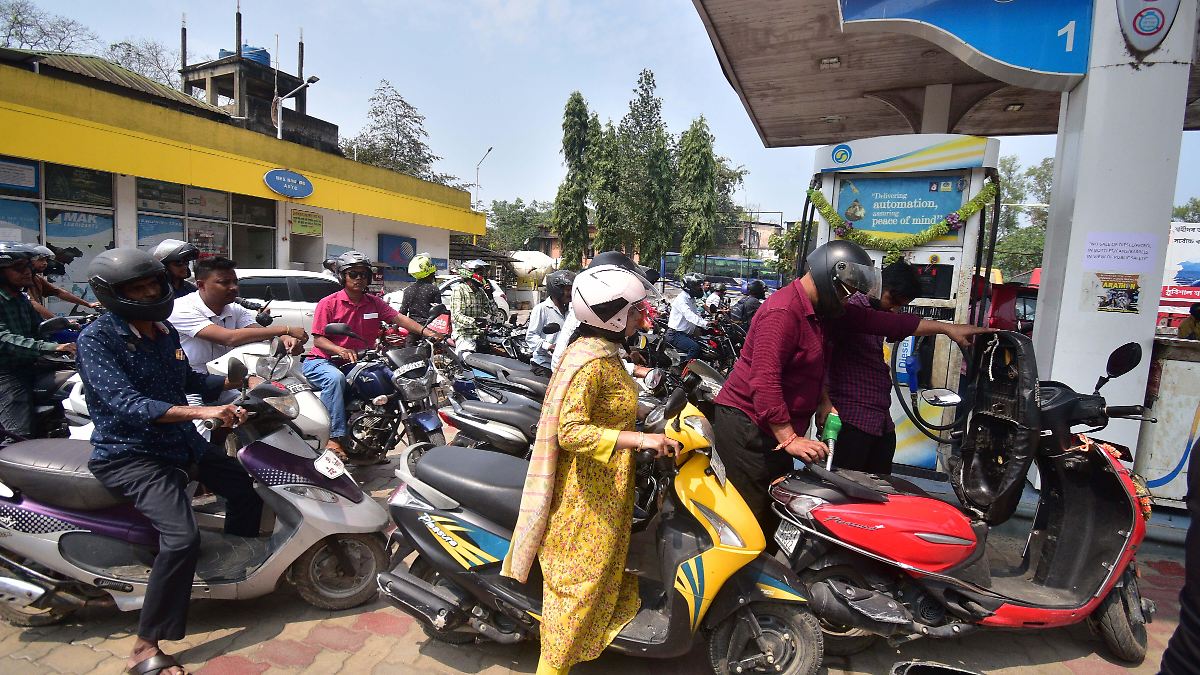
India Urges Austerity as Iran War Drives Up Fuel, Food Costs—Modi Calls for Fuel Cuts, Gold Purchases Halt
Indian Prime Minister Narendra Modi has launched an unprecedented appeal to citizens to curb fuel consumption, reduce edible oil imports, and halt non-essential gold purchases, framing the measures as a “national duty” to protect India’s foreign exchange reserves amid soaring global energy prices triggered by the ongoing conflict in Iran. The directives, announced during a visit to Hyderabad, echo austerity efforts seen during the COVID-19 pandemic and mark the government’s most direct response yet to the economic fallout of the West Asia crisis.
With India importing over 88% of its crude oil and supply chains under strain, Modi’s speech—delivered Sunday—highlighted the urgency of conserving foreign currency. “In this time of global crisis, we have to make a resolution keeping duty paramount,” he stated, urging Indians to adopt measures ranging from carpooling and Metro travel to reviving work-from-home policies. The appeal comes as crude prices surge, edible oil costs climb, and the rupee weakens against the dollar, exacerbating inflationary pressures for a population of 1.4 billion.
The conflict in Iran—centered on disputes over the Strait of Hormuz and regional alliances—has disrupted global oil flows, pushing benchmark prices to multi-year highs. For India, the world’s third-largest oil importer, the impact is immediate: higher import bills, tighter fiscal constraints, and mounting pressure on the Reserve Bank of India to intervene.
Key Measures: Fuel, Food, and Foreign Exchange
Modi’s appeal includes four pillars of austerity:

- Fuel conservation: Urging Indians to reduce petrol and diesel use, with specific calls to prioritize Metro systems in major cities and adopt carpooling where possible.
- Edible oil imports: Citing rising costs, Modi advised households to cut back on non-essential purchases, noting that India imports nearly 60% of its edible oils.
- Gold purchases: A direct halt on non-essential gold buying, framing it as a way to preserve foreign exchange at a time when the Reserve Bank of India faces pressure to defend the rupee.
- Work-from-home revival: Encouraging businesses to extend remote work arrangements, citing the success of digital infrastructure developed during the pandemic.
While the measures are voluntary, their tone reflects growing concern over India’s $600 billion foreign exchange reserves—a buffer that has shrunk by nearly 15% in the past year due to capital outflows and higher import costs. Economists warn that without intervention, the current account deficit could widen, further straining the rupee.
Why This Matters: The Iran War’s Ripple Effects
The conflict in Iran has sent shockwaves through global commodity markets, but India’s vulnerability stems from its heavy reliance on imports. Here’s how the crisis intersects with domestic policy:

- Oil dependence: India processes over 5 million barrels of crude per day, with 88% imported. Disruptions in the Strait of Hormuz—through which 20% of global oil trade passes—could force India to seek alternative suppliers at higher costs.
- Edible oil crisis: With palm oil and soybean prices up 30% in 2026, India’s $12 billion annual edible oil import bill is under pressure. Subsidies for domestic producers may expand, but risks include inflation and supply shortages.
- Gold imports: India is the world’s second-largest gold importer, with purchases totaling $35 billion in 2025. A slowdown in demand could ease pressure on the current account but may also dampen consumer sentiment.
- Rupee stability: The currency has depreciated 8% against the dollar since January, prompting the RBI to raise interest rates twice this year. Further depreciation could trigger capital controls or higher borrowing costs.
Modi’s appeal also signals a shift in rhetoric, moving from economic stimulus to conservation. In a speech that lasted over an hour, he compared the current challenge to the COVID-19 pandemic, when Indians adapted to digital payments, online education, and remote work. “We proved we could change our habits for the greater great,” he said. “Now, we must do it again.”
Who Is Affected? Stakeholders and Responses
The austerity measures will have uneven impacts across India’s economy:
- Middle-class families: Expected to cut discretionary spending on fuel, gold, and imported foods. Households in tier-2 and tier-3 cities—where car ownership is rising—may face higher costs if public transport remains limited.
- Small businesses: Particularly those in logistics and retail sectors, where fuel surcharges and higher input costs could squeeze margins. The government has not yet announced subsidies for these sectors.
- Corporates: Multinationals and domestic firms may extend work-from-home policies, but white-collar employees in metros like Mumbai and Delhi could see reduced commuting options if Metro systems face capacity strains.
- Farmers: While edible oil imports are targeted, farmers—who produce 40% of India’s food needs—may see demand for palm oil alternatives (like mustard or sunflower oil) rise, potentially boosting certain agricultural commodities.
Reactions from opposition parties have been mixed. The Indian National Congress criticized the measures as regressive, arguing that they disproportionately affect low-income groups. Meanwhile, industry lobbies have called for subsidies rather than voluntary cuts, citing the need to protect consumer confidence.
What Happens Next? Watching the Reserve Bank and Global Markets
The next critical developments will hinge on three factors:
- Reserve Bank of India (RBI) policy: The central bank’s next monetary policy review on June 7, 2026 will determine whether further interest rate hikes are needed to stabilize the rupee. Markets are pricing in a 25-basis-point increase.
- Oil price trajectory: If the Iran conflict escalates—particularly in the Strait of Hormuz—crude prices could surpass $120 per barrel, forcing India to accelerate talks with OPEC+ for supply adjustments.
- Government subsidies: Speculation is growing over whether the government will introduce targeted subsidies for edible oils or fuel, similar to measures taken during the 2022 global energy crisis.
For now, Modi’s appeal remains voluntary, but the tone suggests a potential shift toward mandatory rationing if conditions worsen. The Ministry of Electronics and IT has already begun coordinating with states to expand digital payment incentives for fuel purchases, a move that could further discourage cash-based transactions.
Key Takeaways
- India’s foreign exchange reserves are under pressure due to higher oil and edible oil import costs, exacerbated by the Iran war.
- Modi’s austerity call includes fuel cuts, reduced gold purchases, and expanded work-from-home to conserve foreign currency.
- The measures target middle-class families, small businesses, and corporates, with uneven economic impacts.
- Next steps include the RBI’s June 7 policy review and potential subsidy announcements for essential goods.
- If the Iran conflict intensifies, India may face higher crude prices and supply disruptions, requiring deeper intervention.
What’s your reaction to India’s austerity measures? Share your thoughts in the comments below or on our social channels. For updates on RBI policy and global oil markets, bookmark this page or subscribe to our Business Briefing.