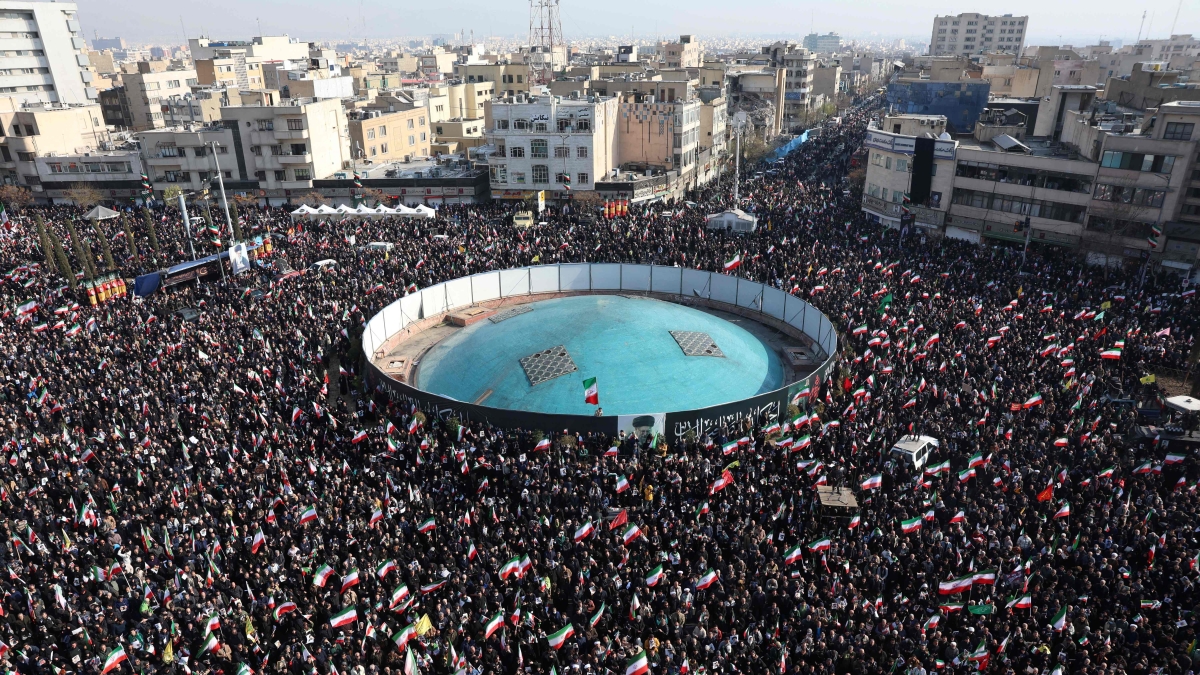
Tehran, Bulgaria – The Middle East remains on high alert as tensions escalate following a series of strikes targeting Iran, culminating in the reported death of Supreme Leader Ayatollah Ali Khamenei. Confirmed by both Iranian state media and President Donald Trump on Saturday, February 28, 2026, the death of the 86-year-old leader raises significant questions about the future of the Islamic Republic and the potential for further conflict. While President Trump has indicated the conflict may conclude “soon,” he clarified that it would not be this week, as heavy bombing continues. The situation is fluid and complex, with Israel also confirming its involvement in the operation.
The strikes, a joint operation between the United States and Israel, represent a significant escalation in regional hostilities. President Trump, in a social media post, described Khamenei as “one of the most evil people in history” and suggested that elements within Iran’s Islamic Revolutionary Guard Corps (IRGC), military, and security forces are seeking immunity from prosecution. This claim, while unconfirmed by independent sources, suggests a potential fracturing within the Iranian regime. The scale of the operation, as described by Trump, involved “heavy and pinpoint bombing” that will continue “uninterrupted throughout the week or, as long as necessary to achieve our objective of PEACE THROUGHOUT THE MIDDLE EAST AND, THE WORLD!”
The Death of a Leader and the Question of Succession
Ayatollah Ali Khamenei had served as Iran’s Supreme Leader since 1989, succeeding Ayatollah Ruhollah Khomeini, the leader of Iran’s 1979 revolution. He held ultimate authority over all branches of the Iranian government and military, functioning as both the political and spiritual leader of the nation. His death creates a power vacuum and uncertainty about the future direction of Iran. The question of succession is paramount, and President Trump has publicly stated his intention to be involved in the selection of the next leader, explicitly ruling out Khamenei’s son. This interventionist stance is likely to further complicate the already volatile situation.
According to reports from CBS News, an Israeli broadcaster indicated that Prime Minister Benjamin Netanyahu was shown a photograph of Khamenei’s body following the strikes. While this claim has not been independently verified, it underscores the level of coordination and intelligence sharing between the two allied nations. The Iranian state-run IRNA news agency confirmed Khamenei’s death but provided no details regarding the cause. Tasnim, a semi-official news agency linked to the IRGC, also reported that Khamenei died as a result of the attack.
Regional Reactions and Escalating Tensions
The strikes have triggered a wave of reactions across the region. Reports indicate celebrations in the streets of Tehran, suggesting a degree of popular discontent with the Khamenei regime. Although, Iran has responded with retaliatory strikes. On Thursday, March 6, 2026, Azerbaijan accused Iran of a drone attack on its exclave, while both Israel and Iran launched fresh strikes against each other. Bahrain also reported being targeted by an Iranian attack on Friday, March 6, 2026, with strikes hitting a hotel and residential buildings in the capital, Manama. Fortunately, no casualties were reported in Bahrain, and civil defense forces extinguished a fire in one of the targeted buildings.
The conflict is not limited to direct military engagements. The United States has reportedly intercepted drones launched by Iran towards Jordan and Bahrain, demonstrating a commitment to protecting regional allies. US Defense Secretary Pete Hegseth has affirmed that the US has “no shortage of munitions” and is prepared to sustain the campaign, dismissing Iranian hopes that the US would be unable to maintain its military pressure.
International Involvement and Diplomatic Efforts
France is reportedly preparing a mission to reopen the Strait of Hormuz, a vital waterway for global oil supplies, highlighting the international community’s concern about the potential for disruption to energy markets. The United States has also reportedly requested assistance from Ukraine in defending against Iranian drones in the Middle East, demonstrating a broadening of the conflict’s scope.
The situation is further complicated by differing perspectives on the long-term strategy. An analysis published by Il Sole 24 ORE suggests that both Trump and Netanyahu may be “prisoners of their own expectations” regarding a swift resolution to the conflict, potentially leading to a prolonged and destabilizing war. The article highlights the dangers of miscalculation and the potential for unintended consequences.
Trump’s Role and the Future of Iran
President Trump’s assertive stance and willingness to intervene in Iran’s internal affairs, specifically regarding the selection of Khamenei’s successor, are unprecedented. His stated goal of achieving “PEACE THROUGHOUT THE MIDDLE EAST AND, THE WORLD!” is ambitious, but the current trajectory suggests a prolonged period of instability. The potential for a power struggle within Iran, coupled with external intervention, creates a highly volatile environment.
The death of Ayatollah Khamenei marks a turning point in Iranian history. The coming days and weeks will be critical in determining the future of the country and the broader region. The international community is closely monitoring the situation, and diplomatic efforts are likely to intensify in an attempt to de-escalate the conflict and prevent further bloodshed. The US military’s continued operations, as indicated by President Trump, suggest that a swift resolution is unlikely, and the region may be bracing for a protracted period of instability.
Key Takeaways
- Khamenei’s Death: The death of Iran’s Supreme Leader, Ayatollah Ali Khamenei, confirmed by both Iranian and US sources, creates a significant power vacuum.
- US-Israel Operation: The strikes were a joint operation between the United States and Israel, marking a major escalation in regional tensions.
- Succession Concerns: President Trump has expressed a desire to influence the selection of Khamenei’s successor, a move likely to further complicate the situation.
- Regional Retaliation: Iran has responded with retaliatory strikes, targeting Azerbaijan, Israel, and Bahrain, escalating the conflict.
- International Involvement: France is preparing a mission to secure the Strait of Hormuz, and the US has requested assistance from Ukraine in countering Iranian drones.
The situation remains highly dynamic. The next significant development to watch for is the announcement of a successor to Ayatollah Khamenei and the response from various factions within Iran. Further updates will be provided as they become available. We encourage readers to share their thoughts and perspectives in the comments section below.
- Gaza Ceasefire Deadlocked as Israel Rejects Plan and Hamas Pressures US
- Texas Senate Race: Democrat James Talarico Shakes Up Republicans and Trump
- Trump Pushes SAVE Act to Mandate Voter ID and Proof of Citizenship (newsdirectory3.com)
- Tariff vs. Price Floor: What Trump's New Solar Rule Does (daybreakwire.com)