
The Ministry of Foreign Affairs of Iran warned that normalizing attacks or threats against civilian infrastructure poses a severe danger to vital facilities globally, drawing international attention during the 77th anniversary of the 1949 Geneva Conventions. According to statements published on the platform X by Foreign Ministry spokesperson Ismail Baghaei and reported by IRNA, Tehran characterized recent threats and actions by the United States against its civil infrastructure as an unprecedented blow to the fundamental principles of international humanitarian law.
The diplomatic friction underscores an escalating dispute between Washington and Tehran regarding navigational rights and regional security in the strategic Strait of Hormuz. As military and political figures exchange warnings over commercial shipping lanes, energy supplies, and defensive doctrines, the debate centers squarely on the boundaries of warfare and the protection of non-military installations.
Legal Framework and Geneva Conventions Arguments
Marking the 77th anniversary of the 1949 Geneva Conventions, Iranian officials emphasized that the foundational rules of war strictly require distinguishing between military targets and civilian objects. Baghaei stated that the framers of the Geneva Conventions could not have anticipated that the United States—as a permanent member of the United Nations Security Council—would repeatedly threaten and allegedly execute strikes against civilian bridges, electrical power plants, and other vital facilities.
Tehran urged the international community, state parties to the Geneva Conventions, and Switzerland as the convention’s depository to confront what it termed serious violations of international humanitarian law. Citing Article 1 common to all four Geneva Conventions, Iranian representatives argued that nations carry an obligation not only to respect the treaties but also to ensure compliance globally. Baghaei warned that remaining silent in the face of open threats against civilian targets undermines a crucial pillar of post-World War II civilization.
“Whenever the law falls silent in the presence of power, what collapses is not merely a bridge or a power plant, but human trust in the possibility of upholding the rule of law in international relations,” Baghaei wrote in statements publicized by state media outlets.
Strait of Hormuz Tensions and Counter-Threats
The diplomatic warnings follow a series of reciprocal threats involving energy infrastructure, shipping routes, and military presence in the Middle East. According to coverage from MetroTV News, Iranian Foreign Minister Abbas Araghchi stated that Tehran’s defense doctrine rests on a strict tit-for-tat principle, warning that any aggression against Iranian infrastructure would trigger a severe and decisive response. Araghchi further asserted that nations providing any form of support to such attacks would be categorized as legitimate targets.
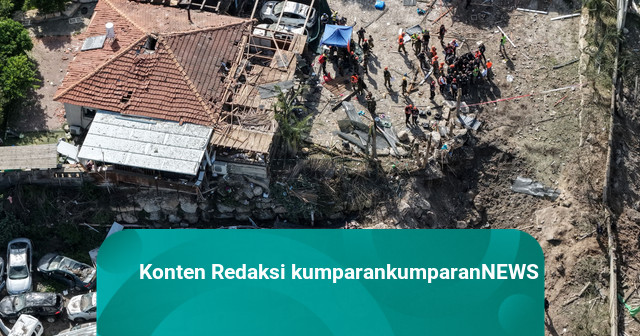
These declarations emerged in response to warnings from United States President Donald Trump, who indicated that Washington would target Iranian energy infrastructure, bridges, or power plants if Tehran interfered with commercial vessels navigating the Strait of Hormuz. Additional reporting from Kumparan noted that a spokesperson for Iran’s Khatam al-Anbiya central command warned that any renewal of strikes against civilian targets would prompt an offensive response of significantly greater scale and destruction.
Implications for Global Security and Energy Markets
International security analysts and diplomats have expressed growing concern that direct targeting of energy assets and civilian infrastructure could destabilize regional stability and disrupt global energy supplies. Iranian officials cautioned that if attacks on vital networks—such as hospitals, electrical grids, water facilities, and transportation links—become normalized, similar lifelines in any country will face acute risks.

As diplomatic channels navigate the standoff over maritime navigation and military postures, regional parliaments and defense commands have maintained a posture of deterrence. Iranian parliamentary leader Mohammad Bagher Qalibaf previously asserted that regional security depends heavily on the absence of US forces and that restrictions on Iranian oil exports would prompt countermeasures across the region.
Official updates, diplomatic filings, and further announcements regarding maritime security in the Strait of Hormuz are expected through statements from the Iranian Ministry of Foreign Affairs and international monitoring bodies. Readers are encouraged to share their perspectives on international humanitarian law and regional security in the comments below.
Keep reading