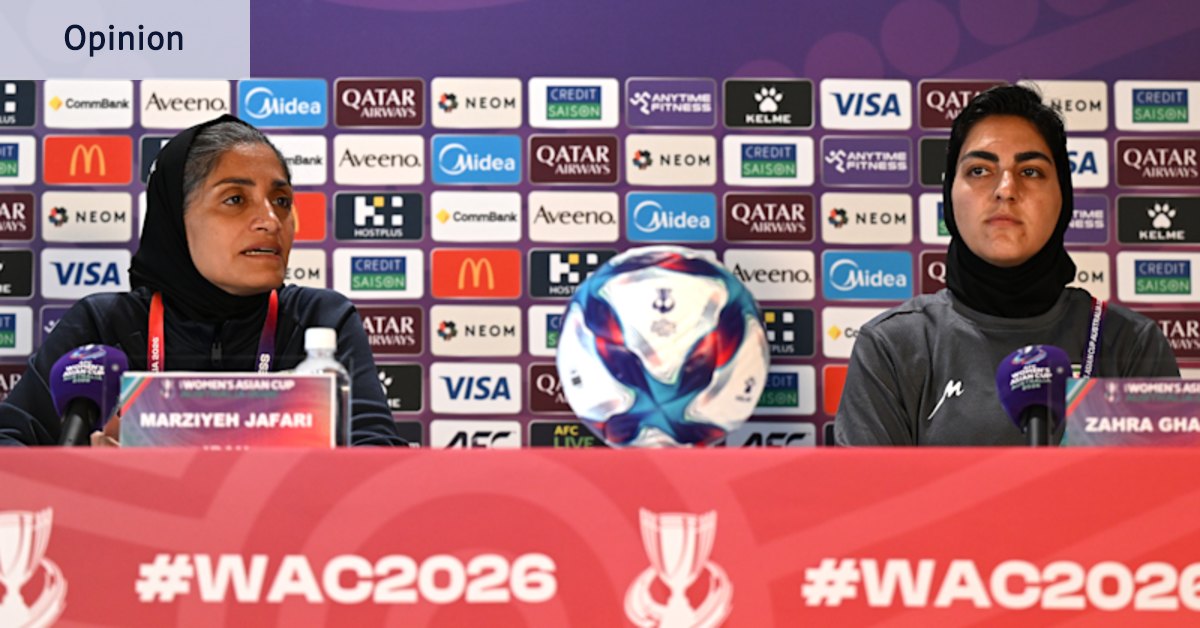
The pitch at Gold Coast Stadium witnessed more than just a football match on Monday night. As Iran’s women’s national team faced South Korea in their opening match of the AFC Women’s Asian Cup 2026 – a tournament that also serves as a qualifying event for the Women’s World Cup – a complex interplay of sporting ambition, political symbolism, and profound personal loss unfolded both on and off the field. The game, which South Korea won 3-0, was shadowed by reports surrounding the political climate in Iran and the delicate position of its athletes, who navigate a landscape where even participation in international sport can carry significant weight.
The atmosphere was particularly charged given recent events within Iran and the broader geopolitical context. Reports have emerged regarding the potential presence of individuals linked to the Islamic Revolutionary Guard Corps (IRGC) within the Iranian delegation attending the tournament in Australia, a development that has raised security concerns given the IRGC’s recent designation as a terrorist organization by Australian authorities. This backdrop adds another layer of complexity to the already sensitive situation faced by the Iranian players, who are acutely aware of the risks associated with expressing any political opinion. The team’s participation in the Asian Cup, represents a delicate balancing act between national pride, personal safety, and the desire to honor those affected by ongoing turmoil within their homeland.
A Silence Born of Risk
The pressure on Iranian athletes to avoid political commentary is immense. During a post-match press conference, as reported by multiple sources, questions regarding the situation in Iran were swiftly curtailed by an AFC media representative, who steered the conversation back to the game itself. This incident underscores the constraints placed upon the team and highlights the sensitivity surrounding any discussion of internal Iranian affairs. It’s a silence born not of apathy, but of a exceptionally real fear of repercussions for themselves and their families.
This caution is understandable given the recent history of political repression in Iran. The events of January, where protests were met with a violent crackdown, tragically claimed the life of Zahra Azadpour, a player for Mehregan Pardis Tehran, who had also been called up for national team training. Azadpour was killed by gunfire during protests in Karaj, a stark reminder of the dangers faced by those who challenge the established order. Her death, and the deaths of fellow players Zahra Khajavi and Behnaz Taherkhani in a car accident shortly after an Olympic qualifier, serve as a poignant backdrop to the team’s participation in the Asian Cup, fueling a desire to honor their memory through their performance.
Symbolism on the Stands and on the Pitch
Despite the pressure to remain silent, subtle forms of protest and solidarity were visible during Monday’s match. Supporters in the stands displayed both Australian flags and the historical Lion and Sun flag of Iran – a symbol associated with opposition to the current regime. Chants in support of Reza Pahlavi, the last Shah of Iran, were briefly heard before being interrupted by security personnel. These actions, though quickly addressed, demonstrated a clear expression of dissent and a desire to show support for change within Iran. The display of the Lion and Sun flag, in particular, is a powerful symbol of resistance, harking back to a pre-revolutionary era and representing a longing for a different future.
On the pitch, Iran’s team demonstrated resilience despite the challenging circumstances. While ultimately losing 3-0 to South Korea, they managed to restrict their opponents to a single goal in the first half, showcasing a determined defensive effort. They also registered two shots on target, demonstrating a willingness to attack despite the pressure. The team, currently ranked 68th in the world, qualified for a second Women’s Asian Cup, a testament to their growing skill and determination. This qualification also represents a crucial step towards potentially reaching the Women’s World Cup, a goal that holds immense significance for the players and their supporters.
Navigating Restrictions and Celebrating Achievements
The path to success for Iranian women’s football has been fraught with obstacles. In November 2024, forward Gelareh Ghanbari faced suspension after her headscarf slipped during a goal celebration in an AFC Women’s Champions League match. This incident highlights the strict regulations imposed on female athletes in Iran, requiring them to adhere to mandatory hijab rules even during moments of triumph. Ghanbari was forced to apologize before being allowed to rejoin the team, a situation that underscores the challenges faced by women seeking to participate in sports within the country.
Despite these barriers, Iranian women’s football has achieved notable milestones. Qualifying for the 2022 Women’s Asian Cup in India marked the team’s first appearance in a major tournament, and holding the host nation to a goalless draw represented a significant achievement. These moments of success, however, are often overshadowed by the political and social constraints faced by the players. The team’s continued participation in international competitions, is not only a display of athletic prowess but also a symbol of resilience and determination in the face of adversity.
Looking Ahead: Australia and Beyond
Iran’s team, led by coach Maryam Irandoost, now prepares for their second group stage match against Australia on Thursday. Irandoost acknowledged the challenges posed by the Australian team but expressed confidence in her players’ ability to showcase their potential. “I know we have a tough game ahead,” she said, adding that playing against strong opponents provides valuable experience for the future. The match against Australia will be a crucial test for the Iranian team, offering an opportunity to demonstrate their progress and potentially secure a spot in the knockout stages of the tournament.
The broader context of the AFC Women’s Asian Cup 2026 extends beyond the field of play. It serves as a platform for Iranian women to represent their nation on the international stage, despite the political and social challenges they face at home. Their participation is a testament to their dedication, resilience, and unwavering commitment to their sport. The tournament also provides an opportunity to raise awareness about the situation in Iran and to amplify the voices of those who are advocating for change. The team’s journey, both on and off the pitch, is a powerful reminder of the human cost of political repression and the importance of supporting those who are striving for a more just and equitable future.
As the tournament progresses, all eyes will be on the Iranian team, not only for their athletic performance but also for the symbolic weight they carry. Their story is one of courage, resilience, and a determination to overcome adversity, and it serves as a powerful reminder of the enduring spirit of Iranian women.
The next match for Iran is scheduled for Thursday against Australia, promising another challenging test for the team. Further updates on the AFC Women’s Asian Cup 2026 can be found on the official AFC website: https://www.the-afc.com/. We encourage readers to share their thoughts and perspectives on this important story in the comments below.