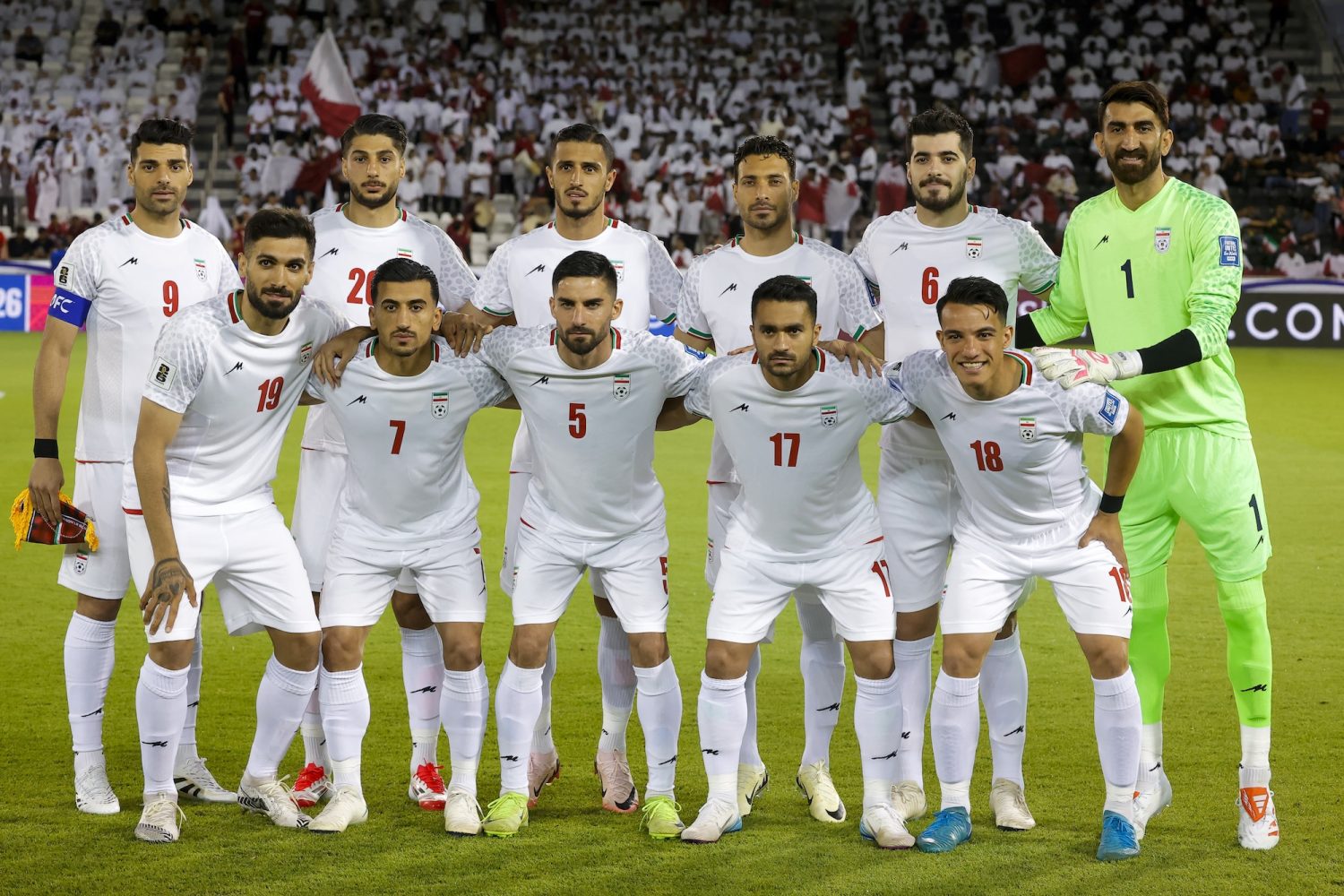
The escalating conflict in West Asia, involving the United States, Israel, and Iran, is casting a long shadow over the upcoming 2026 FIFA World Cup, scheduled to be jointly hosted by the United States, Canada, and Mexico. Concerns are mounting regarding the potential participation of the Iranian national team, one of the first Asian squads to qualify for the tournament, amidst heightened geopolitical tensions and recent attacks. The situation is fluid, and the possibility of Iran withdrawing from the competition is now a serious consideration, raising complex questions about how FIFA would manage such a scenario and whether it could potentially open the door for other nations, including Italy, to re-enter the qualification process.
The Iranian national team was drawn into Group G, slated to face New Zealand, Belgium, and Egypt, with initial matches scheduled in Los Angeles and Seattle. However, following the recent military actions and the death of Iran’s Supreme Leader, Ali Khamenei, on March 1, 2026, as reported by Times Now News, skepticism about Iran’s participation has grown within the Iranian Football Federation. The AFC has already been forced to postpone several matches, including those involving Cristiano Ronaldo’s Al Nassr, demonstrating the immediate impact of the regional instability on the sporting calendar. The potential for travel bans, reminiscent of those previously imposed by the Trump administration, further complicates the situation for Iranian athletes and officials.
FIFA’s Discretion and the Rules Governing Withdrawals
The question of how FIFA would handle Iran’s potential withdrawal centers on the organization’s regulations regarding team participation. According to Article 6 of the FIFA regulations, the governing body possesses significant discretion in such matters. Specifically, point 5 states that if a team withdraws or a match cannot be played due to “force majeure,” the organizing body, authorized by FIFA, will decide on the matter “at its sole discretion” and take “any action deemed necessary.” This broad language essentially grants FIFA considerable latitude in determining the appropriate course of action. Article 6.7 further reinforces this authority, stating that if a participating federation withdraws or is excluded, FIFA will decide “at its sole discretion” and may choose to replace the withdrawing association with another. The New York Times reported that FIFA currently has no plans to substantially alter the tournament format or schedule.
This essentially means FIFA could replace Iran with any qualified nation, a decision fraught with historical and political implications. The last instance of multiple withdrawals before a World Cup occurred in 1950, when Scotland, Turkey, India, and France all withdrew. More recently, in the 2025 FIFA Club World Cup, the Mexican club León was excluded for violating regulations related to multi-ownership, prompting FIFA to organize a playoff between Los Angeles FC and América to determine a replacement. This precedent suggests a possible path forward for FIFA in the event of Iran’s absence.
Potential Replacements and the AFC Qualification Landscape
Should Iran withdraw, FIFA could look to the Asian Football Confederation (AFC) for a replacement. Currently, Iraq is participating in the intercontinental playoff, offering a potential pathway to direct qualification. The United Arab Emirates would be the first nation eliminated from contention within the AFC, but FIFA’s discretionary power extends beyond strict adherence to the qualification order. The Hill notes that FIFA could theoretically invite teams from other confederations to fill the void, opening up possibilities for nations that narrowly missed qualification in Europe, for example.
This prospect has inevitably led to speculation about a potential “re-fishing” of teams, particularly in Europe, and the possibility of Italy regaining a spot in the tournament. Italy is currently involved in the European playoff bracket, and a withdrawal by Iran could create an unexpected opportunity. However, the decision would ultimately rest with FIFA, and the organization’s considerations would likely extend beyond sporting merit to encompass political and logistical factors. The ambiguity of the regulations, as highlighted in reports, leaves the door open to a wide range of outcomes.
The AFC Champions League Impact and Broader Disruptions
The current crisis is already impacting Asian club football. The AFC Champions League has seen several matches postponed, including those involving prominent teams like Al Nassr, led by Cristiano Ronaldo, and Al Hilal. These postponements underscore the far-reaching consequences of the conflict, extending beyond the World Cup qualification process to affect ongoing competitions. The AFC has responded by rescheduling fixtures, but the situation remains volatile and subject to change. The disruption to the AFC Champions League, as reported by both Times Now News and The New York Times, serves as a stark reminder of the interconnectedness of global sport and international affairs.
The situation is further complicated by the broader geopolitical context. The attacks on Iran, coupled with the death of Supreme Leader Ali Khamenei, have created a highly charged atmosphere in the region. Any decision regarding Iran’s participation in the World Cup will inevitably be viewed through a political lens, and FIFA will need to navigate a delicate balance between sporting principles and international sensitivities. The potential for further escalation and the imposition of additional travel restrictions could further complicate matters.
Looking Ahead: Uncertainty and FIFA’s Next Steps
As of March 2, 2026, the future of Iran’s participation in the FIFA World Cup remains uncertain. FIFA has not yet announced any concrete changes to the tournament format or schedule, but the organization is undoubtedly monitoring the situation closely. The Iranian Football Federation has expressed skepticism, and a decision on whether to withdraw or participate is expected in the coming weeks. The next key development will likely be a statement from the Iranian Football Federation outlining its position, followed by a formal response from FIFA.
The potential for a last-minute withdrawal by Iran presents FIFA with a significant challenge. The organization must balance the need to maintain the integrity of the tournament with the complexities of the geopolitical landscape. The decision on whether and how to replace Iran will have far-reaching consequences, potentially impacting the qualification hopes of other nations and raising questions about fairness and transparency. The coming days and weeks will be crucial in determining the fate of Iran’s World Cup dreams and the overall shape of the 2026 tournament.
What are your thoughts on this developing situation? Share your opinions and predictions in the comments below. Don’t forget to share this article with your network to preserve the conversation going.
Keep reading